Who Invented the Toaster: Stunning Guide to the Best Designs

From countertop staple to design icon, the humble toaster has a surprisingly dramatic backstory. If you’ve ever wondered who invented the toaster, how it evolved, and what makes some models stand out today, you’re in the right place. This guide walks through the invention, the key milestones in its development, and what defines the best toaster designs on the market now.
—
A Brief Answer: Who Invented the Toaster?
The question “who invented the toaster” doesn’t have a single simple answer, because the modern version is the result of several important steps:
– First electric toaster (patented):
– Inventor: Albert Marsh (for the heating element) and Frank Shailor (for the actual toaster design)
– Era: Early 1900s
– Key innovation: Use of a durable, high-resistance metal alloy (nichrome) and the first practical, marketable electric toaster.
– First successful electric toaster for home use (USA):
– Inventor: Procter & Schwartz engineers, commercialized by General Electric and others, but Frank Shailor at General Electric is often credited with the first commercially viable electric toaster, patented in 1909.
– First automatic pop-up toaster:
– Inventor: Charles Strite
– Patent year: 1919 (patent granted 1921)
– Key innovation: Timer-based mechanism that released the toast automatically and turned off the heat.
In other words, Albert Marsh’s heating alloy made electric toasting possible, Frank Shailor’s early product brought it into homes, and Charles Strite’s mechanism turned it into the pop-up appliance we recognize today.
But that’s only part of the story.
—
Before Electricity: The Ancient Art of Toasting Bread
Long before anyone asked who invented the toaster, people were already toasting bread. Toasting existed centuries before electricity, driven by the practical need to preserve bread and improve flavor.
Open Flame and Early Devices
In ancient and medieval kitchens:
– Bread was toasted on open fires, using:
– Simple metal skewers or toasting forks.
– Wire frames held near the flames.
– Grill plates or stones warmed over coals.
Toasting served several purposes:
– Preservation: Drying out bread helped it last longer.
– Texture & flavor: It made stale bread palatable and added complexity.
– Safety: Heating could reduce some surface contaminants.
These early methods were labor-intensive and inconsistent. Someone had to stand by the fire, turning bread by hand and gauging doneness purely by eye and experience.
—
The Road to Electric: Why Toasters Needed a New Material
Electric toasting might seem obvious today, but it was impossible until one very specific problem was solved: finding a metal that could heat up without quickly burning out or becoming dangerous.
The Heating Element Problem
To make an electric toaster, you need a heating element that:
– Conducts electricity but offers enough resistance to generate heat.
– Can withstand high temperatures repeatedly.
– Won’t corrode or melt easily.
– Can be formed into thin wires or ribbons.
Early experimenters tried various metals, but most either:
– Broke too easily,
– Oxidized and degraded,
– Or simply weren’t safe or practical for home use.
Albert Marsh and Nichrome: The Real Turning Point
In 1905, American engineer Albert Marsh developed and patented an alloy of nickel and chromium, eventually known as nichrome. This alloy:
– Had high electrical resistance.
– Was durable and long-lasting at red-hot temperatures.
– Didn’t corrode quickly.
– Could be drawn into fine wire for coils.
Nichrome is often called the “Edison of the toaster” because—while Marsh didn’t design the appliance itself—his material was the missing puzzle piece. Without nichrome, early electric toasters would have been unreliable or dangerous. After this breakthrough, inventors finally had a safe, stable way to convert electricity into even, high heat in a small appliance.
—
Early Electric Toasters: From Novelty to Household Appliance
With nichrome coils available, innovators raced to create the first practical electric toaster.
Frank Shailor and the First Commercial Toaster
Around 1909, Frank Shailor, an engineer at General Electric (GE), patented an electric toaster design known as GE Model D-12. This is often acknowledged as the first successful electric toaster brought to market in the United States.
Characteristics of the early GE toaster:
– Open-sided construction: The toast sat on a rack near exposed coils.
– Manual operation: You had to flip the bread by hand to toast both sides.
– No timer or automation: You watched the bread and removed it when it looked done.
– Limited appeal at first: It was initially geared more toward hotels and restaurants than everyday households, in part because home electrical service was not yet universal.
These early models were closer to “electric bread heaters” than the modern pop-up devices we’re used to, but they were a crucial transition from fire to electricity.
—
The Pop-Up Revolution: Charles Strite Changes Everything
While early electric toasters were a technological step forward, they had a practical problem: people still burned toast constantly. Without a timer, it was easy to get distracted and ruin a batch.
A Problem at Lunch: The Origin of the Pop-Up Toaster
During World War I, a Minnesota mechanic named Charles Strite worked in a factory cafeteria. He noticed constant complaints about burned toast. The problem wasn’t electricity—it was human distraction and uneven heat.
Strite set out to build a toaster that:
– Used an automatic timing mechanism.
– Turned off the heat without user intervention.
– Launched the toast when it was done, making it obvious to the user.
In 1919, he filed a patent for an automatic pop-up toaster. The patent was granted in 1921.
From Cafeterias to Kitchens
Initially, Strite’s toaster was marketed for commercial use—restaurants and cafeterias could churn out consistently toasted bread without staffing someone full-time at the toaster.
By the mid-1920s, the design evolved for home use:
– 1926/1927: The Toastmaster brand introduced a home pop-up toaster, bringing Strite’s concept into middle-class kitchens.
– Features typically included:
– Pop-up mechanism.
– Internal timer or thermostat for consistent results.
– Compact design suited to countertops.
This is the point where the toaster became recognizable as the standard household appliance we know today.
—
How Toaster Design Evolved Through the 20th Century
Once the basic concept of a pop-up toaster was established, the rest of the 20th century brought refinements, style changes, and more features.
1930s–1950s: Chrome, Streamlining, and Style
By the mid-20th century:
– Toasters adopted sleek chrome exteriors for easy cleaning and a modern look.
– Art Deco and mid-century modern aesthetics influenced:
– Curved shapes.
– Symmetrical lines.
– Simple, bold controls.
Some design improvements from this era:
– Dual slots became standard.
– More reliable thermostats improved consistency.
– Introduction of browning controls—users could adjust how dark they wanted their toast.
1960s–1980s: Mass Market and Branding
As toasters became more commonplace:
– Prices dropped due to mass production.
– More brands entered the market, each introducing small innovations:
– Cool-touch exteriors made from plastic.
– Removable crumb trays for easier cleaning.
– Defrost settings for frozen bread and pastries.
– Bagel settings that toasted one side more than the other.
Designs ranged from minimalist metal boxes to boldly colored plastic appliances that matched kitchen decor.
1990s–2000s: Digital Controls and Specialty Functions
Toward the end of the 20th century and into the 21st:
– Basic mechanical timers were supplemented or replaced with:
– Electronic timers.
– Digital buttons and displays.
– Automatic centering for even browning.
Toasters began to compete on:
– Precision: Consistent browning from toast to toast.
– Versatility: Wider slots for artisan bread; dedicated bagel modes; reheat functions.
– Safety features: Auto shutoff, better heat insulation, improved wiring.
—
What Defines a “Best” Toaster Design Today?
Understanding how we got here helps explain what to look for now. The best modern designs aren’t just about not burning your bread; they blend safety, performance, durability, and aesthetics.
Below are the core design elements that matter.
—
Core Functional Design: Heating, Slots, and Controls
1. Heating Element Quality and Layout
Even today, the heart of the toaster is the heating element, typically nichrome or a similar alloy.
High-quality designs:
– Use evenly spaced coils or plates to minimize hot and cold spots.
– Provide uniform browning across the entire bread surface.
– Maintain consistent performance over time without burning out.
Poor layouts lead to:
– Undertoasted spots in the middle or corners.
– Overly dark areas along coil lines.
– Inconsistent results from cycle to cycle.
2. Slot Width and Length
As bread styles changed—think thick sourdough slices and tall artisanal loaves—slot design became critical.
Modern premium toasters often feature:
– Extra-wide slots (around 1.5 inches or more) to handle:
– Bagels
– Texas toast
– Artisan bread
– Long slots to toast:
– Long slices from bakery loaves
– Multiple small pieces at once
This flexibility is a hallmark of good contemporary design.
3. Browning Controls and Consistency
Early toasters often produced unpredictable results. Today, good designs aim for precise control:
– Clearly labeled browning levels (e.g., 1–7).
– Internal sensors or calibrated timers that:
– Adjust for toaster temperature between cycles.
– Aim to deliver the same level of browning at setting “4” whether it’s the first slice of the day or the fourth.
Look for features such as:
– Automatic temperature compensation (some models shorten later cycles to avoid over-browning).
– Reheat and defrost modes that tweak timing and power levels accordingly.
—
Safety and Usability: More Than Just Toast
Toaster design has to consider safety in a kitchen full of distractions.
1. Cool-Touch Surfaces and Insulation
Older metal toasters can get extremely hot on the outside. Modern safety-conscious models may feature:
– Cool-touch exteriors using multi-layer construction and insulation.
– Better heat management to reduce the risk of burns when brushing against the appliance.
2. Automatic Shutoff and Jam Protection
A well-designed toaster addresses what happens when:
– Bread gets stuck.
– The user walks away.
– A foreign object falls into the slot.
Contemporary safety measures include:
– Auto shutoff if the toast doesn’t pop up properly or if a cycle runs too long.
– Manual cancel button that interrupts the cycle immediately.
– Safer internal layouts that keep crumbs away from critical wires.
3. Crumb Management
Crumbs are more than a nuisance; they’re a potential fire hazard.
Thoughtful designs use:
– Full-width removable crumb trays that:
– Slide out easily from the front or back.
– Can be fully emptied and wiped.
– Smooth interior surfaces that reduce snag points where crumbs accumulate.
– Clear visual cues (like a tray outline or icon) reminding users the tray exists.
—
Aesthetics and Ergonomics: Toaster as Design Object
The best designs recognize that a toaster is a permanent fixture on the countertop, not a gadget hidden in a cupboard.
1. Materials and Finish
Common choices today:
– Stainless steel: Durable, timeless, and easy to clean; fits most kitchen styles.
– Matte finishes: Hide fingerprints better and provide a softer look.
– Color accents or retro styling: Offer personality and can match themed kitchens.
Premium models may combine:
– Brushed metal with polished accents.
– Glass windows (in some novelty designs) to see the toast browning.
– High-quality knobs and levers that feel solid and long-lasting.
2. Controls and Readability
Good user interface design in a toaster should include:
– Large, legible markings for browning levels and modes.
– Intuitive icons for functions like bagel, defrost, and reheat.
– Tactile feedback in knobs and levers—smooth motion, satisfying clicks, no wobble.
Digital models should:
– Use simple, uncluttered displays.
– Avoid overly complex menus (nobody wants to “program” toast before coffee).
3. Footprint and Cable Management
With limited counter space, modern designs pay attention to:
– Compact footprints that don’t consume unnecessary space.
– Cord storage underneath or at the back, allowing:
– Adjusted length.
– Easy storage when not in use.
– Stable, non-slip feet to prevent accidental sliding.
—
Types of Toasters and How Their Designs Differ
When picking a toaster—or simply comparing designs—it helps to understand the main categories and how their features and engineering priorities differ.
1. Standard Pop-Up Toasters
These remain closest to the Charles Strite concept:
– Vertical slots where bread is inserted.
– Lever-controlled lowering.
– Automatic pop-up when done.
Best used for:
– Sliced bread.
– Bagels (with the right function).
– Toaster pastries.
Design focus:
– Even browning.
– Slot versatility.
– Straightforward controls.
2. Long-Slot Toasters
Long-slot models are a variation of the pop-up toaster:
– Two long slots instead of four short ones.
– Can accommodate:
– Long bakery loaves.
– Multiple smaller slices per slot.
Design benefits:
– Versatility for different bread sizes without increasing width.
– Often more compact in depth, fitting narrow counters better.
3. Toaster Ovens
While distinct from traditional toasters, toaster ovens evolved in parallel and share the same core function—browning bread—while adding more versatility.
Typical features:
– Horizontal rack instead of vertical slots.
– Glass door and internal light.
– Multiple cooking modes:
– Toast
– Bake
– Broil
– Reheat
– Adjustable temperature and timers.
Design priorities:
– Even heat distribution from top and bottom elements.
– Interior space and rack positioning.
– Easy cleaning (crumb tray plus accessible interior surfaces).
Toaster ovens are less specialized but more flexible, ideal for those who want a small oven-like appliance that can also toast.
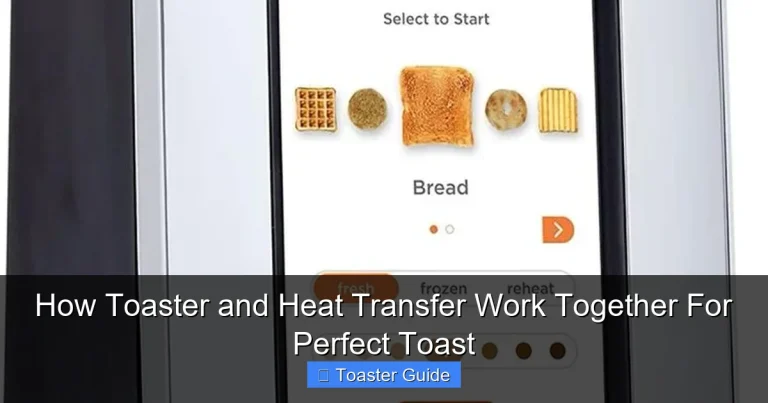
4. Specialty and Smart Toasters
Recent years have brought new twists:
– Smart toasters with:
– Touchscreens.
– Presets for bread types.
– Internet connectivity or app integration.
– Glass-sided toasters:
– Let you literally watch your toast brown.
– Offer a visual check instead of relying only on a timer.
These designs experiment with new interfaces and materials, though their success often hinges on whether they still deliver solid core performance: consistent, safe toasting.
—
How History Influences Today’s Best Designs
The story of who invented the toaster is essentially the story of problem-solving around:
1. Materials – Albert Marsh’s nichrome made electric heating possible.
2. Timing and automation – Charles Strite’s pop-up mechanism reduced burned toast.
3. Safety and convenience – Generations of engineers improved insulation, controls, and usability.
Each of these historical advances is still obvious in current top-rated designs:
– Nichrome-like heating elements with refined shapes and layout for even results.
– Advanced timing controls, now digital, building on Strite’s mechanical concept.
– User-centered features like auto shutoff, cool-touch exteriors, wide slots, and intuitive controls.
Modern manufacturers also draw on mid-century aesthetics, combining nostalgic shapes and colors with contemporary electronics, creating appliances that feel both familiar and current.
—
Choosing a Great Toaster Today: Practical Criteria
Understanding the history and design principles helps when you’re evaluating real products. These are the key factors that separate average models from excellent ones:
1. Evenness of Toasting
Ask yourself:
– Does it brown both sides of the bread uniformly?
– Are there noticeable darker strips where the coils are?
– Does the same browning setting produce consistent results cycle after cycle?
Independent reviews and user photos can be very revealing here.
2. Slot Versatility
Consider the bread you actually use:
– If you eat bagels, thick bakery slices, or homemade bread, prioritize:
– Extra-wide slots.
– Long slots.
– A true bagel function (heats inner side more than outer).
– If you mostly use standard sandwich bread:
– Standard slot width may be fine.
– Focus more on evenness and reliability.
3. Usability and Controls
Look for:
– Straightforward layout (e.g., browning dial, bagel button, defrost button, cancel button).
– Clear labels that are easy to read at a glance.
– A lever that feels solid, not flimsy or sticky.
4. Build Quality and Materials
Indicators of good construction:
– Sturdy housing, whether metal or high-quality plastic.
– Minimal flex when you press on the sides.
– Seamless joins and smooth edges.
– A crumb tray that slides smoothly and feels robust.
Stainless steel or well-finished metal often lasts longer and looks better over time, though good plastics have their place for cool-touch designs.
5. Safety Features
Key safety elements include:
– Auto shutoff if toast gets jammed.
– A cooler exterior (or at least minimal hot spots in places you might touch).
– Reliable wiring and certification (e.g., UL, ETL in North America).
—
Looking Ahead: The Future of Toaster Design
While toasters are a mature technology, there’s still room for innovation along several lines:
– Smarter sensors: Instead of relying entirely on time, future devices might:
– Use optical sensors to detect browning level.
– Adjust in real time for bread thickness, moisture, or initial temperature.
– Energy efficiency: Improved insulation and heating elements that reduce wasted heat.
– Modular and repairable designs: Allowing users to replace a broken lever or heating element instead of discarding the whole appliance.
– Sustainability in materials: Recyclable housings, fewer mixed materials, and more durable construction to extend lifespan.
As with many household devices, the most successful innovations will likely be those that make everyday use simpler and more reliable, not necessarily those that add unnecessary complexity.
—
Conclusion: From Simple Idea to Everyday Essential
The journey from toasting bread over an open flame to today’s sleek countertop appliances involved a series of crucial breakthroughs:
– Albert Marsh provided the heating material—nichrome—that made electric toasting viable.
– Frank Shailor and early 20th-century engineers brought the first electric toasters to market.
– Charles Strite solved the problem of burnt toast with an automatic pop-up mechanism, turning the toaster into a reliable, convenient appliance.
Modern designs build on these foundational innovations, focusing on even heat, safety, usability, and style. Whether you favor a minimalist metal box, a retro-styled statement piece, or a high-tech smart toaster, you’re benefiting from more than a century of engineering refinement.
So the next time you push down a lever and wait for that satisfying pop, you’re participating in a long design story—one that stretches from open fires and hand-held forks to precision electronics and carefully tuned heating elements, all in pursuit of the perfect slice of toast.