
Air Fryer Electricity Usage Explained for Smart Savings

An air fryer usually uses less electricity than a full-size oven for small to medium meals because it heats a smaller space and cooks faster. The biggest savings come from matching the appliance size to your food, avoiding unnecessary preheating, and cooking in efficient batches.
Air fryer electricity usage is one of the easiest kitchen costs to overlook, especially when the appliance feels fast and convenient. The good news is that most air fryers are fairly efficient for small to medium meals, but the exact cost depends on wattage, cook time, batch size, and how you use the machine.
This guide explains how air fryer electricity usage works in real kitchens, how to estimate running cost, and how to keep bills under control without giving up crisp results. If you are comparing air fryers in 2025, the smartest choice is usually the one that matches your cooking habits, not the biggest watt number on the box.
- Wattage matters: Higher watts do not always mean higher cost if cook time is shorter.
- Batch size counts: One efficient batch is better than several tiny rounds.
- Airflow is key: Overfilling or blocking circulation can waste energy.
- Preheat wisely: Skip it when the recipe and model allow.
What “Air Fryer Electricity Usage” Really Means for Budget-Minded Home Cooks
Search intent: understand how much power an air fryer uses and whether it saves money
When people ask about air fryer electricity usage, they usually want two things: a rough idea of how much power the appliance draws and whether it is cheaper than a full-size oven. In most homes, the answer is “often yes for smaller meals,” but the savings are not automatic.
An air fryer works by heating a compact chamber and moving hot air quickly around food. Because the cooking space is smaller than an oven, it usually reaches temperature faster and can finish meals sooner. That shorter cook time is where much of the energy savings come from.
Why wattage, cook time, and batch size matter more than brand hype
Brand marketing often highlights features like presets, smart controls, or extra accessories, but those do not tell you much about actual electricity use. The main factors are simple: how many watts the unit can draw, how long it runs, and how much food you cook at once.
A higher-watt model may not cost much more to use if it cooks quickly and efficiently. On the other hand, a smaller unit that needs multiple rounds for dinner can end up using more energy overall. Batch size matters because repeated cycles add time, and time is what drives electricity consumption.
How Air Fryer Power Consumption Works in Real Kitchens
Typical watt ranges and what they mean on your electric bill
Most countertop air fryers fall somewhere around the lower-to-mid watt range for kitchen appliances, though exact numbers vary by size and model. Smaller basket units usually draw less power than large oven-style models, but the difference in runtime can offset that advantage.
On your bill, wattage only becomes meaningful when paired with usage time. A unit that draws more power for 15 minutes may cost less than a lower-watt appliance that runs for 30 minutes. That is why a quick meal can be surprisingly economical even if the appliance sounds powerful.
Heating cycle behavior: why air fryers don’t draw max power nonstop
Air fryers do not usually pull maximum power continuously from start to finish. They cycle on and off to maintain temperature, similar to many other heating appliances. That means the real-world energy use is often lower than a simple “wattage × total time” guess suggests.
Once the basket or oven cavity reaches the target temperature, the heating element may pause while the fan keeps air moving. This cycling behavior helps explain why two recipes with the same clock time can still use different amounts of electricity, depending on how often the heater has to recover temperature.
Comparing energy use with ovens, toaster ovens, and microwaves
Compared with a full-size oven, an air fryer often uses less electricity for small portions because it has less space to heat. A toaster oven can be similar in spirit, especially for toast, reheat tasks, and smaller bakes, though results depend on size and insulation.
Microwaves are usually the lowest-energy option for reheating and steaming-style tasks, but they do not create the same crisp texture. If texture matters, the air fryer may be the better tradeoff. For a family-sized roast or several trays of food, a conventional oven may still make more sense than running multiple air fryer batches.
Air Fryer Electricity Usage Explained by Size, Model, and Cooking Style
Basket vs. oven-style air fryers: which usually uses more electricity
Basket air fryers are often more efficient for quick, smaller meals because their compact chamber heats up fast and concentrates airflow. Oven-style air fryers usually offer more flexibility and capacity, but they can use more electricity simply because there is more space to heat.
That said, the “most efficient” option depends on what you cook. If you regularly make fries, wings, or single-pan dinners, a basket model may be the smarter energy choice. If you need to cook multiple items at once, an oven-style unit may reduce total runtime by handling more food in one cycle.
Single-basket, dual-basket, and large-capacity models
Single-basket air fryers are usually easiest to run efficiently when you cook for one to three people. Dual-basket models can be convenient for mixed meals, but they may use more electricity if both sides run for long periods or if one basket is underfilled.
Large-capacity models are helpful for families, meal prep, and batch cooking. The energy downside appears when a big unit is used for a tiny portion that could have finished faster in a smaller appliance. In other words, capacity should match the job.
How preheating, frozen foods, and small portions change energy use
Preheating adds a little extra electricity use, though many air fryer recipes can skip it or shorten it. Frozen foods often need longer cook times, which increases total consumption, even if the convenience is worth it.
Small portions can be efficient if they fit the basket well and cook in one round. But if the food is scattered too thinly or cooked in several tiny batches, the appliance may spend more time heating than actually cooking. That is when electricity use climbs.
How to Estimate Your Air Fryer Running Cost in Minutes
Simple formula: wattage × time × local electricity rate
A practical way to estimate air fryer cost is to use a simple energy formula. Convert watts to kilowatts, multiply by hours of use, then multiply by your local electricity rate. The exact rate varies by region, utility plan, and time of day.
For example, a 1,500-watt air fryer running for 20 minutes uses about 0.5 kilowatt-hours before cycling losses and efficiency differences are considered. If your electricity rate is average for your area, that usually works out to a modest cost per meal, especially compared with heating a large oven for a small batch.
Example cost breakdown for common meal types
Fast snacks like frozen fries, chicken nuggets, or reheated leftovers usually finish in a short cycle and cost very little to run. Mid-length meals such as chicken thighs, salmon fillets, or roasted vegetables use more time but still tend to stay manageable for everyday cooking.
Longer recipes, dense frozen foods, or large family batches can cost more because they keep the heating element active for longer. The main point is not that air fryers are “free” to use, but that they are often cost-effective when you cook the right foods in the right quantity.
Time-saving versus cost-saving: when the air fryer is the smarter choice
An air fryer is usually the smarter choice when you want speed, crisp texture, and a smaller heated cooking space. It is especially appealing for weeknight meals, single servings, and reheating foods that would go soggy in a microwave.
If you are cooking a large roast, multiple casserole dishes, or a full tray meal for several people, the oven may be more practical. In that case, the best energy decision is often the one that avoids repeated air fryer batches and keeps the whole meal on one schedule.
Practical Ways to Lower Air Fryer Electricity Use Without Sacrificing Results
Batch cooking and avoiding unnecessary preheating
Batch cooking can lower total electricity use when you plan it well. If you are already heating the appliance, cook enough food to make the cycle worthwhile, but do not overload the basket or block airflow.
Preheating is useful for some recipes, but it is not always necessary. If your model and recipe allow it, skipping or shortening preheat time can trim energy use without hurting results. The key is to follow the cooking method that actually works for the food you are making.
Using the right temperature and not overfilling the basket
Higher heat is not always better. Many foods cook evenly at moderate temperatures, and using the right setting can reduce the chance of burning the outside before the inside is done. That also helps avoid extra cook time from restarting the cycle.
Overfilling the basket is another common energy mistake. When air cannot circulate freely, food cooks unevenly and often needs shaking, flipping, or extra minutes. A properly loaded basket usually gives better results with less wasted electricity.
Matching food size and quantity to the appliance capacity
Choose the appliance size based on your usual meals, not your occasional biggest dinner. A compact unit is often more efficient for one or two people, while a larger model is better if you regularly cook for a family or prep several servings at once.
If you frequently reheat leftovers, roast vegetables, or cook side dishes, a smaller basket may be all you need. If you often make full meals, a larger model may save time by reducing the need for multiple rounds. Efficiency improves when the machine fits the task.
Cleaning and maintenance habits that improve efficiency
Built-up grease and stuck-on crumbs can interfere with airflow and heat transfer. Regular cleaning helps the appliance work as intended and can prevent longer cook times caused by poor circulation.
Check the basket, tray, and heating area according to the manufacturer’s care instructions. Avoid harsh cleaning that can damage coatings or fan areas. A clean air fryer is usually a more reliable and efficient one.
Common Mistakes That Waste Energy and Raise Cooking Costs
Running oversized models for tiny portions
Using a large air fryer for a very small snack can be convenient, but it is not always the most efficient approach. Bigger cavities take more energy to heat, especially if the food only occupies a small part of the cooking space.
If you mostly cook small portions, a compact model may be a better fit. If you already own a large one, try grouping small items into a single session instead of running it for just a few bites at a time.
Opening the basket too often and extending cook time
Every time you open the basket, you release heat and interrupt the cooking cycle. That can add minutes to the total runtime, which increases electricity use and may affect texture.
It is fine to check food when needed, but frequent peeking usually works against both efficiency and consistency. Use the recommended shake or turn points, then close the basket and let the cycle finish.
Using accessories or foil in ways that block airflow
Accessories can be helpful, but they should not block the fan-driven airflow that makes air fryers work. Too much foil, a crowded rack, or the wrong insert can slow cooking and force longer run times.
Always leave room for air to move around the food. If an accessory changes the way heat circulates, it may save cleanup time but cost more energy in the long run. Balance convenience with airflow.
Ignoring manufacturer settings and defaulting to higher heat
Some users turn everything up “just to be safe,” but that can waste energy and dry out food. Manufacturer guidelines and recipe instructions are usually the best starting point because they are designed for the appliance’s airflow and heating pattern.
Lower or moderate temperatures often work well if you allow enough time. When in doubt, start with the recommended setting and adjust only if your food needs it. That approach is usually more efficient than guessing high.
Safety, Reliability, and Kitchen Power Considerations
Plugging air fryers into safe outlets and avoiding overloaded circuits
Air fryers can draw a meaningful amount of power, so they should be plugged into a suitable outlet that is not already overloaded with other high-watt appliances. Avoid running them on flimsy extension cords unless the manufacturer specifically allows it.
If your kitchen circuit trips often, the issue may be the circuit load rather than the air fryer itself. In that case, a qualified electrician can help assess the wiring and outlet setup safely.
Understanding heat, ventilation, and countertop clearance
Air fryers release hot air and need space around them to operate safely. Keep the appliance on a stable, heat-resistant surface with enough clearance from walls, cabinets, and nearby items.
Poor ventilation can trap heat, affect performance, and create a safety risk. This is especially important in smaller kitchens where appliances are packed close together. Follow the clearance guidance in the manual rather than guessing.
When cord length, outlet quality, or appliance age can affect performance
A damaged cord, loose outlet, or aging appliance can cause inconsistent heating and may make the unit seem less efficient than it really is. If the plug feels unusually warm, the cord is frayed, or the appliance powers down unexpectedly, stop using it and inspect it safely.
Older appliances can also lose efficiency over time if fans, heating elements, or internal parts wear down. When performance drops noticeably, compare the cost of repair against replacement and consider professional service if electrical concerns are involved.
Final Takeaway: Is an Air Fryer Energy Efficient for Everyday Cooking?
Best use cases for smart savings in 2025 kitchens
For many households, an air fryer is energy efficient when it replaces a full oven for small to medium meals, quick reheats, and crispy foods that benefit from concentrated heat. It is especially useful if you cook in modest portions and want faster results with less kitchen warm-up.
The best savings usually come from matching the appliance to the meal. A compact basket model can be a smart choice for daily use, while a larger oven-style unit may make more sense for families and batch cooking.
Quick recap of the most important electricity-saving habits
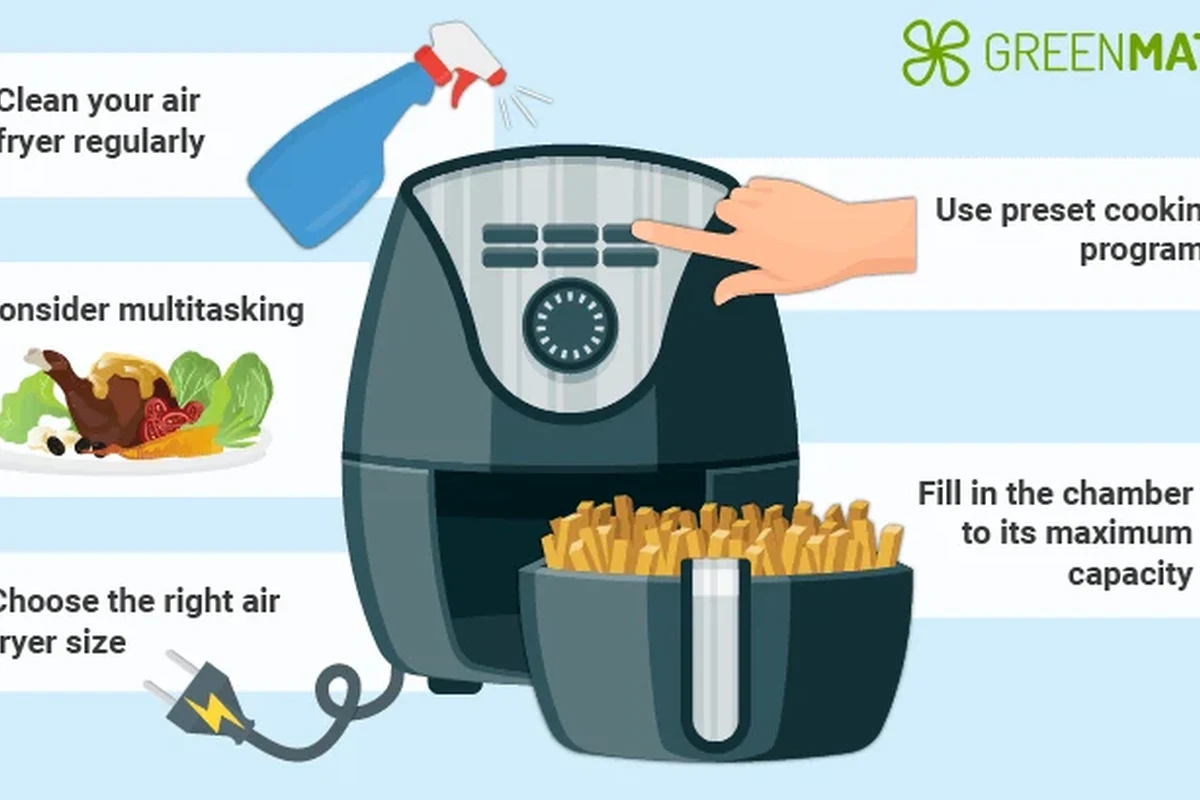
To keep costs down, use the right size air fryer, avoid unnecessary preheating, cook in sensible batches, and do not block airflow. Clean the appliance regularly, follow the recommended temperature settings, and avoid opening the basket more than needed.
Most importantly, think about total runtime instead of just wattage. That is the clearest way to understand air fryer electricity usage explained in practical terms: the cheapest appliance is the one that cooks your food efficiently, in one or two well-planned cycles, with minimal waste.
Frequently Asked Questions
An air fryer often uses less electricity than a full-size oven for small to medium meals because it heats a smaller space and usually cooks faster. Exact savings depend on wattage, cook time, and how much food you make at once.
Usually, larger models can use more electricity because they have more space to heat. But if a bigger unit lets you cook everything in one batch, it may still be efficient overall.
Not always. Some recipes and models work well without preheating, and skipping it can save a little electricity.
Wattage, cook time, basket size, and batch size matter most. Frequent basket opening, overfilling, and repeated cooking rounds can also raise energy use.
It depends on the model and what you cook. An air fryer is often cheaper for crisping and quick meals, while a toaster oven may be better for certain baked or toasted foods.
Check the size, wattage, cooking capacity, and whether the model fits your usual meal portions. Also consider counter space, ease of cleaning, and whether the appliance can handle your most common recipes without multiple batches.
