
Air Fryer Fire Prevention Tips for Safer Cooking

Air fryer fire prevention is mostly about safe placement, regular cleaning, and staying nearby while the appliance is running. If you notice smoke, burning smells, or electrical issues, stop using it and check the unit before cooking again.
Air fryers have become a go-to countertop appliance because they are fast, flexible, and easy to use. But like any high-heat kitchen device, they need a few basic safety habits to keep cooking low-stress and low-risk.
This guide from the RedKitchenProject Editorial Team covers practical air fryer fire prevention tips for everyday home use. The goal is simple: help you cook safely, avoid smoke and flare-ups, and know what to do if something starts to go wrong.
- Placement: Keep the air fryer on a stable, nonflammable surface with clear airflow.
- Cleaning: Remove crumbs and grease before and after use to reduce smoke risk.
- Supervision: Stay nearby and stop cooking fast if you see smoke or sparks.
- Model awareness: Follow the manual for liners, accessories, and electrical limits.
Why Air Fryer Fire Prevention Tips Matter for Home Cooks in 2025
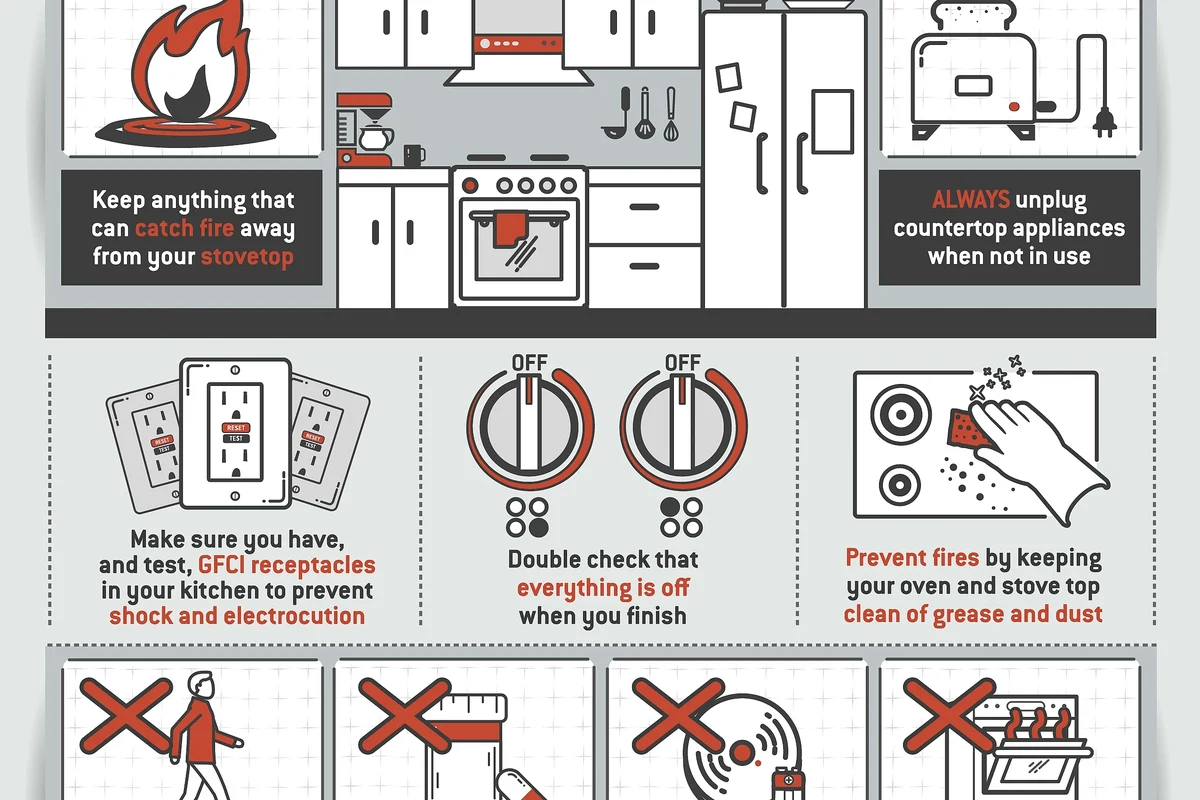
What readers are actually looking for: safer everyday air frying, not alarmist advice
Most people do not need dramatic warnings every time they use an air fryer. They need clear, realistic habits that reduce risk without making the appliance feel difficult to use.
Good fire prevention is mostly about setup, cleaning, and attention. If you place the unit correctly, avoid grease buildup, and stay nearby while it cooks, you reduce most of the common problems people run into.
How fire risks happen in real kitchens: grease, overheating, blocked vents, and misuse
Air fryer fire risk usually comes from a few repeat causes. Grease and crumbs can collect near the heating area, airflow can be blocked, and the unit can overheat if it is crowded or poorly placed.
Misuse matters too. Using the wrong accessories, ignoring smoke, or running the appliance too close to cabinets or curtains can turn a normal cooking session into a safety issue.
How Air Fryers Work and Where Fire Risk Comes From
High heat, rapid air circulation, and exposed heating elements explained
An air fryer works by moving very hot air around food at high speed. That fast circulation creates crisp results, but it also means the cooking chamber gets hot quickly and can react badly to debris or grease.
Many models use an exposed heating element above the basket area. If oil splatter, crumbs, or parchment paper drift too close to that zone, smoke and scorching become more likely.
Common failure points: crumbs, oil splatter, damaged baskets, and poor placement
Small food bits are easy to overlook, but they matter. Crumbs can burn, oil residue can smoke, and a damaged basket or tray may not sit properly, which can affect airflow and heat distribution.
Placement is another frequent issue. If the air fryer sits on a wobbly surface, under low cabinets, or beside flammable items, heat and steam have fewer places to go.
When a model’s design matters: basket style, wattage, and ventilation differences
Not every air fryer is built the same way. Basket style, wattage, fan strength, and vent layout can all affect how hot the unit runs and how much clearance it needs.
That does not mean one design is automatically safer than another. It means you should compare models based on your kitchen space, cooking habits, and how much supervision you are willing to give during use.
Air Fryer Fire Prevention Tips for Daily Use
Place the air fryer on a stable, heat-safe, nonflammable surface
Set the air fryer on a flat, sturdy surface that can handle heat. A counter section away from soft materials, paper goods, and hanging towels is usually the safest choice.
A wobbly or uneven setup can shift the basket and make the unit harder to monitor. Stability helps both cooking performance and safety.
Leave proper clearance around the unit for airflow and heat dissipation
Air fryers need room to breathe. Leave space around the sides, back, and top so hot air can move freely and the exterior does not trap excess heat.
If a unit is pushed against a wall or tucked under cabinets, heat buildup becomes more likely. That can also make smoke and odors harder to notice early.
Keep the basket clean before every cook to prevent grease buildup
A quick check before cooking goes a long way. Remove crumbs, wipe away visible grease, and make sure the basket and tray are seated correctly.
Built-up residue is one of the easiest fire hazards to prevent. Even a small amount of leftover oil can smoke at high temperatures, especially during longer cooks.
Use the right amount of oil and avoid aerosol sprays that can ignite residue
Air fryers usually need less oil than traditional frying methods. A light coating is often enough, while heavy oil use can increase smoke and leave sticky residue behind.
Aerosol cooking sprays can be a problem on some surfaces and may leave a film that is difficult to remove. If your manufacturer warns against them, follow that advice and use a safer alternative.
Never overload the basket: why crowding increases smoke and fire risk
Overcrowding blocks airflow, and blocked airflow leads to uneven cooking, excess moisture, and more smoke. It can also cause food to sit too close to the heating area.
Cooking in smaller batches may take a little longer, but it usually gives better results and fewer safety problems. That tradeoff is worth it when you want reliable, low-smoke cooking.
Stay nearby during cooking and respond quickly to abnormal smells, smoke, or sparks
Do not treat an air fryer like a set-it-and-forget-it appliance. Staying close lets you catch unusual smells, loud popping, smoke, or sparks before they become a bigger issue.
If something seems off, stop the cycle and assess the situation. Quick action is one of the simplest and most effective fire prevention habits you can build.
What to Check Before Buying or Using a Specific Air Fryer Model
Compatibility-style checklist for your kitchen setup: counter space, outlet load, and ventilation
Before buying or using a model, make sure your kitchen can support it safely. Check counter depth, overhead clearance, and whether the nearest outlet can handle the appliance without crowding other high-wattage devices.
Ventilation matters too. A compact kitchen may need a smaller unit or a more open placement plan than a larger, well-ventilated space.
Key model factors to compare: temperature limit, auto shutoff, basket materials, and cord length
Look at features that affect safety, not just cooking speed. Temperature range, auto shutoff behavior, basket material, and cord length can all influence how easy the appliance is to use safely.
Longer cords are not always better if they create clutter or encourage unsafe placement. Shorter, well-managed cords can be easier to keep away from heat and traffic.
When to review the manual for model-specific warnings and cleaning instructions
The manual is worth reading even if you have used other air fryers before. Cleaning steps, accessory limits, and surface warnings can vary by brand and model.
If the manufacturer says not to use certain liners, sprays, or attachments, follow that guidance. Model-specific instructions are often the best source for reducing smoke and damage.
Signs a unit should be replaced instead of repaired: damaged cord, loose basket, or repeated overheating
Some problems are not worth ignoring. A damaged cord, loose-fitting basket, broken latch, or repeated overheating can signal that the appliance is no longer safe to use normally.
If the unit trips breakers, smells burnt even after cleaning, or behaves unpredictably, stop using it and consider replacement. For electrical concerns, a qualified electrician or appliance repair professional may be the right next step.
Cleaning, Maintenance, and Inspection Steps That Reduce Fire Risk
Daily cleaning routine: basket, tray, heating chamber, and crumb removal
After the unit cools, empty crumbs and wipe the basket, tray, and visible interior surfaces. A soft cloth or non-abrasive sponge is usually enough for routine care.
Do not forget the heating chamber area if your model allows safe access. That is where hidden buildup can cause smoke long before you notice it from the outside.
Deep-clean timing: how often to remove grease buildup based on usage frequency
The more you use your air fryer, the more often it needs a deeper clean. Heavy users may need to clean grease buildup weekly, while lighter users may only need it every few weeks.
There is no universal schedule because cooking style matters. Fatty foods, breaded foods, and repeated high-temperature cooking usually create more residue.
Inspecting power cords, plugs, vents, and interior coatings for wear or damage
Make a habit of checking the cord and plug before use. Look for fraying, bending, discoloration, or a loose connection at the outlet.
Also inspect vents and interior coatings. If vents are blocked or the nonstick surface is peeling, the unit may no longer be operating safely or efficiently.
Safe replacement parts and accessories: what is worth buying and what to avoid
Replacement baskets, trays, and liners should be compatible with your exact model. Accessories that fit loosely or block airflow can create more problems than they solve.
When in doubt, choose manufacturer-approved or clearly compatible parts. If an accessory changes how the basket sits or blocks vents, it is probably not a good fit for fire prevention.
Common Air Fryer Mistakes That Can Lead to Smoke or Fire
Using parchment paper incorrectly or without airflow support
Parchment paper can be useful, but only when used correctly. If it is too large, placed loosely, or not weighed down by food, it can lift into the heating area and scorch.
Always make sure airflow is not blocked. If the liner covers too much surface area, it can interfere with circulation and increase risk.
Cooking fatty foods without draining excess grease
Fatty foods can produce a lot of dripping grease. If that grease pools in the basket or tray, it may smoke at high heat or create stubborn residue for the next cook.
Trimming excess fat and emptying the drip area promptly can help keep temperatures more manageable. This is especially important for longer cooking cycles.
Running the air fryer near curtains, paper towels, or overhead cabinets
Keep combustible items away from the appliance. Paper towels, packaging, curtains, and even some cabinet finishes can be affected by heat, steam, or accidental contact.
Overhead cabinets are a common problem because people underestimate how much hot air rises. Give the unit space so heat does not collect where you least expect it.
Ignoring smoke, unusual odors, or repeated tripping of the breaker
Smoke is not something to brush off as “just the food.” If it happens repeatedly, there may be residue, a temperature issue, or a fault inside the unit.
Breaker trips and unusual electrical smells are especially important. Those signs may indicate a wiring, outlet, or appliance problem that needs attention before the next use.
Using extension cords or overloaded outlets when the manual advises against it
Air fryers can draw significant power, and not every outlet setup is suitable. If the manual advises against extension cords, follow that warning rather than improvising.
Overloaded outlets can overheat and increase electrical risk. If your kitchen layout makes safe plug-in use difficult, a qualified electrician can help you assess the setup.
Fire-Safety Actions, Emergency Response, and Kitchen Security Notes
What to do if the air fryer starts smoking: power off, unplug if safe, and monitor carefully
If smoke appears, turn the unit off right away. If it is safe to do so, unplug it after switching it off and keep an eye on the appliance until it cools.
Do not open the basket repeatedly if flames or heavy smoke are present. Sudden airflow changes can make the situation worse.
Why water is not the right response for grease or electrical flare-ups
Water is not the right choice for grease-related flare-ups or electrical problems. It can spread burning grease or create a shock hazard if the appliance is still energized.
Use only the response method recommended for the type of fire involved. If you are unsure, prioritize shutting off power safely and calling emergency services if the fire grows.
Keep a Class K or multipurpose extinguisher nearby and know when to use it
A kitchen extinguisher can be a smart precaution, especially if you cook frequently. Make sure you know which extinguisher is appropriate for the kind of fire you might face in your kitchen.
Keep it accessible, not buried in a cabinet. In an emergency, seconds matter more than storage aesthetics.
When to stop using the appliance and contact the manufacturer, electrician, or fire professional
Stop using the air fryer if it has repeated smoke issues, visible damage, electrical odor, or signs of internal failure. Do not keep “testing” a unit that already seems unsafe.
For electrical faults, outlet concerns, or unusual breaker behavior, contact a qualified electrician. If there is any sign of a true fire incident or lingering damage, a fire professional or appliance specialist may also be appropriate.
Quick Recap: The Safest Air Fryer Habits to Remember
Short checklist of the most important prevention steps for everyday cooking
Keep the unit on a stable, nonflammable surface. Leave clearance for airflow, clean the basket and tray regularly, use only a small amount of oil, and avoid overcrowding.
Stay nearby while cooking, watch for smoke or strange smells, and stop the appliance quickly if something seems wrong. Those habits prevent most avoidable problems.
Final takeaway: safer air frying is mostly about placement, cleaning, supervision, and model awareness
The best air fryer fire prevention tips are not complicated. They come down to smart placement, regular cleaning, careful loading, and knowing the limits of your specific model.
With a little attention, air fryers can stay one of the most convenient and reliable appliances in the kitchen. Safe use is mostly about consistency, not complexity.
Frequently Asked Questions
Keep the air fryer on a stable, heat-safe surface with clear space around it. Clean crumbs and grease regularly, avoid overloading the basket, and stay nearby while it cooks.
Yes, if oil buildup is heavy or parchment paper is used incorrectly. Use only a small amount of oil and make sure liners do not block airflow or float into the heating area.
Turn it off right away and unplug it if that is safe to do. Let it cool, check for grease buildup or food debris, and stop using it if the smoke keeps happening.
Clean the basket and tray after each use, then do a deeper clean as needed based on how often you cook. Heavy use and fatty foods usually mean more frequent grease removal.
Only if the manufacturer allows it, and even then it should be a proper heavy-duty setup. Many air fryers are better plugged directly into a suitable outlet to reduce overheating risk.
Replace it if the cord is damaged, the basket is loose, it repeatedly overheats, or it gives off burnt electrical smells after cleaning. For electrical concerns, a qualified electrician or appliance professional can help assess the risk.
