How to Set Instant Pot to High Pressure

If you are standing in front of your cooker wondering how to set Instant Pot to high pressure, you are not alone. I remember my first few times using one. The recipe said “cook on high pressure,” but the buttons on my machine did not make that feel obvious.
The good news is that high pressure is usually the default setting on most Instant Pot models. You just need to know which button starts pressure cooking, how to check the pressure level, and what to do if your model uses slightly different words.
In this guide, I’ll walk you through the simple steps, explain what high pressure means, and share the small mistakes I see home cooks make most often.
Quick Answer
To set an Instant Pot to high pressure, press Pressure Cook or Manual, set the cooking time with the plus, minus, dial, or touch controls, then make sure the pressure level says High. On many models, high pressure is already the default. If your display shows Low, press Pressure Level or adjust the setting until it changes to High. Close the lid, set the steam release to Sealing if your model requires it, and press Start if your model has a Start button.
How to Set Instant Pot to High Pressure Step by Step
Most recipes that say “high pressure” mean the normal pressure-cooking mode. This is the setting used for beans, rice, chicken, soups, stews, potatoes, and many weeknight meals.
- Add your food and the required liquid to the inner pot.
- Lock the lid in place.
- Turn the steam release valve to Sealing, unless your model seals automatically.
- Press Pressure Cook or Manual.
- Set the cook time listed in your recipe.
- Check that the pressure level says High.
- Press Start if your Instant Pot has that button.
After that, the cooker will heat up and build pressure. The timer usually does not start right away. It starts after the pot reaches pressure. That is why a “10-minute” recipe may take closer to 20 or 25 minutes total.
What the Buttons Mean on Different Instant Pot Models
Instant Pot models do not all use the same button names. Some say Manual. Newer ones often say Pressure Cook. Some have a Pressure Level button. Others use a knob, touchscreen, or menu setting.
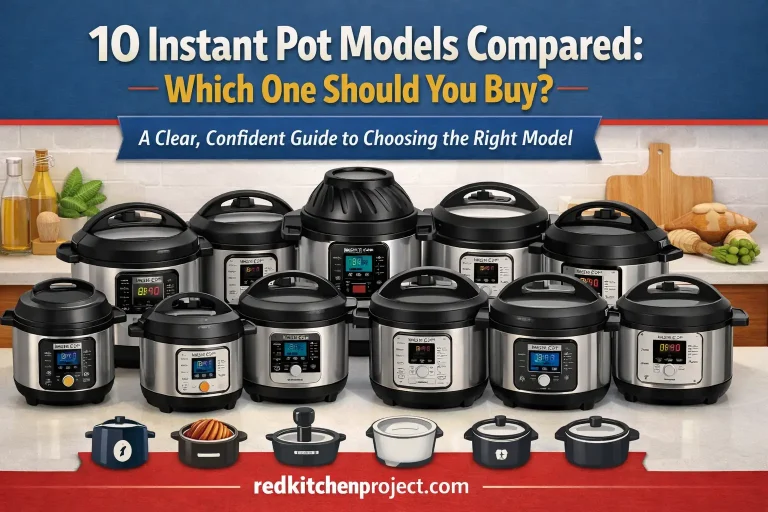
If you are still choosing a cooker, this Instant Pot model comparison can help you understand how different models handle controls and features.
| What You See | What It Usually Means | What to Do |
|---|---|---|
| Pressure Cook | Main pressure cooking mode | Press it, set time, choose High |
| Manual | Older name for pressure cooking mode | Press it, set time, check High pressure |
| Pressure Level | Switches between High and Low | Press until the display shows High |
| Adjust | Changes mode level on some older models | Use only if your manual says it controls pressure |
| Start | Begins the cooking program | Press after choosing time and pressure |
If you use a 6-quart cooker, the basic steps are the same, but the button layout may vary. This 6-quart Instant Pot guide is useful if you want to compare everyday models for family cooking.
For model-specific directions, I also like checking the official Instant Pot product manuals. A manual can clear up button names fast, especially if you bought your cooker secondhand or lost the booklet.
What High Pressure Actually Does
High pressure traps steam inside the pot. That raises the cooking temperature above normal boiling. Food cooks faster because the heat and moisture push into the food more strongly than simmering on the stove.
High pressure is best for foods that need firm, steady heat:
- Dry beans and lentils
- Chicken, beef, pork, and turkey
- Rice, grains, and potatoes
- Soups, stews, and chili
- Frozen meats when the recipe allows it
Low pressure is gentler. I use it less often, but it can help with delicate foods like some seafood, eggs, or soft vegetables. For most beginner recipes, high pressure is the setting you want.
One thing to remember: high pressure is not the same as high heat on a stove. You do not need to raise the temperature yourself. The cooker controls heat and pressure once the lid is sealed.
Setting the Time, Sealing the Lid, and Releasing Pressure
Once high pressure is selected, the next key choice is time. Use the time from a trusted recipe. Do not guess too much at first. A few extra minutes can turn vegetables mushy, while too little time can leave beans or meat underdone.
You also need enough liquid. Most pressure recipes need at least 1 cup of thin liquid, though some small models or specific recipes may use a little less. Water, broth, and thin sauces work. Thick sauces can scorch if they sit on the bottom without enough thin liquid.
Many recipes also tell you how to release pressure. This part matters because food keeps cooking while pressure drops.
| Release Method | How It Works | Best For |
|---|---|---|
| Quick Release | You open the valve to release steam fast | Vegetables, seafood, and foods that overcook quickly |
| Natural Release | You let pressure drop on its own | Beans, meats, soups, and foamy foods |
| Timed Natural Release | You wait 5 to 15 minutes, then release the rest | Rice, chicken, potatoes, and many everyday meals |
For leftovers after pressure cooking, cool and store food safely. I follow the basic rule that cooked leftovers should not sit out for long, and the Mayo Clinic leftover food safety guide gives clear timing for refrigerating and reheating leftovers.
If you start using racks, pans, or stacked inserts, check fit before cooking. This guide to pot-in-pot accessories for Instant Pot cooking is helpful when you want to cook rice, vegetables, or small dishes inside a second container.
Common Mistakes to Avoid
- Forgetting to seal the valve: If the valve is on Venting, the pot may never reach pressure.
- Using too little liquid: Pressure cooking needs steam. Without enough liquid, you may get a burn warning.
- Setting the time before choosing the right mode: Use Pressure Cook or Manual, not Slow Cook or Sauté.
- Ignoring the release method: Quick release and natural release can give very different results.
- Opening the lid too soon: The lid should not open while the pot is still under pressure.
- Overfilling the pot: Beans, grains, and soups need room to bubble and foam.
Expert Tips from Daniel Brooks
Key Takeaways
- Use Pressure Cook or Manual to cook on high pressure.
- High pressure is the default on many Instant Pot models.
- Use Pressure Level if you need to switch from Low to High.
- The cook timer starts after the pot reaches pressure, not right away.
- Follow the recipe’s pressure release method for the best texture.
Frequently Asked Questions
Is Manual the same as Pressure Cook on an Instant Pot?
Yes, on many Instant Pot models, Manual and Pressure Cook mean the same basic thing. Older models often say Manual, while newer models usually say Pressure Cook. Use that button when a recipe says to cook on high pressure.
Is high pressure the default setting on Instant Pot?
On many models, yes, high pressure is the default when you press Manual or Pressure Cook. Still, it is smart to check the display before walking away. If it says Low, press Pressure Level until it shows High.
Why is my Instant Pot not reaching high pressure?
The most common reasons are not enough liquid, a loose sealing ring, food stuck on the bottom, or the steam release valve being left on Venting. Check the lid, valve, ring, and liquid level. Then restart the pressure cooking program.
Do I need to press Start after setting high pressure?
Some Instant Pot models start on their own after a few seconds. Newer models often need you to press Start. If your display does not begin preheating, press Start or check your model’s manual.
Can I change from low pressure to high pressure after cooking starts?
It is better to cancel and restart the program with the correct pressure level. Changing settings during cooking can be confusing and may affect timing. If the pot has already pressurized, release pressure safely before opening the lid.
How do I know when the Instant Pot is at high pressure?
The float valve will rise, steam leaking should slow or stop, and the timer will begin counting down. The display may say On before that happens. Once pressure is reached, the cooking time starts.
Should I use high pressure for every recipe?
No, but high pressure works for most common Instant Pot recipes. Use it for meats, beans, grains, potatoes, soups, and stews. Use low pressure only when a recipe calls for gentler cooking.
Conclusion
Learning how to set the Instant Pot to high pressure is one of the first skills that makes the cooker feel useful instead of confusing. Once you know that Pressure Cook and Manual are the key buttons, the whole process becomes much easier.
Start with a simple recipe, check that the display says High, seal the lid, and follow the release method. After a few uses, you will stop second-guessing the buttons and start trusting the process.
My best advice is to practice with easy foods first, like rice, potatoes, soup, or chicken. Those recipes teach you how your own model heats, seals, and releases pressure in a real home kitchen.