
When To Press A French Press: Perfect Brew Timing

Press the French press after steeping 3 to 4 minutes for a balanced cup of coffee.
I’ve brewed hundreds of pots and taught many people how to use a French press, so I know exactly when to press a French press and why timing changes the taste. This guide explains the science, the simple rules, the tasting cues, and step-by-step actions so you can press the french press confidently every time.
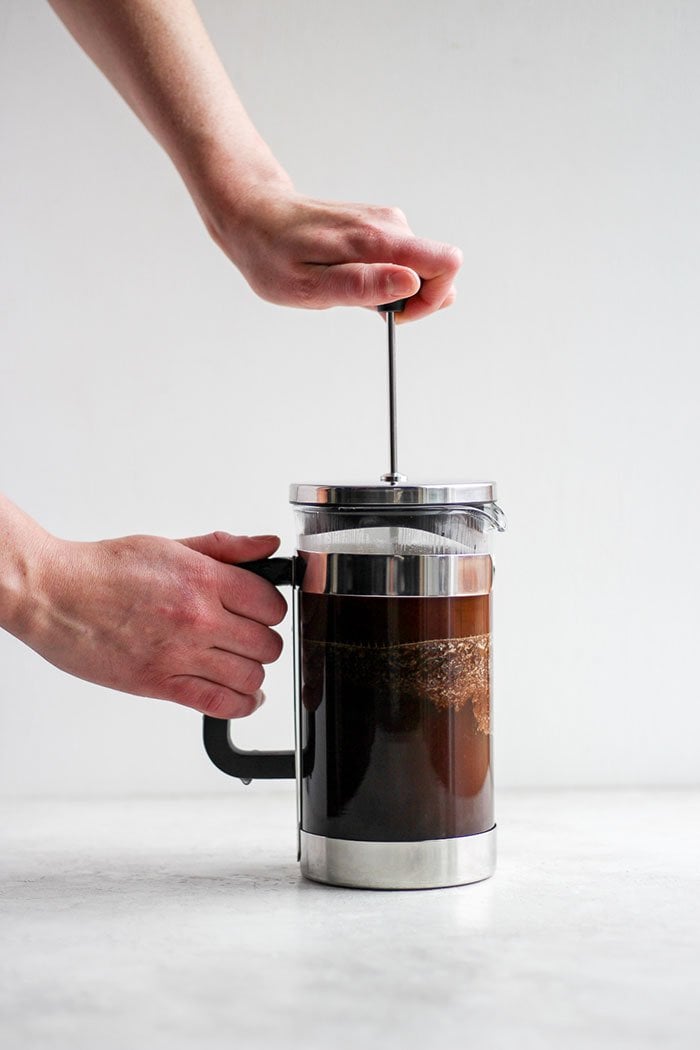
Understanding the French press and why timing matters
A French press is a full-immersion brew device. Coarse coffee grounds steep directly in hot water and a plunger with a metal filter separates grounds from liquid. Timing controls extraction. Press too early and the coffee is weak and sour. Press too late and the coffee is bitter and muddy.
Extraction depends on contact time, grind size, water temperature, and coffee-to-water ratio. Think of the press as a slow handshake between water and coffee. The right moment to press balances acidity, sweetness, and body.

Basic rule: when to press a french press (recommended timings)
Most home brewers follow a simple rule: press between 3 and 4 minutes for a typical recipe. For clarity:
- 3 minutes — brighter cup, lighter body. Good for medium roasts and slightly finer coarse grinds.
- 3.5 minutes — balanced acidity and body. My go-to for everyday coffee.
- 4 minutes — fuller body and more extraction. Works well for darker roasts or coarser grinds.
If you follow the usual ratio of 1:15 to 1:17 (coffee to water), start pressing at 3:30 and adjust from there. When to press a french press changes with grind size and roast, so view these times as starting points not strict rules.
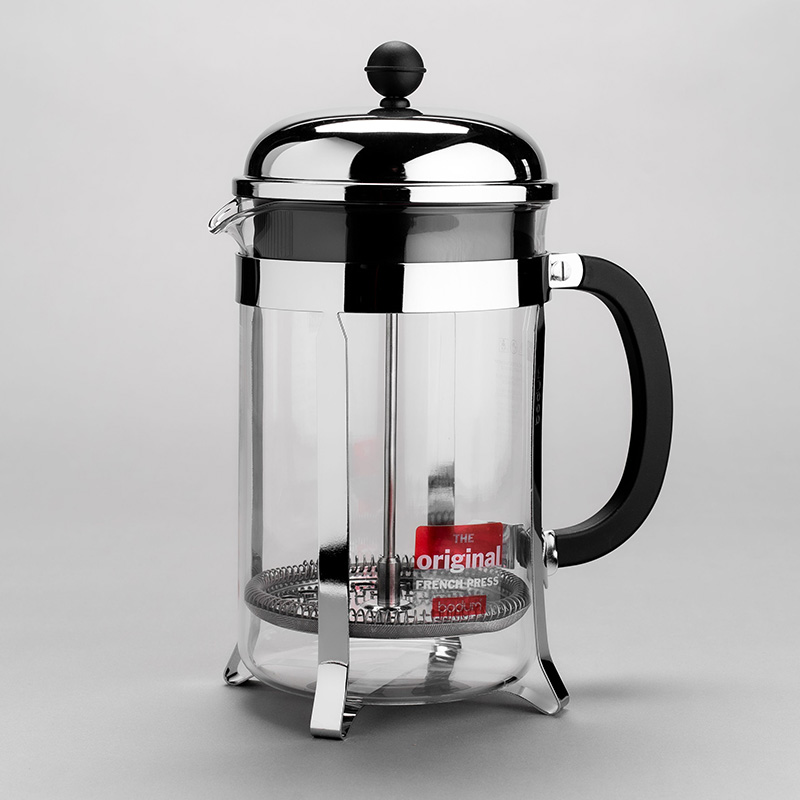
Key factors that change when to press a french press
Several variables alter the moment you should press a french press:
- Grind size — finer grinds extract faster. If you grind finer, press sooner to avoid over-extraction.
- Roast level — light roasts can handle slightly longer times to extract flavor; dark roasts extract faster and can become bitter with extra time.
- Water temperature — hotter water speeds extraction. Use 195–205°F (90–96°C) for most coffees.
- Coffee-to-water ratio — stronger brews often need less time to reach desired extraction.
- Agitation — stirring or plunging gently during brew increases extraction, so press earlier if you agitate a lot.
- Freshness and bean origin — very fresh beans or dense beans (e.g., high-altitude) can behave differently.
Tinker with one factor at a time to learn how each affects when to press a french press.
Step-by-step guide: exactly when to press a french press (practical routine)
Follow these steps the first few times to learn timing.
- Measure coffee and water — try 1:16 ratio (15 grams coffee to 240 grams water).
- Grind coarse — consistent size, like coarse sea salt.
- Heat water to 200°F (just off boil).
- Bloom — pour a little water to wet grounds and wait 30 seconds to release gases.
- Pour the rest of the water and start a timer at zero.
- Stir gently at 30 seconds to ensure even saturation.
- Press between 3:00 and 4:00 depending on taste. I start at 3:30.
- Serve immediately to avoid over-extraction in the carafe.
This routine helps you learn when to press a french press and gives consistent results.

Tasting cues and how to decide exactly when to press
Taste tells you more than time. Look for these cues:
- Under-extracted (press too soon) — tastes sour, thin, or grassy.
- Balanced (ideal press time) — clean acidity, sweetness, pleasant body.
- Over-extracted (press too late) — bitter, hollow, or harsh.
If you get sour notes, add 15–30 seconds next brew. If it’s bitter, reduce contact time or coarsen the grind. Try small changes and keep tasting notes. This real feedback helps you refine when to press a french press for your beans.
Common mistakes and how to avoid them
I see the same errors with beginners. Avoid these:
- Using too fine a grind — causes sludge and bitterness. Use coarse grounds.
- Ignoring water temperature — boiling water kills subtle flavors; let it cool briefly.
- Letting coffee sit after plunging — transfer to a carafe immediately to stop extraction.
- Relying only on the clock — taste and adjust. Use time as a guide.
- Skipping bloom — degassing unevenly can lead to poor extraction.
From my experience as a brewer, small fixes produce big improvements in when to press a french press.

Comparisons and related brewing tips
Knowing when to press a french press helps when comparing other methods:
- Pour-over — shorter contact time, finer grind, faster flow. Pressing a French press later gives more body.
- AeroPress — shorter steep time and pressure force extraction faster.
- Cold brew — very long steep times (12–24 hours) with coarser grounds for smooth low-acid cups.
If you want more body like a French press but cleaner clarity, try a double-filter pour-over or press and decant immediately.

Personal testing notes and real-life advice
I tested the same bean daily for a month. Results:
- 3:00 produced bright, fruity notes.
- 3:30 balanced sweetness and acidity.
- 4:00 emphasized body but added slight bitterness in lighter roasts.
Lesson learned: keep a brew log. Note grind, ratio, temp, and when to press a french press. Small changes matter. Also, enjoy the ritual—pressing at the right time makes every morning better.
Frequently Asked Questions of when to press a french press
How long should I steep in a French press for the best flavor?
Most brewers steep between 3 and 4 minutes. Start at 3:30 and adjust up or down based on taste and grind size.
Does grind size change when to press a French press?
Yes. Finer grinds extract faster so press sooner. Coarser grinds need more time.
What water temperature should I use before pressing?
Use water between 195–205°F (90–96°C). Slightly cooler water slows extraction and may need extra 15–30 seconds.
Should I stir or not during the brew?
A gentle stir at 30 seconds helps even extraction. Heavy agitation speeds extraction, so press earlier if you stir a lot.
Can I press early to make weaker coffee?
Yes, pressing earlier reduces extraction and weakens the cup. Adjust ratio or grind if you want less strength without losing balance.
Will pressing later always make coffee stronger?
Not always. Later pressing increases extraction but can also add bitterness. Balance time with grind and roast.
Conclusion
Timing is the single most powerful control over your French press cup. Press between 3 and 4 minutes to start, then tune the time based on grind, roast, water temperature, and taste cues. Keep simple notes, taste often, and adjust one variable at a time to learn when to press a french press for your ideal brew. Try a short test series this week—press at 3:00, 3:30, and 4:00—and decide which one you love. Share your results, subscribe for more tips, or leave a comment with your favorite timing.
