What Is The Purpose Of A French Press Coffee Maker: Guide

A French press brews rich, full-bodied coffee by steeping grounds and using a metal filter.
I’ve spent years testing brew methods and teaching others. When people ask what is the purpose of a french press coffee maker I explain its role clearly: it gives you direct control over extraction and delivers bold, oily coffee that highlights bean character. Read on for a friendly, expert guide that covers purpose, how it works, pros and cons, recipes, and real tips from hands-on experience.
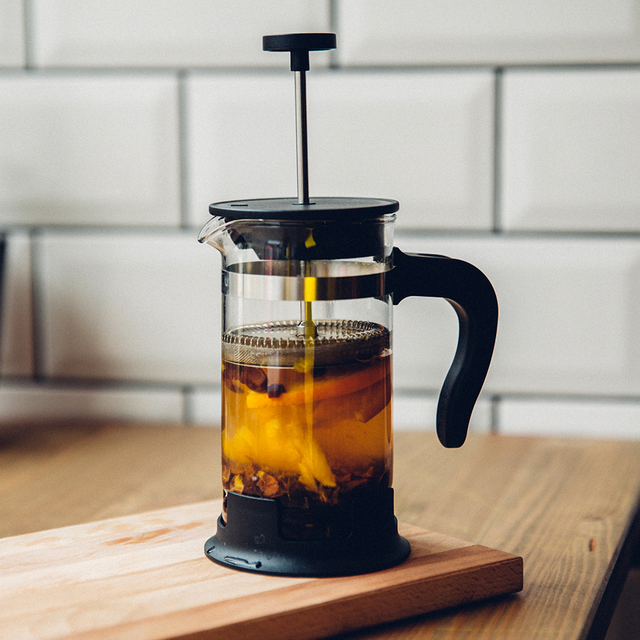
What is the purpose of a French press coffee maker?
The simple answer to what is the purpose of a french press coffee maker is to extract coffee by full immersion, producing a rich, tactile cup. The device uses coarse grounds, hot water, and a metal mesh filter so oils and fine solids stay in the brew.
Key purposes and uses:
- Make full-flavor coffee that preserves oils and aromatics.
- Offer hands-on control of brew time, temperature, and strength.
- Serve as a simple, low-tech method that needs no electricity.
- Brew concentrate for milk drinks or a strong black cup for slow sipping.
When people ask what is the purpose of a french press coffee maker they usually mean flavor and control. It shines when you want bold texture and clearer control over each variable.

How a French press works
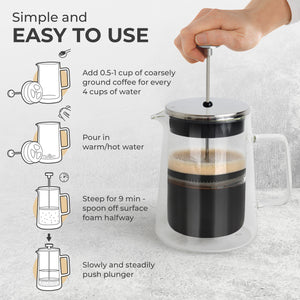
A French press brews by full immersion. Coarse coffee grounds steep in hot water. After a set time you press a metal-mesh plunger down to separate grounds from liquid. The mesh catches large particles but lets oils and fine sediments pass, which shapes the cup.
Steps in one line:
- Add coarse grounds, pour hot water, steep, then plunge slowly.
Understanding what is the purpose of a french press coffee maker helps you pick grind size, steep time, and pouring technique. The design is simple, but each small change alters taste and texture.
Benefits and flavor impact
A main reason people choose a French press is flavor. Because the metal filter allows oils and micro-fines into the cup, the brew feels heavier and more flavorful on the palate. This produces:
- Fuller body and richer mouthfeel compared with paper-filtered coffee.
- Stronger, more immediate perception of aroma and bean nuances.
- Flexibility to brew stronger or milder cups by adjusting grind and time.
If you want to know what is the purpose of a french press coffee maker for flavor, it’s all about preserving the elements that paper filters remove. That makes it perfect for single-origin beans and dark roasts where texture matters.

Common limitations and misconceptions
A French press is not perfect for every scenario. Common drawbacks:
- Some sediment in the cup can bother people who prefer a clear brew.
- Oils retained in the cup can speed stale flavors if coffee sits too long.
- Cleaning can be messier than with drip machines and requires rinsing grounds promptly.
Knowing what is the purpose of a french press coffee maker also means knowing its limits. It’s best for fresh servings and for people who enjoy body and texture over crystal-clear clarity.
How to use a French press: step-by-step
Follow a simple routine for consistent results. Here’s an easy recipe and technique I trust.
Classic method:
- Boil water and let cool 30 seconds to reach about 200°F.
- Add coarse grounds using a 1:15 to 1:17 ratio (coffee to water by weight).
- Pour half the water, bloom 30 seconds, stir gently, then add remaining water.
- Steep 4 minutes total, then press slowly and serve immediately.
If you’re learning what is the purpose of a french press coffee maker in practice, this routine will get you a clean, rich cup. From experience, using a scale and timer simplifies repeatable results.

Tips for best results and recipes
Small tweaks change the cup. Use these practical tips I learned the hard way.
- Grind size: coarse and even. Fines increase sediment and over-extraction.
- Water temp: 195–205°F is ideal. Too hot tastes bitter; too cool tastes flat.
- Stir once after 30 seconds to ensure even extraction.
- Plunge slowly; fast plunges force more fines into the cup.
Two quick recipes:
- Balanced cup: 1:16 ratio, 4-minute steep, coarse grind.
- Strong/milk drinks: 1:12 ratio, 3.5–4 minutes, slightly coarser grind.
To get the most from what is the purpose of a french press coffee maker try these ratios and adjust to taste. Keep notes each brew so you learn what each variable does.
Personal experience and lessons learned
I started using a French press daily after trying many brew methods. My early mistakes taught me a lot. I used a fine grind once and got grit in every sip. I let coffee sit on the press and the oils turned dull after 20 minutes.
Lessons I share:
- Clean the carafe and filter right away. Old oils ruin future brews.
- Use a burr grinder for consistent coarse grind. Blade grinders give uneven extraction.
- Serve immediately for best texture; reheat only if needed and expect flavor loss.
My experience answering what is the purpose of a french press coffee maker has shown me it’s both a brewing tool and a ritual. It invites slower moments and a mindful approach to coffee.

Frequently Asked Questions of what is the purpose of a french press coffee maker
What is the purpose of a french press coffee maker?
The purpose is to brew coffee by full immersion to produce a rich, full-bodied cup with oils and fine particles included. It gives direct control over time and strength.
Does a French press make stronger coffee?
Yes. A French press often tastes stronger because oils and fines increase perceived body and intensity, but you can control strength with ratio and grind size.
Is a French press better than drip coffee?
It depends on taste. A French press yields more body and texture, while drip with paper filters makes a cleaner, brighter cup.
How do I reduce sediment in a French press?
Use a coarser, even grind, plunge slowly, and let grounds settle a minute before pouring. Double mesh filters can also help.
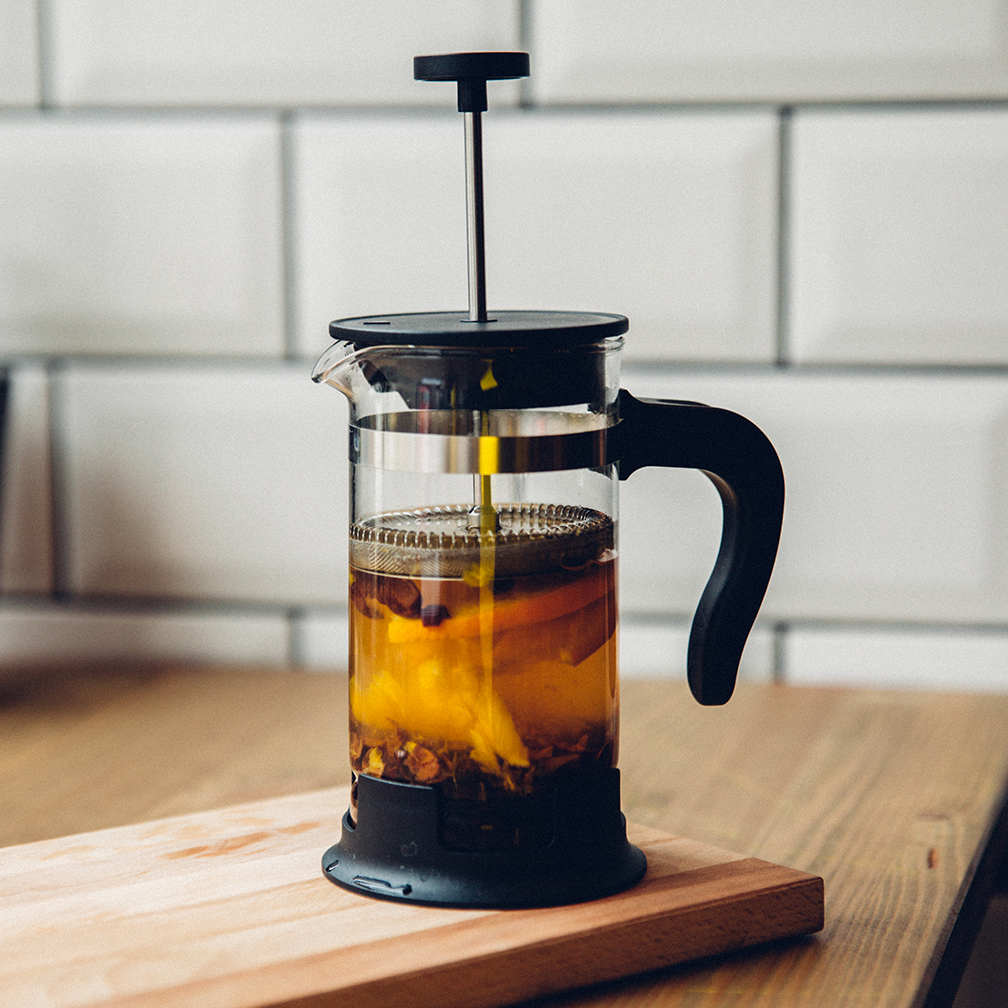
Can I use a French press for tea or cold brew?
Yes. A French press works for loose-leaf tea and cold brew. Steep times and ratios vary by ingredient and taste.
Conclusion
A French press coffee maker exists to give you a hands-on way to extract coffee that emphasizes body, aroma, and direct control. It excels when you want bold flavor and a tactile cup. Try the recipes and tips here, note your adjustments, and enjoy the ritual of brewing. If you found this helpful, try a batch with the steps above, leave a comment about your results, or subscribe for more simple, practical coffee guides.