

Air fryer heat circulation explained: hot air moves fast around food to brown and crisp it evenly.
I’ve spent years testing kitchen gear and explaining cooking tech. This guide breaks down air fryer heat circulation explained in plain language. You’ll learn how the air moves, what parts matter, why results change with placement, and how to fix common problems. Read on to master airflow and get more consistent, crispy meals from your air fryer.
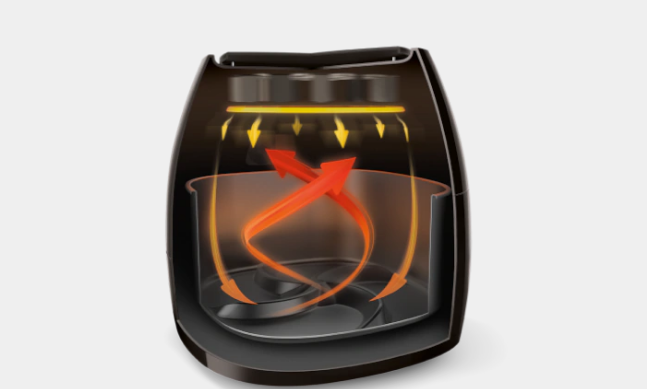
How air fryer heat circulation explained: the basics
Air fryer heat circulation explained means hot air is forced around food. Fans push heated air fast. The moving air removes moisture and forms a crispy layer. That’s why you get fried texture without much oil.
I’ve tested many models. Faster circulation gives more even browning. But too-fast or blocked airflow causes uneven cooking or cold spots. Understanding how the air moves helps you use the right basket, rack, and settings.

Key components that control circulation
Air fryer heat circulation explained starts with three parts:
- Fan and motor. These create the airflow. A stronger fan moves more air.
- Heating element. This heats the air fast and keeps it hot.
- Basket, tray, and vents. These guide air around the food.
Design matters. A top-mounted heating element with a powerful fan will circulate hot air quickly. Mesh baskets let air reach all sides of food. Solid trays can slow airflow and create shaded spots.

Airflow patterns and how they affect cooking
Air fryer heat circulation explained includes two main airflow patterns:
- Directed airflow. Air follows a set path, often from top down and out vents.
- Turbulent airflow. Air swirls and mixes for fast heat transfer.
Directed flow can give crisp tops and softer undersides. Turbulent flow equalizes temperature and browns more evenly. Many modern air fryers mix both to balance crust and interior doneness.

Practical tips to optimize heat circulation
Use these steps to improve results when air fryer heat circulation explained matters:
- Do not overcrowd the basket. Crowding blocks airflow and creates soggy food.
- Shake or flip foods midway. This redistributes air and evens browning.
- Use racks for layered cooking. Racks allow air below and above the food.
- Preheat briefly. Preheating ensures the air starts hot and moves heat in quickly.
- Choose the right tray. Mesh and perforated trays help airflow reach surfaces.
I learned early to avoid stacking items. One test batch of fries was limp until I spread them in a single layer. Little changes like this improve texture without higher heat.

Temperature, time, and circulation: why they interact
Air fryer heat circulation explained also covers timing and heat. Faster air flow transfers heat more efficiently. That means you can often lower temperature or shorten time.
If you raise temperature but keep poor circulation, the outside can burn while the inside stays raw. If circulation is strong, reduce time by 10–20% from conventional oven recipes. I track time closely when switching recipes between appliances.

Common problems, causes, and simple fixes
When air fryer heat circulation explained is ignored, these issues show up:
- Uneven browning. Caused by blocked airflow or overcrowding. Fix by spacing items and shaking food often.
- Soggy bottoms. Caused by trays that trap steam. Use a rack or perforated tray.
- Hot spots. Caused by fan imbalance or damaged parts. Clean vents and rotate trays to test.
If your air fryer still underperforms, try testing with a thermometer. Measure temperature at different points to check circulation patterns.
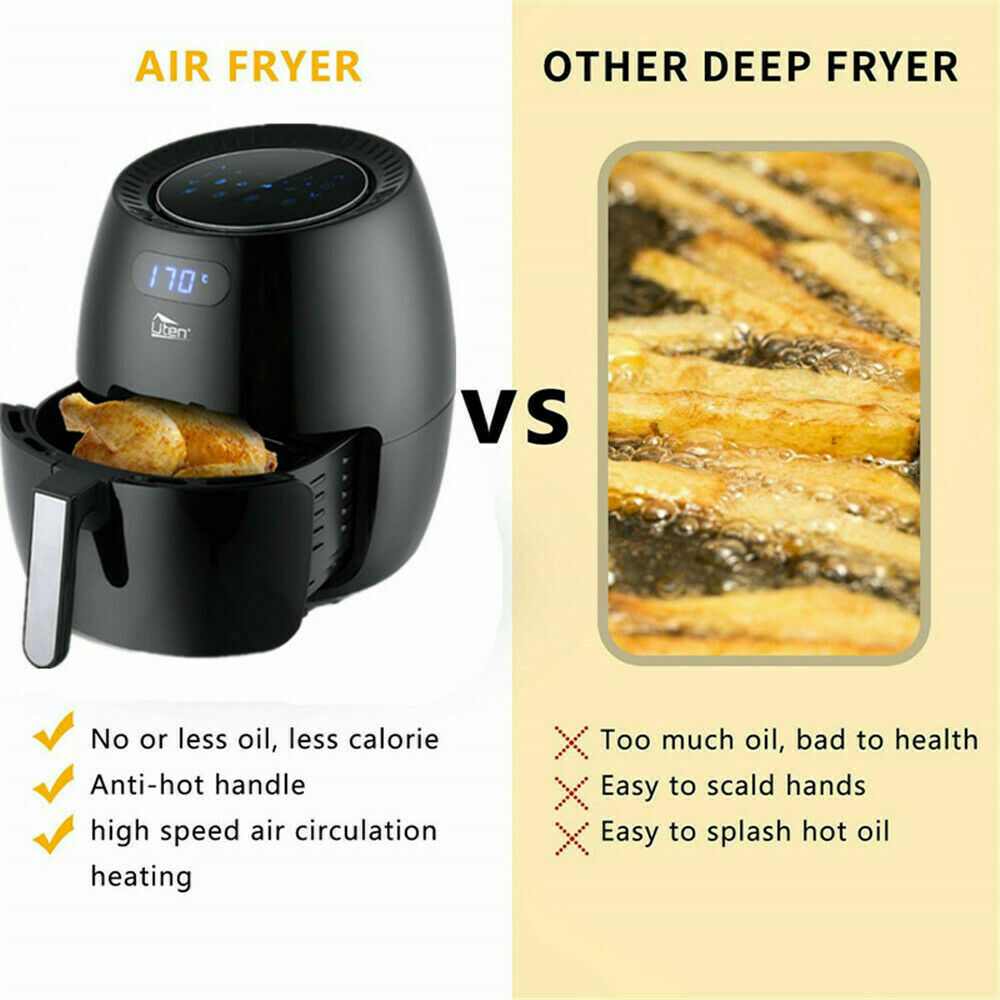
Design differences: basket vs oven-style circulation
Air fryer heat circulation explained varies with style:
- Basket-style models concentrate air in a compact cavity. They are fast and efficient for small batches.
- Oven-style models have larger volumes and multiple racks. They need stronger fans or longer times for the same crisp.
Choose the style that matches your cooking needs. For family meals, oven-style might be better. For quick snacks, a basket model usually wins for crispness.

Maintenance and care that preserve circulation
Keeping circulation strong is easy and important:
- Clean the fan housing and vents. Grease buildup blocks air paths.
- Replace warped trays. Warped metal can trap food and block flow.
- Check seals and gaskets. Poor seals let hot air escape and reduce flow.
I once left a tray with baked-on oil. Circulation dropped and my foods cooked unevenly until I deep-cleaned the unit. Regular cleaning prevents that.
Related concepts and deeper science
Air fryer heat circulation explained ties to broader cooking science:
- Convective heat transfer. Moving air carries heat to the food surface.
- Evaporation and the Maillard reaction. Moisture leaves the surface, allowing browning chemistry.
- Thermal gradients. Airflows reduce temperature gaps between food surfaces and cores.
Understanding these ideas helps with precise cooking. For example, drying the surface speeds the Maillard reaction and improves crispness.
My experience and mistakes to avoid
I’ve used dozens of units and made common mistakes:
- Overloading the basket reduces airflow and ruins texture.
- Using oily sprays that gum up the fan over time.
- Not preheating for frozen foods, which causes uneven cooking.
A small habit change fixed my results: I learned to space food and shake it once. That simple move made fries, wings, and vegetables crispier across models.
Frequently Asked Questions of air fryer heat circulation explained
How does air fryer heat circulation explained differ from convection ovens?
Air fryer heat circulation explained uses faster, more concentrated airflow in a smaller space. Convection ovens circulate air too, but in a larger cavity and often at lower speed.
Will cooking at higher fan speed always give better results?
Not always. Higher fan speed can brown the outside too fast while the inside stays undercooked. Balance fan speed with temperature and time.
Can I improve circulation in a small air fryer?
Yes. Avoid crowding, use perforated trays, and shake or flip food mid-cycle to help air reach all sides.
Does the basket material affect airflow?
Yes. Mesh or perforated baskets let air reach more surfaces and improve circulation, while solid trays can trap steam.
Should I preheat my air fryer for better circulation?
Preheating helps. Starting with hot air speeds heat transfer and improves initial browning and crispness.
Conclusion
Understanding air fryer heat circulation explained gives you control over texture, timing, and flavor. Keep air paths clear, avoid overcrowding, use the right trays, and adjust time or temperature when needed. Try one change at a time and note results. Mastering airflow will turn good air-fried meals into great ones. If this guide helped, try the tips on your next batch and leave a note about your results or questions.