

A French press delivers rich, full-bodied coffee with simple control over strength and flavor.
I’ve brewed with French presses for years and I know what makes them special. This guide will explain why use french press coffee maker, how it works, and how to get better coffee at home. I’ll share clear steps, real tips I learned the hard way, and the pros and cons so you can choose the right method for your taste and routine. Read on to master a simple tool that makes great coffee without fuss.
Why use french press coffee maker?
A French press is a straightforward tool that gives you full control of brew time, strength, and flavor. It uses immersion brewing and a metal mesh filter. That lets the coffee oils and tiny particles stay in the cup. The result is a fuller body and richer mouthfeel than many filtered methods.
People ask why use french press coffee maker when there are many other options. The answer lies in taste, control, and the low cost of entry. If you value hands-on brewing and bold flavor, this brewer makes sense. It is also durable and simple to clean.

How a French press works
The French press uses a simple design. Coarse coffee grounds are steeped in hot water. After a set time, you press a plunger with a mesh filter down. The filter separates grounds from liquid but lets oils through. This immersion process extracts flavors evenly. The result is a full-bodied cup with pronounced aroma.
Knowing how it works helps you control the outcome. Adjust grind size, water temp, and steep time. Small changes shift body, acidity, and bitterness. That flexibility is a big reason many coffee lovers ask why use french press coffee maker.
Benefits of using a French press coffee maker
- Full-bodied flavor. The metal filter keeps oils and fine particles. This creates a richer cup.
- Simple control. You decide grind, water, time, and ratio.
- Easy to use. No paper filters or special skill is needed.
- Cost-effective. A quality press is affordable and long-lasting.
- Portable and versatile. You can use it at home, work, or while camping.
- Environmentally friendly. No disposable filters mean less waste.
These benefits explain why use french press coffee maker for people who value flavor and control. It’s a winning balance of craft and convenience.

How to brew great coffee with a French press
Follow these steps for a reliable cup:
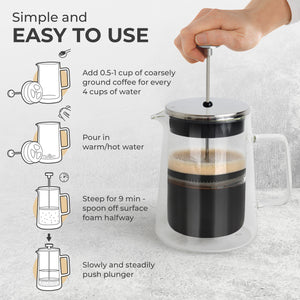
- Grind coffee coarse. The texture should be like sea salt.
- Measure ratio. Use about 1:15 to 1:17 coffee to water. For example, 20 g coffee to 300 g water.
- Heat water to about 200°F (just off boil). Let water sit 30 seconds if boiled.
- Add grounds to the press. Pour half the water and stir gently.
- Pour remaining water. Place lid with plunger up. Start a timer.
- Steep 4 minutes for balanced flavor. Steep 3–5 minutes to taste.
- Press slowly. Push the plunger down with steady pressure.
- Serve immediately. Leaving coffee in the press will make it bitter.
Repeat the process and tweak grind or time until you like the taste. This hands-on approach is why use french press coffee maker; you can fine-tune each variable.
Choosing the right French press and grind
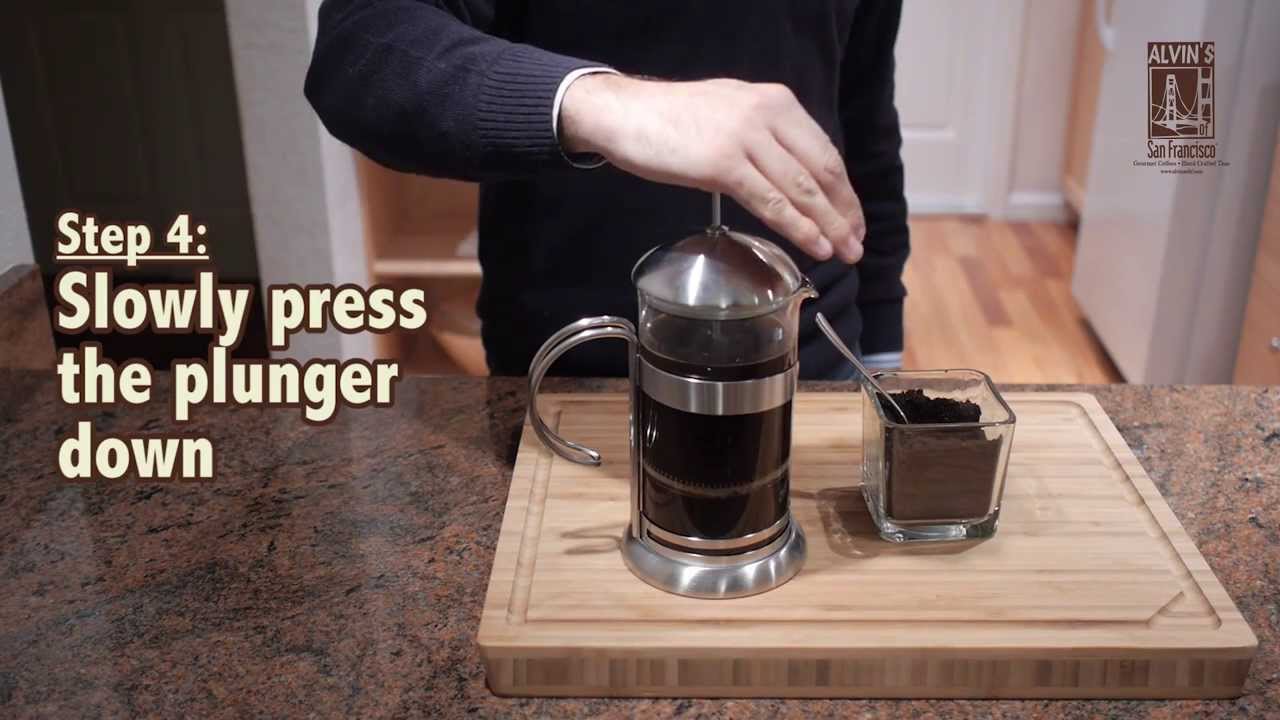
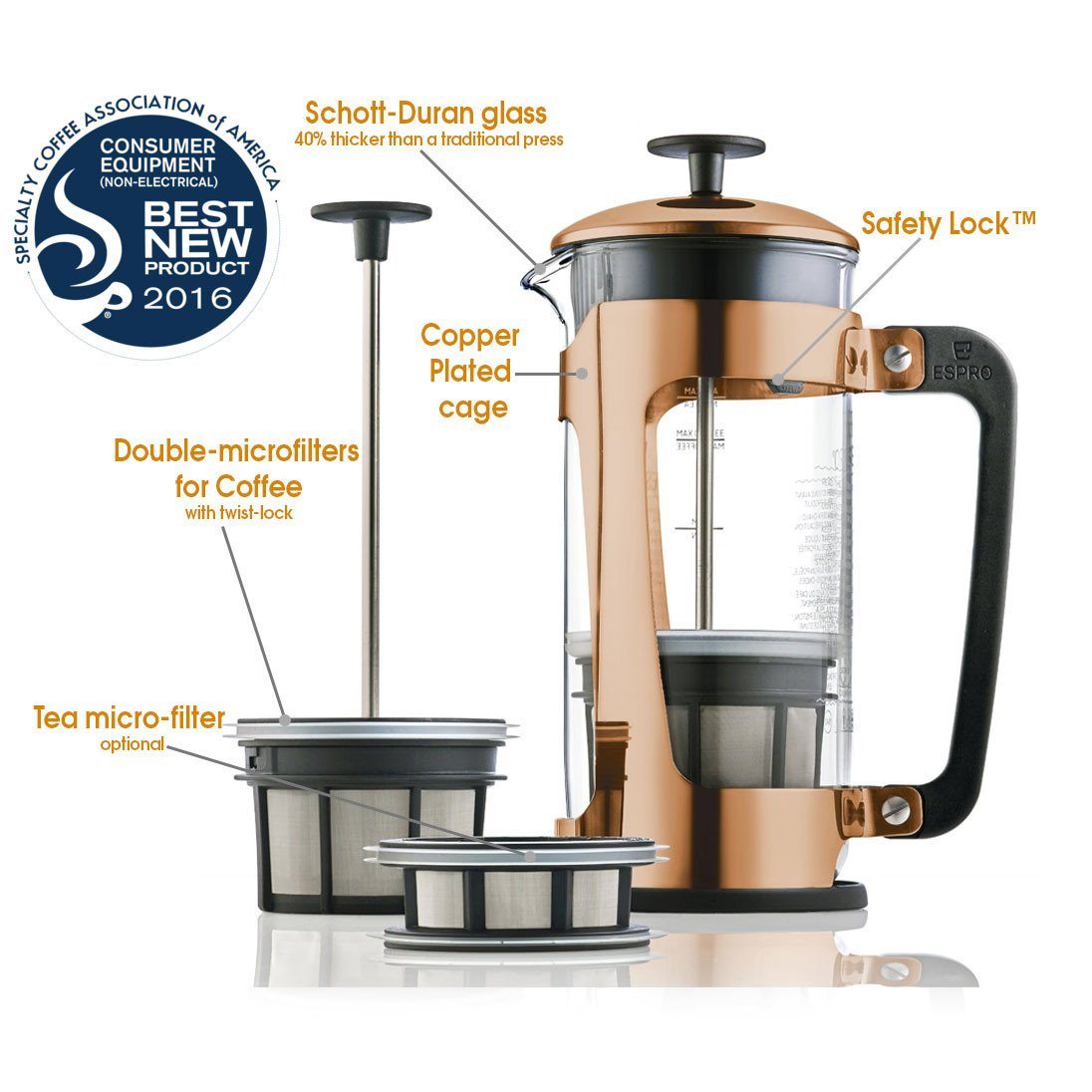
- Material matters. Glass presses show coffee color. Stainless steel keeps heat longer.
- Size. Choose one that matches your usual servings to avoid wasted heat.
- Filter quality. Look for a well-fitted, double-screen filter to reduce sediment.
- Grind consistency. A burr grinder gives steady coarse grounds. Avoid blade grinders.
When you ask why use french press coffee maker, part of the answer is that choosing the right press and grind makes a big difference. Spend a little on a grinder and press for much better results.
Taste, body, and health notes
The French press highlights coffee oils. That gives fuller body and stronger aroma. It also lets tiny particles through, which some people enjoy as texture. Be aware of a health point: unfiltered coffee can raise cafestol, a compound linked to higher cholesterol in some studies. If you have cholesterol concerns, discuss this with your doctor or alternate with paper-filter methods.
These trade-offs explain why use french press coffee maker for flavor lovers, while others may prefer filtered coffee for health reasons.
Limitations and when not to use a French press
- Sediment might bother some people. Expect some fines in the cup.
- Not the fastest. Brewing and cleaning take time compared to single-serve machines.
- Heat loss. Glass presses cool faster unless double-walled.
- Extraction risk. Over-steeping can make coffee bitter.
If you need quick, consistent shots or very clean cups for tasting, you might skip the press. But for everyday bold cups, a press often wins. This helps answer why use french press coffee maker in practical terms.

Personal experience and practical tips
I have used French presses for years. Early mistakes taught me clear lessons. I once used a too-fine grind. The result was gritty and overly bitter. Since then I use a coarse grind and a burr grinder. I also preheat the press with hot water to keep temperature steady.
Tips I learned:
- Preheat the carafe. It keeps brew temp steady.
- Stir gently after 30 seconds. It helps even extraction.
- Pour into a thermal server if you won’t drink right away.
- Clean the mesh filter after each use to avoid oil buildup.
These small habits improved my coffee fast. They show practical reasons why use french press coffee maker and how to get the best from it.

Related tools and when to choose them
- Pour-over. Choose this for clarity and bright acidity.
- AeroPress. Pick this for speed and low sediment.
- Espresso machine. Best for concentrated, high-pressure shots.
If you still ask why use french press coffee maker, think of it this way: choose the press for body and simplicity, and use other methods when you want different flavor profiles or speed.
People also ask
Does French press make stronger coffee?
Yes. French press often yields a heavier body and perceived strength because it keeps oils and fines. Strength also depends on ratio and grind.
How coarse should the grind be for a French press?
Grind should be coarse, similar to sea salt. Too fine leads to sediment and over-extraction.
Can you leave coffee in a French press?
You can, but flavor will continue to change and become bitter. Transfer coffee to a server if you won’t drink it right away.
Frequently Asked Questions of why use french press coffee maker
What makes French press coffee different from drip coffee?
French press coffee keeps natural oils and fine particles. Drip coffee uses paper filters to remove these elements, resulting in a cleaner cup.
Is French press coffee stronger in caffeine?
Not necessarily. Caffeine depends on roast, grind, and ratio. French press can taste stronger due to body and oils, but caffeine may be similar to other methods.
How do I reduce sediment in my French press cup?
Use coarser grounds and a quality double-screen filter. Pour gently and avoid pressing too hard to limit fines in the cup.
Is a glass or stainless steel French press better?
Glass shows the brew and is affordable. Stainless steel keeps heat longer and is more durable. Choose based on heat retention and lifestyle.
Can I use a French press for tea?
Yes. The immersion method works well for many loose-leaf teas. Adjust steep time and pour immediately to avoid bitterness.
Conclusion
A French press gives simple, reliable control over strength and flavor. It highlights body and aroma, and it fits hands-on brewers who value taste. Consider your priorities: if you want richer, fuller cups and don’t mind a bit of sediment, try a French press. Start with a coarse grind, a 1:15 ratio, and a 4-minute steep. Tweak from there to match your taste.
Try it for a week. Note what you like and adjust one thing at a time. If you found this useful, leave a comment, share your favorite ratio, or subscribe for more brewing tips.