Who Invented French Press Coffee History and Origin

No single person invented French press coffee. The modern brewer came from early French patents and later design changes.
If you’re asking who invented French press coffee, the short answer is that no single person gets full credit. The method grew through several patents and design updates, with early French records playing a big role.
That means the real story is less about one inventor and more about a chain of ideas. Once you know that history, the French press makes a lot more sense in your kitchen.
- Origin: Early French patents helped start the press-style coffee story.
- Inventor: No one person gets full credit for the modern French press.
- Brewing: Coarse grind and steady steeping improve taste and texture.
- Care: Clean the mesh, plunger, and carafe after each use.
Who Invented French Press Coffee? The Short Answer and the Real Story
The French press did not come from one neat invention moment. It came from a series of filter and plunger ideas that changed over time.
Most history points to early French patents as the key starting point. Later makers improved the design until it became the brewer we know today.
The key names linked to the first French press design
Several names show up in the early history of the French press. The most often cited are French inventors Mayer and Delforge, who filed an early patent in the 1850s.
Later, Italian designers also helped shape the modern version. Attilio Calimani and Faliero Bondanini are often linked to important updates in the 1900s.
So if you want the simplest answer, the first press-style idea is tied to France. But the modern French press came from more than one inventor.
Why the invention story is more complex than one person
Old coffee gear often changed through many patents. One person might sketch the idea, while another improves the filter, seal, or handle.
That is why coffee history can feel messy. A brewer may carry a famous name, but the final product often reflects years of small changes.
In short, the French press is a shared invention story.
How the name “French press” became common
The name “French press” became popular because early versions were tied to French patents and French design history. In many countries, people also used names like coffee plunger or press pot.
The term stuck because it was easy to say and easy to remember. Today, most home cooks know the device by that name, even if the design has a mixed past.
The French press is also called a press pot, cafetière, or coffee plunger in different places.
The History of French Press Coffee From Early Patents to Modern Use
The French press story starts with simple coffee filter ideas. People wanted a way to brew coffee without cloth bags or fine paper filters.
That need led to early plunger-style tools. Over time, the method became easier to use at home.
Early coffee filter ideas in the 1800s
In the 1800s, coffee makers were changing fast. Many designs tried to separate grounds from liquid in a cleaner way.
Some used cloth. Others used metal screens or simple plungers. These early ideas set the stage for the French press.
French patent records and the first press-style designs
French patent records from the mid-1800s show early press-like coffee tools. These designs were not always the same as today’s version.
Still, they mattered because they introduced the basic idea. Coffee could steep in hot water, then use a plunger to push grounds down.
That simple method became the heart of the French press.
How the design changed over time
Early models were often less refined than modern ones. Seals were rougher, filters were simpler, and some parts leaked more.
Later versions improved the mesh filter and the fit of the plunger. Makers also used stronger glass, metal, and heat-safe materials.
Those changes made the brewer more practical for everyday use.
Why the method spread across home kitchens
The French press spread because it was simple. You did not need a power cord, pods, or a special setup.
It also gave people control. You could change the grind, water amount, and steep time to match your taste.
For many kitchens, that mix of ease and control was a big win.
How a French Press Works and Why It Makes Different Coffee
A French press makes coffee by steeping grounds in hot water. Then you press a mesh filter down to separate the liquid from the grounds.
This process gives coffee a fuller body than many drip brewers. It also keeps more of the natural oils in the cup.
Basic parts of a French press maker
Most French presses have a few simple parts.
Holds the water and coffee grounds during brewing.
Moves down to separate grounds from the brewed coffee.
Helps trap grounds while coffee pours out.
Help with pouring and safer handling of hot liquid.
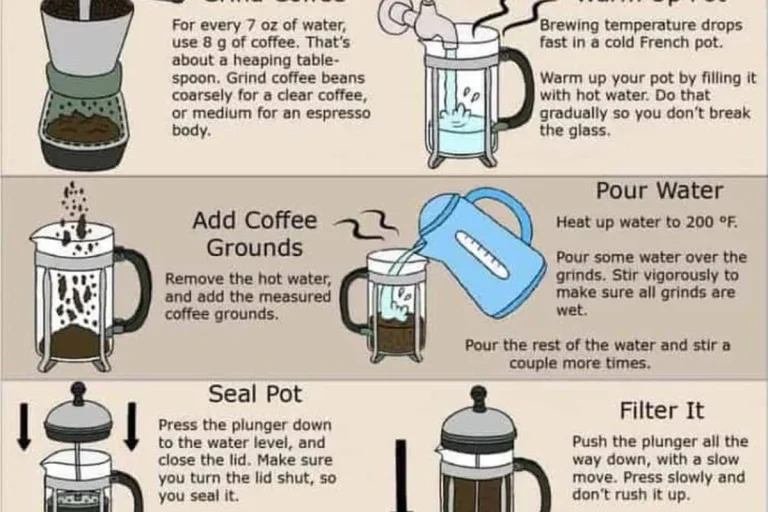
Step-by-step brewing process
Use a coarse grind and place it in the carafe.
Cover the grounds evenly and stir if needed.
Wait a few minutes so the flavor can develop.
Lower the plunger with steady pressure.
Serve soon after pressing for the best taste.
How steeping changes flavor and body
Steeping lets water pull flavor from the coffee grounds over time. That gives the cup a rich, round taste.
Because the filter is fairly open, some fine bits and oils stay in the drink. That is why French press coffee often tastes heavier than drip coffee.
Why grind size and brew time matter
Grind size changes how fast water pulls flavor from the coffee. A coarse grind helps keep the cup balanced and less muddy.
Brew time matters too. Too short, and the coffee can taste weak. Too long, and it can turn bitter.
What You Need for Better French Press Coffee
Good French press coffee does not need fancy gear. It does need a few basics done well.
Small changes can make a big difference in taste.
Best coffee grind for French press brewing
A coarse grind usually works best. Think of the texture of rough sea salt.
Fine grinds can slip through the filter and make the cup gritty. They can also make over-extraction more likely.
Water temperature and ratio basics
Hot water should be warm, but not boiling hard for most brews. Very hot water can pull harsh flavors from the grounds.
The coffee-to-water ratio varies by taste and brewer size. If you like stronger coffee, use a little more coffee. If you like a lighter cup, use a little less.
Exact ratios can vary by bean, roast, and press size. Check your brewer manual if it gives a starting guide.
Useful tools and optional extras
You can brew with just the press, coffee, and water. Still, a few extras can help.
- A kitchen scale can make your ratio more consistent.
- A kettle with a steady pour helps wet grounds evenly.
- A timer keeps steeping time more exact.
- A spoon helps break up dry clumps after pouring.
Common beans and roast styles that work well
Many people like medium and dark roasts in a French press. Those roasts often give a fuller body and deeper flavor.
That said, lighter roasts can also work well. They may taste brighter and more lively, especially if you like fruit notes.
Benefits and Limits of French Press Coffee
The French press has stayed popular for a reason. It offers a simple brew with a lot of flavor.
But it also has a few trade-offs. Knowing both sides helps you decide if it fits your kitchen.
Why many coffee drinkers love this method
People often love the French press because it feels low fuss. There are no pods, no paper filters, and no machine to program.
It also gives a hands-on feel. If you enjoy making coffee as a small morning ritual, this method can be satisfying.
Flavor, texture, and control advantages
French press coffee often tastes bold and full. The mesh filter lets more oils stay in the cup.
You also control the brew time and strength. That makes it easy to fine-tune the result.
- Simple setup with no power needed
- Rich body and strong coffee flavor
- Easy to adjust strength and steep time
- Works well in small kitchens and travel setups
Where French press coffee falls short
The cup can have some sediment, especially if the grind is too fine. Some drinkers do not mind that.
Cleanup also takes a little more effort than a drip machine. You need to empty the grounds and wash the parts well.
Who this brewing style suits best
A French press suits people who like rich coffee and simple tools. It also fits small kitchens where counter space matters.
If you want a fast one-button brew, another coffee maker may suit you better.
Common Mistakes People Make With French Press Coffee
Most French press problems come from a few easy mistakes. The good news is that they are simple to fix.
Using the wrong grind size
Fine grind can make coffee muddy and hard to press. It can also leave more grit in the cup.
Use a coarse grind for a cleaner result. That is one of the easiest upgrades you can make.
Brewing too long or too short
Short brew times can leave coffee thin and weak. Long brew times can make it bitter.
Try a steady brew time and adjust from there. Small changes are usually enough.
Using water that is too hot
Boiling water can burn the grounds and sharpen the taste. That can make the cup feel harsh.
Let the water rest briefly after boiling if needed. That often gives a smoother result.
Pressing too hard or pouring too fast
You do not need to force the plunger down. Slow, steady pressure works better.
Pouring too fast can stir up the grounds at the bottom. That can make the last sip gritty.
Your coffee tastes bitter or muddy.
Use a coarser grind, shorten the steep, and press more slowly.
Cleaning, Maintenance, and Safety Tips for French Press Owners
A French press is easy to care for, but it still needs regular cleaning. Coffee oils can build up fast.
Good care also helps the brewer last longer and stay safer to use.
How to clean the carafe, plunger, and filter
Rinse the parts soon after brewing so grounds do not stick. Then wash with warm water and mild soap.
Pay attention to the mesh filter and lid. Fine grounds can hide in small spaces.
Empty grounds, rinse parts, and wash with mild soap.
Check the mesh, seals, and plunger fit for wear.
How often to replace worn parts
Replacement timing depends on the model and how often you use it. Mesh filters and seals may wear out first.
If the plunger feels loose or the filter looks bent, check for replacement parts in the manual or from the maker.
Safety tips for glass and hot water use
Hot glass and boiling water can cause burns. Handle the brewer carefully and keep it away from the edge of the counter.
Check glass carafes for chips or cracks before each use. Stop using damaged equipment right away.
Simple care habits that help it last longer
Do not slam the plunger down. That can stress the filter and glass.
Store the brewer dry when you are done. That helps reduce odor and buildup.
Follow the appliance manual and stop using damaged equipment.
Final Verdict: Is the French Press Still Worth Using in 2026?
Yes, the French press is still worth using in 2026 for many home coffee drinkers. It remains one of the simplest ways to make rich, full coffee.
It also works well for people who want control without a big machine.
Best reasons to choose a French press today
Choose a French press if you want low-cost, low-tech brewing. It is also a good fit if you like bold flavor and a hands-on routine.
For small kitchens, it can be a smart choice because it stores easily and needs little space.
When another coffee maker may be a better fit
Pick another brewer if you want a cleaner cup with less sediment. A drip machine or pour-over may suit you better.
You may also prefer a different option if speed and convenience matter more than ritual.
Clear recommendation from the Red Kitchen Project Editorial Team
Our take is simple. If you want easy brewing, strong flavor, and a classic coffee ritual, the French press still earns its place.
If you want the cleanest cup with the least cleanup, another brewer may be the better daily match.
The French press has a long, shared history, but its appeal is still easy to understand. It is a great pick for rich flavor and simple home brewing, while lighter, cleaner cups may call for a different maker.
- The French press came from several inventors, not just one person.
- French patents and later design updates shaped the modern brewer.
- Coarse grind, steady steeping, and gentle pressing improve the cup.
- It is still a strong choice for simple, flavorful coffee in 2026.
Frequently Asked Questions
No single person invented the French press. Early French patents and later Italian updates helped shape the modern brewer.
The name comes from early French patent history and press-style coffee designs linked to France. Different countries also use names like coffee plunger or press pot.
A coarse grind usually works best. Fine grounds can make the coffee muddy and harder to press.
Use hot water that is not at a hard boil. Very hot water can pull harsh flavors from the coffee.
Rinse the parts after use, then wash them with warm water and mild soap. Check the mesh filter and seals often for buildup or wear.
Yes, if you like rich flavor and simple brewing. If you want a cleaner cup with less sediment, another brewer may suit you better.