How Hot Does an Instant Pot Get? A Simple Guide for Home Cooks

If you have ever looked at your Instant Pot and wondered what is actually happening inside that sealed pot, you are not alone. Many home cooks ask the same question: how hot does an Instant Pot get, and is it hotter than boiling water on the stove?
The short answer is yes, it can get hotter than regular boiling water when pressure cooking. That extra heat is the reason an Instant Pot can turn tough meat tender, cook beans faster, and make weeknight meals easier.
In this guide, we will break down Instant Pot temperatures in plain English. You will learn how hot it gets on pressure cook, sauté, slow cook, and keep warm modes, what those temperatures mean for food safety, and when heat problems may signal a bigger appliance issue.
Quick Answer
An Instant Pot usually reaches about 239°F to 244°F on high pressure, depending on the model and pressure setting. That is hotter than boiling water at 212°F because the sealed lid traps steam and raises pressure. Other modes, like sauté, slow cook, and keep warm, use lower or adjustable temperatures.
Why an Instant Pot Gets Hotter Than Boiling Water
Water normally boils at 212°F at sea level. In a regular open pot, water turns into steam and escapes into the air. The temperature stays close to boiling.
An Instant Pot works differently.
When you lock the lid and seal the steam release valve, steam builds inside the pot. That trapped steam raises the pressure. Higher pressure lets water and steam get hotter than they would in an open pot.
That is why pressure cooking is faster than regular cooking.
A pot roast that may take hours in the oven can become tender much faster in an Instant Pot because the food is surrounded by hotter steam and moist heat.
According to the official Instant Pot frequently asked questions, high pressure is commonly around 10.2 to 11.6 psi, with a working temperature of about 239°F to 244°F.
Instant Pot Temperature by Cooking Mode
The temperature depends on the function you choose. Pressure Cook, Sauté, Slow Cook, Yogurt, and Keep Warm do not all heat the same way.
Here is a simple guide.
| Instant Pot Mode | Approximate Temperature Range | Best Used For |
|---|---|---|
| High Pressure | About 239°F–244°F | Meat, beans, rice, soups, stews |
| Low Pressure | Lower than high pressure, model-dependent | Delicate foods, eggs, seafood, vegetables |
| Sauté | Roughly stovetop-style heat, varies by setting | Browning meat, cooking onions, reducing sauces |
| Slow Cook | Usually lower steady heat | Soups, chili, stews, slow-cooker-style meals |
| Keep Warm | Around food-holding temperature | Holding cooked food before serving |
| Yogurt | Low controlled heat | Fermenting yogurt |
These numbers are useful, but remember one thing: the Instant Pot controls heat automatically. You do not set an exact oven-style temperature in most modes. Instead, the appliance uses sensors to heat, pause, and adjust as needed.
How Hot Does an Instant Pot Get on High Pressure?
On high pressure, most Instant Pot models work around 239°F to 244°F.
That is the main temperature range people mean when they ask, “how hot does an Instant Pot get?”
This higher heat helps with:
- Cooking dried beans faster
- Tenderizing beef chuck, pork shoulder, and chicken thighs
- Softening root vegetables
- Making broth and stock
- Cooking rice and grains efficiently
For everyday home cooks, the key idea is simple:
High pressure means high heat plus trapped steam.
That is why a 30-minute pressure cook can sometimes replace several hours of simmering.
Does Food Actually Reach 244°F?
Not always in every part of the food.
The steam and liquid inside the pot may reach pressure-cooking temperatures, but thick foods heat from the outside inward. A large roast, frozen chicken breast, or dense casserole-style dish needs enough time for the center to become fully hot.
This is why food safety still matters.
For meat, poultry, leftovers, and mixed dishes, use a food thermometer when needed. The USDA explains that bacteria grow quickly in the 40°F to 140°F “danger zone,” so cooked food should not sit too long at unsafe temperatures. You can review the USDA’s guidance on the food safety danger zone for safe holding and leftover handling.
How Hot Does an Instant Pot Get on Low Pressure?
Low pressure is cooler than high pressure. The exact temperature can vary by model.
Low pressure is useful when you want gentler cooking. It is often better for foods that can overcook quickly.
Use low pressure for:
- Eggs
- Fish
- Tender vegetables
- Some custards
- Delicate grains
Many beginners use high pressure for everything because recipes often call for it. That works for many meals, but low pressure gives you more control when texture matters.
For example, broccoli can turn mushy very fast under high pressure. Low pressure, or even steaming without pressure, may give better results.
How Hot Does an Instant Pot Get on Sauté Mode?
Sauté mode is the Instant Pot function that feels most like cooking on a stovetop. It heats the bottom of the inner pot so you can brown, soften, simmer, or reduce food before pressure cooking.
Most Instant Pot models offer Sauté settings such as:
- Less or Low
- Normal or Medium
- More or High
Use these settings like you would use burner levels on a stove.
Best Uses for Sauté Mode
Sauté mode is helpful for building flavor before pressure cooking.
Use it to:
- Brown ground beef before chili
- Sear stew meat before adding broth
- Cook onions and garlic
- Toast spices
- Reduce a watery sauce after pressure cooking
Do not walk away during Sauté mode. Unlike pressure cooking, the lid is open and the bottom of the pot can get hot enough to scorch food.
If onions or garlic start browning too fast, press Cancel, stir, and switch to a lower setting.
Can an Instant Pot Get Too Hot?
Yes, but the appliance is designed to detect many overheating issues.
If the bottom gets too hot, many models show a Burn, Food Burn, or similar warning. This usually means food is sticking to the bottom or there is not enough thin liquid to create steam.
Common causes include:
- Too little liquid
- Thick sauce on the bottom
- Tomato paste touching the base
- Burned bits left after sautéing
- Rice or pasta stuck to the bottom
- Sealing ring not installed correctly
- Steam release valve left open
The Burn message does not always mean your meal is ruined. It means the Instant Pot is warning you before the problem gets worse.
What to Do If Your Instant Pot Shows a Burn Warning
Stay calm. Do not force the lid open.
Follow these steps:
- Press Cancel.
- Let the pressure come down naturally for a few minutes.
- Carefully release remaining pressure if the recipe allows it.
- Open the lid away from your face.
- Check the bottom of the inner pot.
- Scrape up stuck food with a wooden or silicone spoon.
- Add more thin liquid if needed.
- Restart cooking only if the food is safe and not badly burned.
Never put your face, hand, or cabinets directly over the steam release valve. Steam burns can happen quickly.
Why Liquid Matters for Instant Pot Heat
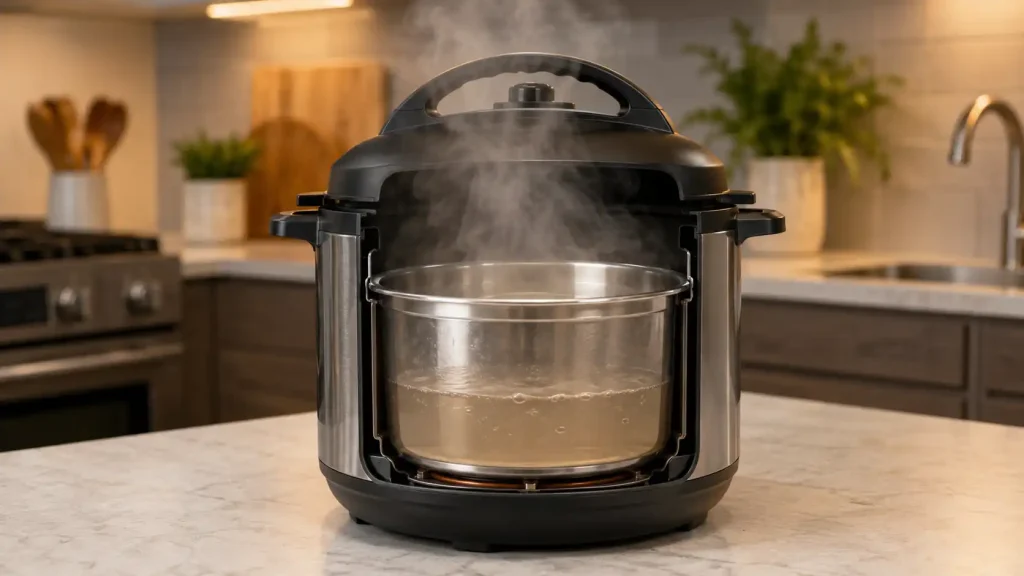
Pressure cooking needs steam. Steam comes from liquid.
If there is not enough liquid, the pot cannot build pressure properly. Instead, the bottom may overheat, and food may burn.
Most Instant Pot recipes need at least some thin liquid, such as:
- Water
- Broth
- Stock
- Thin sauce
- Cooking wine
- Juice for some recipes
Thick sauces are different. Tomato sauce, cream sauce, barbecue sauce, and condensed soup can burn if placed directly on the bottom without enough thin liquid underneath.
A good rule for beginners:
Thin liquid goes on the bottom. Thick sauces go on top and should not be stirred in unless the recipe says so.
Instant Pot Heat and Food Safety
The Instant Pot can get very hot, but safe cooking still depends on time, food size, and proper handling.
Pressure cooking is strong, but it is not magic. A thick piece of frozen meat needs more time than small fresh pieces. A full pot takes longer to heat than a half-full pot.
For safer results:
- Cut large pieces of meat into smaller chunks when possible.
- Do not overfill the inner pot.
- Use enough liquid.
- Check thick meats with a food thermometer.
- Refrigerate leftovers promptly.
- Do not use Keep Warm as a way to cook raw food.
Keep Warm is for holding cooked food. It is not designed to safely cook raw chicken, beef, pork, or seafood.
How Hot Is Keep Warm Mode?
Keep Warm mode is much lower than pressure cooking. Its job is to hold cooked food at a serving temperature, not to cook it from raw.
This is useful when dinner is ready but your family is not at the table yet.
Keep Warm works well for:
- Soup
- Chili
- Stew
- Cooked rice for a short time
- Braised meat
- Warm dips
But there are limits.
Food can dry out, thicken, or become mushy if it sits too long. Rice may stick. Pasta may swell. Vegetables can lose texture.
For best quality, use Keep Warm for short holding times when possible.
Is the Outside of the Instant Pot Hot?
The outside of an Instant Pot usually does not get as hot as the inside, but it can still become warm or hot during cooking.
Pay attention to:
- The lid
- Steam release area
- Metal parts
- Inner pot rim
- Condensation collector
- Steam after pressure release
The steam release valve is the biggest burn risk. Hot steam can cause injury faster than hot water because it carries a lot of heat.
Keep the Instant Pot away from low cabinets when releasing pressure. Steam can damage wood finishes, paint, and cabinet surfaces over time.
Can You Use an Instant Pot for Canning?
Most Instant Pot models are not recommended for pressure canning.
This is important because pressure canning requires very specific pressure and temperature control for food safety. Low-acid foods, such as green beans, meat, and broth, need tested canning conditions to prevent serious foodborne illness.
Some models may have canning-related programs, but you should only follow the manufacturer’s instructions and tested canning guidance.
For everyday home cooks, the safe advice is simple:
Do not assume your Instant Pot can replace a proper pressure canner.
Check your exact model manual first. Instant provides a central page for Instant Pot product manuals, which is the best place to confirm what your specific appliance can and cannot do.
Expert Tip
Expert Tip:
After using Sauté mode, always deglaze the pot before pressure cooking. Add a splash of water or broth and scrape the bottom until it feels smooth. This helps prevent Burn warnings and improves flavor.
How Instant Pot Temperature Affects Cooking Results
Heat affects more than speed. It changes texture, moisture, flavor, and tenderness.
Meat
High pressure is excellent for tough cuts. Beef chuck, pork shoulder, ribs, and chicken thighs do well because moist heat breaks down connective tissue.
But lean meats can dry out if overcooked. Chicken breast, pork loin, and fish need shorter cooking times.
Rice and Grains
Rice cooks well because pressure heat pushes moisture into the grain. But too little water can cause sticking or burning.
Rinse rice when the recipe recommends it. Starch on the surface can foam and clog the valve.
Beans
Dried beans benefit from high pressure. They cook faster than on the stove.
However, do not overfill the pot. Beans foam and expand. For foamy or expanding foods, keep the fill level lower.
Vegetables
Vegetables cook very quickly under pressure. Dense vegetables like potatoes and carrots handle high pressure well. Tender vegetables like zucchini, broccoli, and asparagus can overcook in minutes.
Buying Guide: Does Temperature Matter When Choosing an Instant Pot?
For most home cooks, all standard Instant Pot models get hot enough for pressure cooking. The bigger buying decision is not just temperature. It is how much control, size, and convenience you need.
Consider these features:
- Size: A 6-quart model suits most families. A 3-quart is better for singles or small kitchens. An 8-quart helps with batch cooking.
- Pressure options: Some models offer both low and high pressure. This is useful for delicate foods.
- Sauté control: More heat levels give better browning control.
- Display and controls: Clear buttons help beginners avoid mistakes.
- Inner pot quality: Stainless steel is durable and handles scraping better than nonstick coatings.
- Replacement parts: Sealing rings, lids, valves, and inner pots should be easy to find.
- Support and manuals: A model with clear documentation is easier to use safely.
A budget Instant Pot can be excellent for soups, rice, beans, and basic pressure cooking. A higher-end model may be worth it if you cook often, want more settings, or prefer better controls.
Warning Signs Checklist
Use this table to decide whether a heat issue is normal or needs attention.
| Warning Sign | What It May Mean | What to Do |
|---|---|---|
| Burn message appears often | Food sticking, not enough liquid, thick sauce on bottom | Deglaze, add thin liquid, layer ingredients correctly |
| Steam leaks around lid | Sealing ring missing, damaged, or not seated | Reinstall or replace sealing ring |
| Pot never reaches pressure | Valve open, not enough liquid, lid issue | Check valve, liquid, lid, and ring |
| Circuit breaker trips | Electrical issue or overloaded circuit | Unplug and stop using until checked |
| Shock from appliance | Possible electrical fault | Unplug immediately |
| Cracked lid or damaged valve | Pressure safety risk | Do not use; contact support |
| Food undercooked after normal time | Large pieces, frozen food, too full | Add time and check internal temperature |
Electrical problems should be taken seriously. The CPSC advises that if an appliance repeatedly trips a breaker, blows a fuse, or gives a shock, it should be unplugged and repaired or replaced according to CPSC electrical safety guidance.
Common Mistakes Home Cooks Should Avoid
- Using too little liquid. Pressure cooking needs steam. Without enough thin liquid, food may burn.
- Filling the pot too high. Overfilling can block steam flow and affect pressure.
- Stirring thick sauces into the bottom. Layer tomato sauce, cream sauce, or barbecue sauce on top unless the recipe says otherwise.
- Touching the steam release area. Steam can burn skin quickly.
- Opening the lid before pressure drops. Never force the lid open.
- Using Keep Warm to cook raw food. It is for holding cooked food, not cooking from scratch.
- Ignoring damaged parts. A cracked lid, loose valve, or worn sealing ring can affect safety.
- Assuming every model works the same. Buttons, pressure levels, and features vary by model.
When to Contact Customer Support or Replace the Appliance
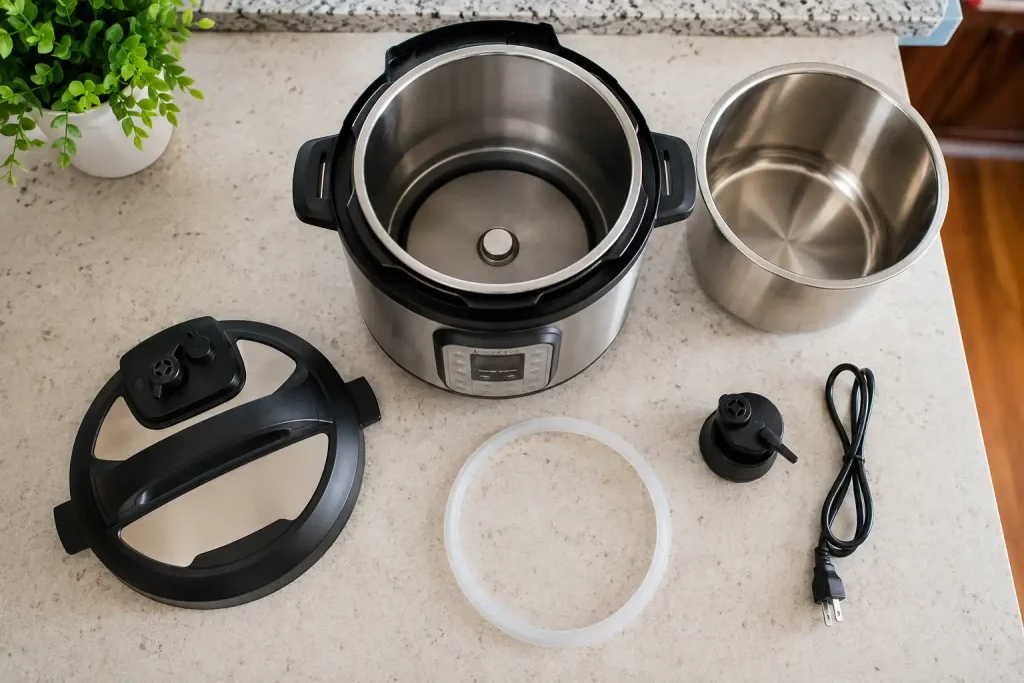
Some Instant Pot problems are easy to fix at home. Others are not worth the risk.
You can usually handle simple issues like:
- Cleaning the inner pot
- Replacing a sealing ring
- Checking the steam release valve
- Deglazing after sautéing
- Adding more liquid
- Reading the model manual
But you should contact customer support or stop using the appliance if you notice:
- A cracked lid
- A damaged locking pin
- A melted base
- A burning plastic smell
- Repeated electrical tripping
- Shock or tingling when touching the appliance
- A damaged power cord
- Steam escaping from unusual places
- Error codes that keep returning
Do not open the base or attempt electrical repairs yourself. The heating element, sensors, wiring, and pressure controls are not safe DIY repair areas for most home cooks.
Replacement may make more sense if the unit is old, parts are unavailable, or repair costs approach the price of a new Instant Pot.
Should You Upgrade to a Newer Instant Pot?
Upgrade only if the newer model solves a real problem for you.
A new Instant Pot may be worth it if:
- Your current model has limited pressure settings.
- You want a better display.
- You cook for more people and need a larger size.
- Replacement parts are hard to find.
- Your current unit has repeated heat or pressure problems.
- You want added functions like air frying or sous vide.
Keep your current model if it works well, seals properly, and fits your cooking habits. A basic Instant Pot can still make excellent soups, beans, rice, stews, and weeknight dinners.
FAQs
How hot does an Instant Pot get on high pressure?
Most Instant Pot models reach about 239°F to 244°F on high pressure. This is hotter than boiling water because pressure traps steam inside the sealed pot.
Is an Instant Pot hotter than a slow cooker?
Yes, during pressure cooking. An Instant Pot on high pressure gets much hotter than a slow cooker. However, the Instant Pot’s Slow Cook mode uses lower heat, closer to slow-cooker-style cooking.
Can an Instant Pot get hot enough to burn food?
Yes. Food can burn if there is not enough liquid, if thick sauce sits on the bottom, or if food sticks after Sauté mode. The Burn warning helps alert you before the problem gets worse.
Is Keep Warm mode safe for food?
Keep Warm can safely hold already cooked food for a limited time, but it should not be used to cook raw food. For best quality, do not leave food warming longer than necessary.
Why does my Instant Pot say Burn?
The Burn message usually means the bottom is too hot. Common causes include low liquid, stuck food, thick sauce, or ingredients layered incorrectly.
Does the outside of the Instant Pot get hot?
The outside can get warm, and some parts can become hot. The steam release area is the main burn risk. Keep hands, face, children, and cabinets away from escaping steam.
Do all Instant Pot models reach the same temperature?
Most standard models have similar high-pressure cooking temperatures, but features vary. Some models include low pressure, max pressure, air frying, or more advanced temperature controls.
Conclusion
So, how hot does an Instant Pot get? On high pressure, it usually reaches about 239°F to 244°F, which is hotter than boiling water and hot enough to cook many foods faster than traditional methods.
For everyday home cooks, the most important things are simple: use enough liquid, avoid overfilling, respect the steam, and choose the right mode for the food. High pressure is great for tough meats, beans, rice, and stews. Lower or gentler settings are better for delicate foods, warming, and slow-style cooking.
Before buying, repairing, or replacing an Instant Pot, think about how you actually cook. A basic model may be all you need. A more advanced model may be worth it if you want more control, better settings, or extra cooking functions.
Use your Instant Pot with care, follow your model manual, and you can make faster, safer, better meals with much more confidence.