How Much Dry Pasta Is 1 Cup Cooked Easy Guide

About 2 ounces of dry pasta usually makes 1 cup cooked. The exact amount can change with pasta shape, cooking time, and how you measure it.
If you want 1 cup of cooked pasta, start with about 2 ounces of dry pasta. That is the best general answer for most common shapes, but the exact amount can shift a little by shape and how long you cook it.
- Simple rule: 2 ounces dry pasta usually equals 1 cup cooked.
- Best accuracy: Use a kitchen scale for steady portions.
- Shape matters: Spaghetti, penne, and rotini can measure differently.
- Common mistake: Do not pack dry pasta tightly into a cup.
How Much Dry Pasta Is 1 Cup Cooked

The short answer is simple. For most dry pasta, 2 ounces makes about 1 cup cooked.
That works well for spaghetti, penne, rotini, and elbow pasta. Still, the final cup can look a little different from one shape to another.
The quick answer for common pasta shapes
Here’s the easy rule most home cooks use. About 2 ounces of dry pasta equals 1 cup cooked pasta.
For a rough kitchen shortcut, that is often near 1 cup dry pasta for 2 cups cooked. But this is only a guide. Long pasta and small pasta do not always behave the same way.
Pasta usually doubles in size as it cooks, but shape and time can change the final volume.
Why the same cup can weigh more or less
A cup is a volume measure, not a weight measure. That means the same cup can hold different amounts of pasta by shape and packing.
For example, a cup of loose spaghetti pieces weighs less than a cup of tight penne. The pasta shape changes how much air sits between the pieces.
How Pasta Changes When It Cooks
Dry pasta soaks up water as it heats. That water makes the pasta softer, heavier, and larger.
Because of that, a small dry amount can turn into a much bigger cooked portion. This is why dry and cooked pasta are not easy one-to-one swaps.
Water absorption and pasta expansion
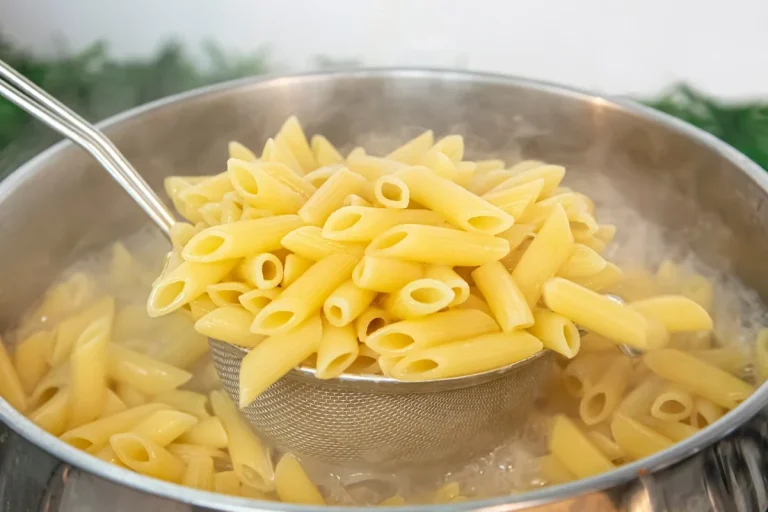
Pasta absorbs water during cooking. As it does, the noodles swell and the shape opens up.
That swelling does not happen at the same rate for every pasta. Thin pasta may cook fast and stay light. Thick pasta may take longer and end up with more bulk.
Why shape and size matter so much
Small shapes like elbows and rotini trap more water and air. Long shapes like spaghetti can settle more tightly in a cup.
That means 1 cup cooked spaghetti may not match 1 cup cooked shells in weight or feel. If you need exact portions, shape matters a lot.
How cooking time affects the final amount
Longer cooking times usually mean more water absorption. That can make pasta softer and a bit heavier.
Overcooked pasta may also clump together after draining. That can change the way it fills a cup and make portions less even.
Always follow the package directions and taste the pasta near the end of cooking. Different brands and shapes can need different times.
Dry to Cooked Pasta Conversion Chart
This chart gives a practical home-cooking guide. It is not exact science, but it helps with meal planning and portion control.
| Dry Pasta | About Cooked Amount | Best Use |
|---|---|---|
| 2 ounces | About 1 cup | One side portion or light meal |
| 4 ounces | About 2 cups | One hearty serving or two small servings |
| 8 ounces | About 4 cups | Family meal or pasta salad base |
Spaghetti, penne, rotini, and elbow pasta examples
Spaghetti often looks smaller in the cup when dry. Once cooked, it expands and softens into a fuller portion.
Penne, rotini, and elbow pasta usually fill a cup more evenly. Their short shape makes them easier to measure, but they still vary a little after cooking.
Rough cup and ounce comparisons
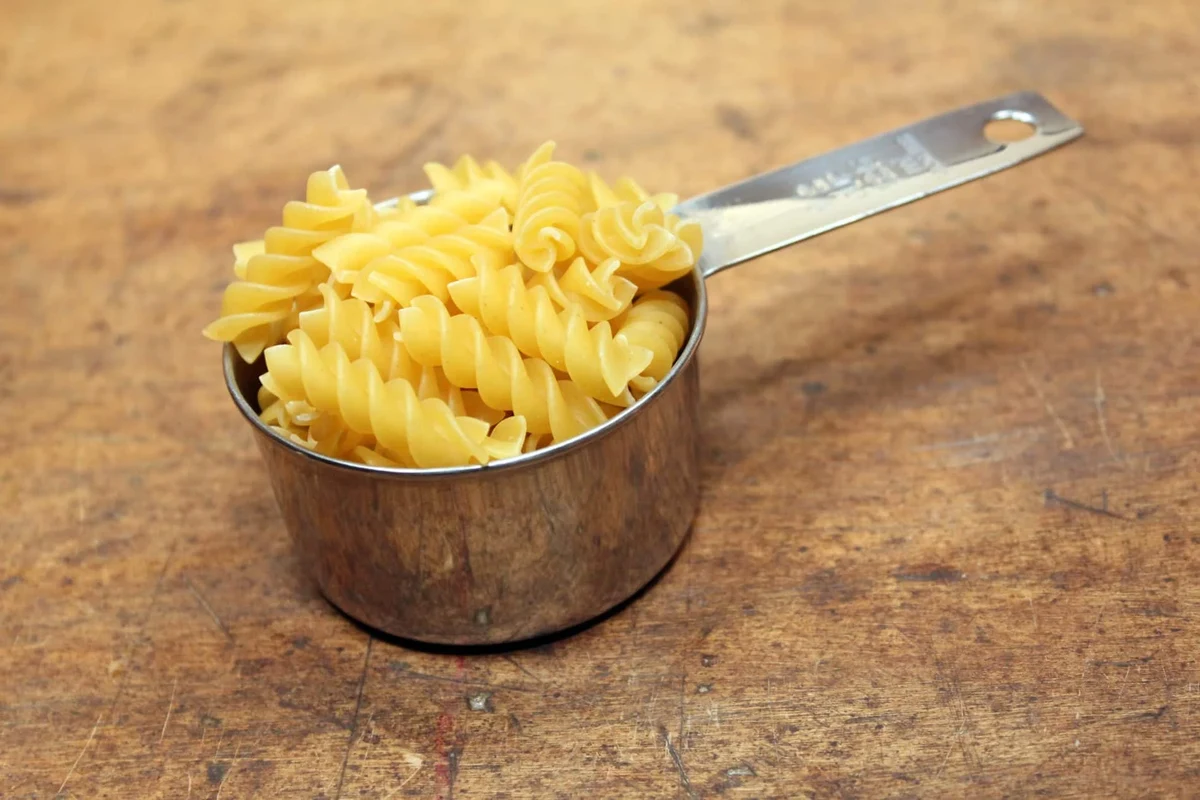
A dry measuring cup of pasta is not the same as a cooked measuring cup. Dry pasta has more air space, so it weighs less than the same volume cooked.
As a rough guide, 2 ounces dry pasta often becomes about 1 cup cooked. Two cups cooked often start with about 4 ounces dry.
When to measure by weight instead of volume
Weight gives you the most reliable result. That is especially useful for meal prep, calorie tracking, and recipe testing.
If you cook pasta often, a small kitchen scale can save guesswork. It also helps when a recipe calls for ounces instead of cups.
Best Ways to Measure Pasta at Home
You do not need fancy tools to get a good result. But the right tool can make portions easier and more consistent.
Using a kitchen scale for the most accurate result
A scale is the best choice for accuracy. It tells you how much dry pasta you really have before cooking.
That matters when you want the same result every time. It also helps if you cook for kids, guests, or meal prep containers.
Measuring cups for everyday cooking
Measuring cups work fine for most home meals. They are quick, simple, and easy to grab.
Just remember not to pack the pasta down too hard. Loose filling gives a more honest measurement than pressing it into the cup.
Pasta measuring tools and when they help
Pasta measuring tools can be handy for long noodles. Many have holes sized for one, two, or more servings.
They help most when you cook spaghetti or linguine often. For short pasta, a cup or scale is usually easier.
If you cook pasta often, mark a few favorite dry portions in ounces. It makes weeknight dinners much faster.
Common Mistakes That Throw Off Pasta Portions
Most pasta mistakes are simple. They come from measuring the wrong way or cooking a little too long.
The good news is that these problems are easy to fix once you know what to watch for.
Packing pasta too tightly in the cup
Pressing pasta into the cup can make the portion too large. That is common with short shapes like penne and rotini.
Instead, spoon it in lightly and level it off. That gives a closer estimate of a true serving.
Confusing dry volume with cooked volume
This is one of the biggest mix-ups in home kitchens. Dry pasta and cooked pasta do not take up the same space.
If a recipe says 1 cup cooked, do not start with a full cup dry unless the recipe says so. That can double your portion by mistake.
Overcooking, undercooking, and draining errors
Overcooked pasta can swell too much and turn soft. It may also stick together after draining.
Undercooked pasta may seem smaller and firmer than expected. Drain it well, but do not rinse unless the recipe asks for it.
Your pasta portions keep coming out too big or too small.
Measure dry pasta by weight when you can, and use a loose cup measure when you cannot.
How to Use the Right Amount for Recipes
Once you know the dry-to-cooked rule, recipe planning gets easier. You can scale pasta up or down without much stress.
Scaling pasta for one person, two people, or a family
For one person, 2 ounces dry pasta is a good starting point. That usually gives about 1 cup cooked.
For two people, 4 ounces dry is often enough for a simple meal. For a family, start with 8 ounces or more, depending on the sauce and sides.
Matching pasta amounts to sauce and add-ins
Rich sauces need less pasta. Lighter sauces can handle a bigger bowl.
If you add meat, beans, vegetables, or cheese, the pasta portion can stay smaller. That keeps the meal balanced and less heavy.
How to avoid waste and keep portions balanced
Start with less if you are unsure. You can always cook a little more pasta later.
That approach helps reduce waste. It also keeps leftovers from piling up when you only need a small meal.
Nutrition, Value, and Practical Kitchen Tips
Portion size matters for both nutrition and budget. A smaller, accurate serving can help you stretch a meal farther.
It also helps you avoid cooking too much food on busy nights.
How portion size affects calories and fullness
More pasta means more calories, but the total meal matters too. Sauce, cheese, meat, and oil all add up fast.
If you want a filling meal, add vegetables or lean protein. That often works better than simply making the pasta portion bigger.
Budget-friendly tips for serving pasta well
Pasta is already a value-friendly food. The trick is serving it smartly.
Use the right portion, then bulk up the plate with vegetables, beans, or a simple salad. That keeps dinner satisfying without wasting ingredients.
Storage and reheating tips for leftover cooked pasta
Cool leftover pasta quickly and store it in the fridge. Use a clean container with a tight lid.
When reheating, add a splash of water or sauce so it does not dry out. Reheat only until hot, and do not leave cooked pasta out too long.
Food safety can vary with the sauce, the room temperature, and how long the pasta sits out. When in doubt, follow safe storage guidance from trusted food safety sources.
Final Recommendation for Home Cooks
If you want the simplest answer, remember this: about 2 ounces of dry pasta makes 1 cup cooked. That is the best starting point for most home kitchens.
Use a scale when you want accuracy. Use a loose cup measure when you just need a fast dinner plan.
When to follow the chart closely
Follow the chart closely for meal prep, calorie tracking, and recipes that need exact portions. It also helps when you cook for several people.
That way, you can keep servings even and avoid guessing.
When a little guesswork is fine
For a weeknight dinner, a little flexibility is okay. Pasta is forgiving, and most family meals do not need perfect math.
If the sauce is generous and the sides are simple, a close estimate usually works well.
The simplest rule to remember next time you cook
Think in ounces first, then in cups. Start with 2 ounces dry for about 1 cup cooked pasta.
That one rule will solve most pasta portion questions in your kitchen.
- About 2 ounces dry pasta usually makes 1 cup cooked.
- Shape, time, and packing can change the final amount.
- A kitchen scale gives the most accurate portion.
- Loose cup measuring works well for everyday cooking.
Frequently Asked Questions
For most shapes, about 2 ounces of dry pasta makes 1 cup cooked. The exact amount can change a little by shape and cooking time.
Yes. Long pasta, short pasta, and tight shapes like rotini or penne can measure differently after cooking.
Weight is more accurate, especially for meal prep or recipe testing. Volume works fine for quick home cooking.
Pasta absorbs water as it cooks, so it swells and gets heavier. Overcooking can make that effect more noticeable.
Spoon pasta into the cup lightly and level it off. Do not press it down unless the recipe asks for a packed measure.
Yes, but leftovers may clump or settle, so the cup can look different. For best results, reheat gently and add sauce or a little water if needed.