How to Boil Water in Instant Pot: Simple Steps, Safety Tips, and Common Mistakes

If you have ever wondered whether your Instant Pot can boil water, the answer is yes — but it works a little differently from a kettle or stovetop pot. Learning how to boil water in Instant Pot is useful for testing your appliance, making hot water for recipes, steaming foods, loosening stuck-on residue, or preheating liquid for soups and broths.
The good news is that boiling water in an Instant Pot is simple. The key is choosing the right function, using enough water, and understanding when to use the lid and when to leave it off. This guide explains the easiest methods, safety tips, timing, troubleshooting, and when boiling water may signal a bigger appliance issue.
Quick Answer
To learn how to boil water in Instant Pot, add water to the stainless steel inner pot, select Sauté, and wait until the water reaches a rolling boil. For pressure-style boiling or a water test, add water, lock the lid, set the valve to Sealing, and run Pressure Cook for a few minutes.
Can You Boil Water in an Instant Pot?
Yes, you can boil water in an Instant Pot. In fact, boiling water is one of the simplest things the appliance can do.
Your Instant Pot has a heating element under the inner pot. When you choose a cooking function like Sauté or Pressure Cook, that heating element warms the stainless steel pot, which then heats the water.
The method you choose depends on what you want:
- Use Sauté if you want open-pot boiling, similar to a saucepan.
- Use Pressure Cook if you want to run a water test or create steam under pressure.
- Use Steam if your model has a Steam function and you want hot steam for food.
For most everyday kitchen needs, Sauté is the easiest way to boil water in an Instant Pot because you can see when the water starts bubbling.
Best Method: How to Boil Water in Instant Pot Using Sauté
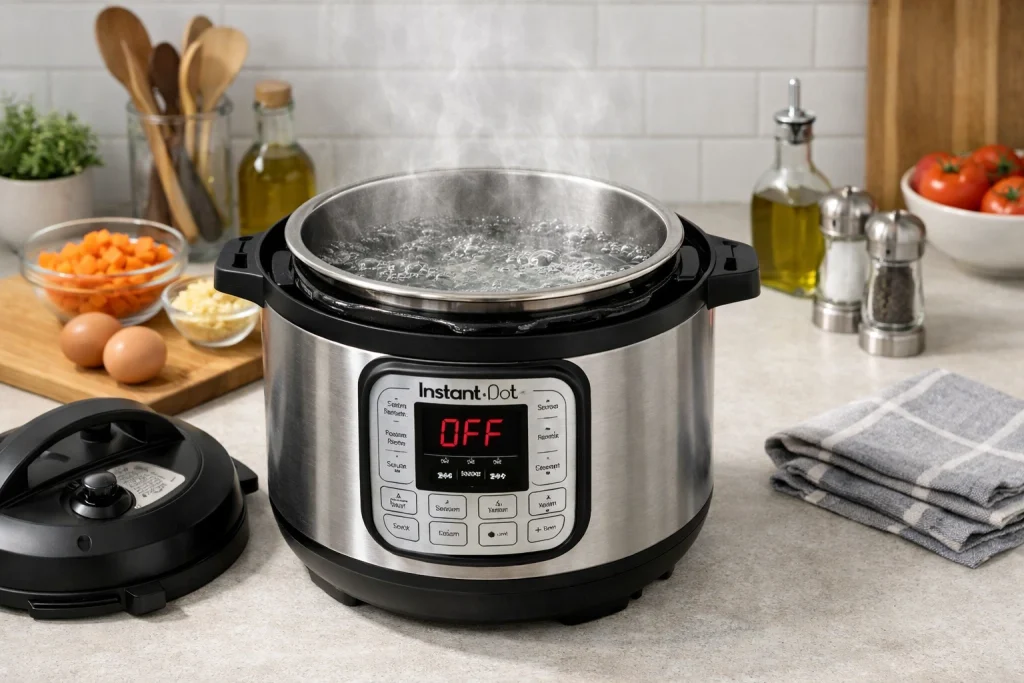
The Sauté function is the most straightforward method because it heats the water without pressure. You do not need to seal the lid, and you can watch the water as it heats.
What You Need
You only need:
- Your Instant Pot base
- Stainless steel inner pot
- 1 to 4 cups of water
- Heat-safe mitts or a towel
- A clean, stable countertop
Do not pour water directly into the Instant Pot base. Water must always go into the removable stainless steel inner pot.
Step-by-Step Instructions
- Place the inner pot inside the Instant Pot base.
Make sure it sits flat and dry on the outside. - Add water.
For a quick boil, use 1 to 2 cups. For more hot water, use 3 to 4 cups. - Plug in the Instant Pot.
Place it on a dry, level surface with space around the steam area. - Press Sauté.
If your model lets you adjust heat, choose More or High. - Leave the lid off.
This lets you see the water and prevents pressure from building. - Wait for bubbles.
Small bubbles appear first. A rolling boil means the water is bubbling strongly across the surface. - Press Cancel when done.
Carefully remove or use the hot water as needed.
Most Instant Pots can bring 1 to 2 cups of water to a boil in several minutes, but timing depends on water amount, starting temperature, room temperature, and model size.
Can You Boil Water with the Lid On?
Yes, but only if you understand the difference between a normal lid and pressure cooking.
If you place the Instant Pot pressure lid on and set the valve to Sealing, the appliance may build pressure as the water heats. That is fine for a water test or pressure steaming, but it is not the same as watching a pot boil on the stove.
For simple boiling, keep the lid off while using Sauté.
If you want to run a pressure water test, follow the official method for your model. Instant Pot includes “How To Do a Water Test” guidance on many product pages, such as the Instant Pot Duo 6-quart getting-started support page, which is useful when checking whether the lid, seal, and pressure system are working correctly.
How to Boil Water in Instant Pot Using Pressure Cook
This method is best when you want to test the pressure function, make steam, or check that your Instant Pot seals properly.
Pressure Cook Water Test Steps
- Add 2 to 3 cups of water to the inner pot.
- Lock the lid in place.
- Set the steam release valve to Sealing if your model requires manual sealing.
- Select Pressure Cook or Manual.
- Set the time for 2 to 5 minutes.
- Let the Instant Pot come to pressure.
- When the cycle ends, press Cancel.
- Carefully use a quick release if appropriate for your model.
- Open the lid only after the float valve drops.
Important warning: Never force the lid open. If the float valve is up, the pot is still pressurized.
This method does not let you see the water boiling, but inside the pot, the water heats and creates steam. Once pressure builds, the boiling behavior changes because pressure raises the boiling point of water.
Sauté vs. Pressure Cook: Which Method Should You Use?
| Method | Best For | Lid Position | Pressure Builds? | Main Benefit | Limitation |
|---|---|---|---|---|---|
| Sauté | Simple boiling, hot water, cleaning residue | Off | No | Easy to watch and control | Can evaporate if left too long |
| Pressure Cook | Water test, steam, checking seal | Locked | Yes | Tests pressure system | You cannot see the water |
| Steam | Steaming vegetables, eggs, dumplings | Usually locked | Often yes | Good for food steaming | Depends on model settings |
| Keep Warm | Holding already-hot water | Lid optional | No | Maintains warmth | Not meant for boiling |
For everyday use, choose Sauté. For appliance testing, choose Pressure Cook.
How Much Water Should You Use?
For simple boiling, use the amount you need. For faster heating, start small.
A good home-cook guide:
- 1 cup: quick hot water for loosening residue or warming the pot
- 2 cups: basic water test or small steaming job
- 3 to 4 cups: larger amount for recipes or cleaning steam
- More than 4 cups: possible, but slower and less efficient than a kettle
Do not fill above the max line. For pressure cooking, also avoid overfilling because steam needs space to build safely.
How Long Does It Take to Boil Water in an Instant Pot?
The time depends on several factors:
- Amount of water
- Starting water temperature
- Instant Pot size
- Sauté heat level
- Room temperature
- Whether the inner pot is fully seated
As a rough guide, 1 to 2 cups of room-temperature water may start boiling in several minutes on Sauté. A larger amount will take longer.
An Instant Pot is useful, but it is not always the fastest tool for boiling water. An electric kettle is usually more convenient if your only goal is tea, coffee, or instant oatmeal. But the Instant Pot is handy when you are already cooking in it or want to create steam inside the pot.
Why Boil Water in an Instant Pot?
Boiling water in an Instant Pot may sound too simple, but it is actually useful in several kitchen situations.
1. Running a Water Test
A water test checks whether your Instant Pot heats, seals, and builds pressure properly. It is especially helpful when the appliance is new or has not been used for a while.
Run a water test if:
- You just bought the Instant Pot
- You replaced the sealing ring
- The lid was recently cleaned deeply
- The pot has trouble coming to pressure
- You want to understand how steam release works
2. Loosening Stuck-On Food
If food sticks to the bottom of the inner pot, boiling water can soften the residue.
Add 1 to 2 cups of water, use Sauté, and gently scrape with a wooden spoon or silicone spatula. Avoid metal tools that may scratch the stainless steel surface.
3. Preheating Liquid for Soup or Broth
If you are making soup, stew, ramen, or broth, starting with hot water can help the pot reach cooking temperature faster.
This is useful when you are cooking:
- Noodle soup
- Lentil soup
- Chicken broth
- Vegetable stock
- Rice porridge
- Beans or legumes
4. Steaming Foods
Boiling water creates steam. With a trivet or steamer basket, you can steam eggs, vegetables, dumplings, or small portions of fish.
Follow food safety rules when cooking meats, poultry, seafood, or leftovers. The USDA’s safe minimum internal temperature chart is a useful reference for checking whether food is fully cooked.
Safety Tips Before Boiling Water in an Instant Pot
Boiling water is simple, but the Instant Pot is still an electric heating appliance. Treat it with care.
Keep Water Away from the Base
The outer base contains electrical parts. Only the stainless steel inner pot should hold water.
Before cooking, check that:
- The inner pot is inserted
- The outside of the inner pot is dry
- The heating plate is clean and dry
- The cord is fully plugged in
- The appliance is on a stable surface
Watch the Steam
Steam can burn skin quickly. Keep your face, hands, cabinets, and paper towels away from the steam release area.
When releasing pressure, use the handle, switch, or button designed for your model. Do not cover the valve with a towel while pressure is releasing because it can interfere with steam flow.
Avoid Extension Cords
Plug the Instant Pot directly into a proper wall outlet when possible. The U.S. Fire Administration advises that small appliances should be unplugged when not in use and that damaged cords are a reason to replace the appliance, according to its appliance and electrical fire safety guidance.
Do Not Use the Instant Pot as a Room Humidifier
It may create steam, but it is not designed to humidify a room. Running it for long periods with plain water can waste energy and increase moisture around cabinets.
Be Careful with Food Safety
If you are boiling water for food prep, remember that hot water alone does not make all foods safe. Perishable foods should not sit in the temperature “danger zone” for too long. USDA guidance explains that bacteria grow fastest between 40°F and 140°F in its food temperature safety resource.
Expert Tip
Expert Tip:
If your Instant Pot smells like last night’s chili or curry, boil 2 cups of water with a splash of white vinegar on Sauté for a few minutes. Then press Cancel, cool the pot, wash the inner pot, and air out the sealing ring. This simple step helps reduce odors without harsh cleaners.
Can You Use Boiling Water to Clean an Instant Pot?
Yes, boiling water can help with light cleaning, but it does not replace proper washing.
Use boiling water for:
- Softening stuck food
- Loosening cloudy residue
- Reducing mild smells
- Pre-cleaning after soups or sauces
After boiling water, wash the inner pot with warm soapy water. Clean the sealing ring, lid parts, and condensation collector as your manual recommends. Instant Pot’s FAQ notes that the inner pot is dishwasher safe and that lid accessories should be cleaned according to the user manual on its Instant Pot frequently asked questions page.
Never submerge the Instant Pot base in water. Wipe the base with a barely damp cloth only after it is unplugged and cool.
Common Warning Signs While Boiling Water
Boiling water should be easy. If something seems wrong, stop and check the appliance.
| Warning Sign | Possible Cause | What to Do |
|---|---|---|
| Water does not heat | Loose cord, wrong setting, faulty outlet | Check power, press Cancel, restart |
| Burning smell | Dirty heating plate, food residue, electrical issue | Stop immediately and inspect |
| Steam leaks from lid during pressure cooking | Sealing ring issue or lid not locked | Check ring and lid position |
| Float valve never rises | Not enough water, sealing problem, valve issue | Add water and inspect parts |
| Error message appears | Overheat protection or sensor issue | Follow model manual |
| Cord is hot or damaged | Electrical risk | Stop using the appliance |
If you notice sparks, melted plastic smell, smoke, or a damaged cord, stop using the Instant Pot immediately.
When to Contact Customer Support or Replace the Appliance
Boiling water is a basic task. If your Instant Pot cannot do it reliably, the problem may be more than user error.
Contact customer support if:
- The appliance will not turn on
- The display flashes unusual error codes
- The heating element does not warm
- The lid will not seal during a water test
- Steam leaks from unusual places
- The float valve is stuck after cleaning
- The pressure release system does not work correctly
Consider replacing the appliance if:
- The cord is cracked, loose, or damaged
- The base has been soaked with water
- You smell burning plastic or electrical odor
- The appliance is old and replacement parts are unavailable
- Repair costs are close to the price of a new unit
- The pressure system feels unreliable even after replacing basic parts
Do not open the Instant Pot base or attempt electrical repair at home. The pressure and electrical systems are not good DIY repair areas for everyday users. Replacing a sealing ring is normal maintenance. Taking apart the heating base is not.
Is an Instant Pot Better Than a Kettle for Boiling Water?
Not usually. A kettle is better if you only need hot water for tea, instant coffee, or cocoa. It is faster, lighter, and easier to pour.
An Instant Pot is better when:
- You are already cooking in it
- You want to run a water test
- You need steam for pressure cooking
- You want to loosen stuck food
- You need hot liquid before making soup
Think of the Instant Pot as a flexible cooking appliance, not a dedicated water boiler.
Product-Choice Considerations for Home Cooks
If boiling water and basic steaming are common tasks in your kitchen, consider how your appliance setup fits your habits.
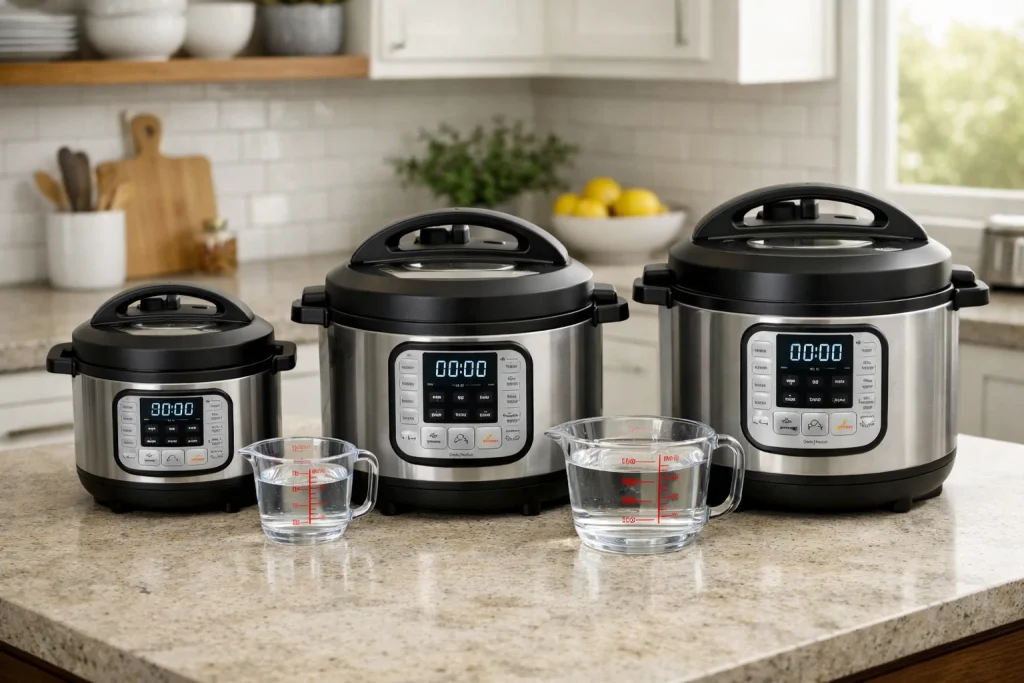
A 3-quart Instant Pot is good for small kitchens, singles, couples, and quick water tests. It heats smaller amounts well but may feel limited for large soups.
A 6-quart Instant Pot is the best all-around size for most families. It handles boiling water, steaming, rice, beans, soups, and weeknight meals.
An 8-quart Instant Pot is useful for large families, batch cooking, and big broths. But it takes more space and may need more liquid for pressure cooking.
For durability, look for a stainless steel inner pot, easy-to-find replacement sealing rings, clear controls, and strong customer support. A model with simple buttons is often easier for everyday use than one with many settings you may never touch.
Common Mistakes Home Cooks Should Avoid
- Forgetting the inner pot. Never pour water into the outer base.
- Using the pressure lid when you only need open boiling. Use Sauté with the lid off for simple boiling.
- Standing over the steam release valve. Steam can burn your face or hands.
- Overfilling the pot. Leave enough space, especially when pressure cooking.
- Walking away during Sauté. Water can boil away if left too long.
- Using a damaged sealing ring. A loose or cracked ring can prevent pressure from building.
- Ignoring error messages. Cancel the cycle and check your manual.
- Trying risky DIY repairs. Do not open the electrical base or pressure parts.
- Using metal tools aggressively. Stainless steel is durable, but harsh scraping can leave marks.
- Assuming hot water makes food safe. Use proper food temperatures for meats, leftovers, and casseroles.
FAQs
Can I boil water in an Instant Pot without the lid?
Yes. Use the Sauté function and leave the lid off. This is the easiest way to boil water because you can see the bubbles and stop the cycle when the water reaches a rolling boil.
Which Instant Pot setting is best for boiling water?
Sauté is best for simple boiling. Pressure Cook is better for a water test or steam-based cooking. Keep Warm is not designed to bring cold water to a boil.
How much water do I need for an Instant Pot water test?
Most water tests use about 2 to 3 cups of water, but you should follow your model’s manual. The goal is to create enough steam for the pot to build pressure safely.
Can I make tea or coffee water in an Instant Pot?
You can, but it is not the most convenient choice. A kettle is usually faster and easier to pour. The Instant Pot works if you do not have a kettle or already have the appliance out.
Why is my Instant Pot not boiling water?
Check that the cord is secure, the outlet works, the inner pot is seated correctly, and you selected Sauté or Pressure Cook. If it still does not heat, stop using it and contact customer support.
Is it safe to quick release after boiling water under pressure?
Yes, if your model allows quick release and you follow the manual. Keep your hands and face away from the steam. Never force the lid open before the float valve drops.
Can boiling water remove Instant Pot smells?
It can help with mild odors, especially when mixed with a small splash of white vinegar. Strong smells may also require washing the sealing ring, lid parts, and inner pot separately.
Conclusion
Learning how to boil water in Instant Pot is simple once you know which setting to use. For open boiling, use Sauté with the lid off. For a water test or pressure steam, use Pressure Cook with enough water and follow your model’s safety instructions.
The Instant Pot is not always the fastest water-boiling tool, but it is practical when you are testing the appliance, steaming food, loosening stuck-on residue, or preparing hot liquid for a recipe. Use enough water, watch the steam, keep the base dry, and stop using the appliance if you notice electrical smells, damaged cords, or pressure problems.
Start with a small amount of water, practice with the Sauté function, and use your Instant Pot confidently for simple kitchen tasks before moving on to bigger recipes.