How to Set Up Instant Pot: A Simple First-Time Guide

If your new Instant Pot is sitting on the counter and you are not sure where to start, you are not alone. I remember opening my first one and thinking, “This looks useful, but what do I press first?” Learning how to set up Instant Pot the right way makes the first cook feel much easier.
I’m Daniel Brooks, and I like kitchen tools that save time without making dinner feel stressful. In this guide, I’ll walk you through the first setup, the parts to check, the water test, basic safety habits, and what to cook first.
This is not a recipe. It is a calm, step-by-step starter guide for everyday home cooks who want to use their Instant Pot with confidence.
Quick Answer
To set up an Instant Pot, unbox all parts, wash the removable pieces, place the stainless steel inner pot inside the cooker base, check the sealing ring, attach the condensation collector if your model has one, plug it into a wall outlet, and run a water test before cooking food. The water test helps you learn how the lid, pressure, steam release, and display work. After that, start with an easy recipe like rice, eggs, soup, or shredded chicken.
What Comes With an Instant Pot?
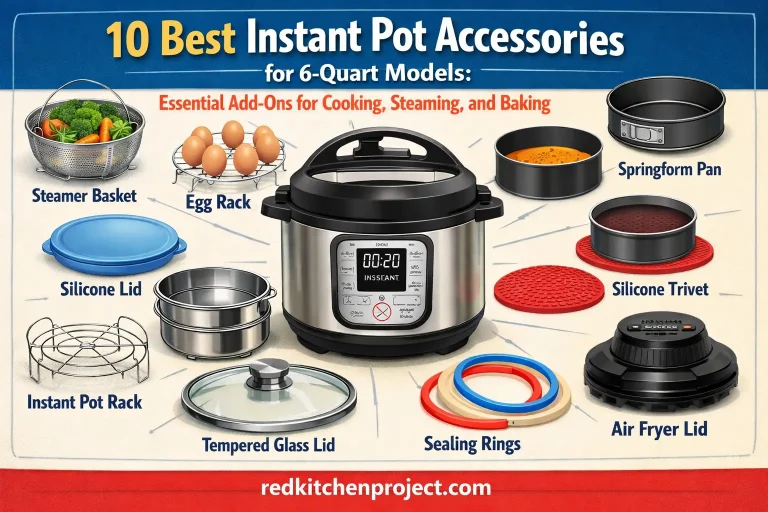
Most Instant Pot models come with the cooker base, inner pot, lid, sealing ring, steam rack, power cord, and a small condensation collector. Some newer models also include extra accessories or have built-in steam release features. Your box may look a little different, so always keep the manual nearby for your exact model.
The most important rule is simple: never cook directly in the cooker base. Food and liquid must go into the removable inner pot only. The heating element sits inside the base, and it should stay clean and dry.
| Part | What It Does | First Setup Check |
|---|---|---|
| Cooker base | Holds the heating element and control panel | Keep it dry and place it on a flat counter |
| Inner pot | Holds food and liquid | Wash it before first use |
| Lid | Locks in steam for pressure cooking | Check that it turns and locks smoothly |
| Sealing ring | Helps the lid seal under pressure | Make sure it is fully seated |
| Steam release | Lets pressure leave the pot | Know where sealing and venting are on your model |
| Condensation collector | Catches extra moisture | Attach it to the back if included |
Before you plug anything in, give yourself a clear workspace. I like to keep the Instant Pot away from towels, curtains, low cabinets, and anything that could block steam. If you want a broader kitchen appliance placement checklist, this guide on countertop appliance safety is a helpful next step.
How to Set Up Instant Pot for the First Time
Start slow. You do not need to understand every button on day one. The goal is to get the machine clean, placed safely, and ready for a test run.
- Unbox everything. Remove plastic, cardboard, labels, and packing pieces from the cooker, lid, and accessories.
- Wash removable parts. Wash the inner pot, sealing ring, lid parts, and steam rack with warm soapy water. Dry them well.
- Place the inner pot inside the base. Do not add anything until the inner pot is in place.
- Check the sealing ring. It should sit evenly under the lid. If it is loose or twisted, the pot may not seal.
- Attach the condensation collector. Some models have a small cup at the back. Slide it into place if your model includes one.
- Set the steam release correctly. On many models, it must be set to Sealing for pressure cooking. Some models seal automatically.
- Plug it into a wall outlet. Use a stable outlet, not a weak extension cord or overloaded power strip.
The official Instant Pot support pages explain that setup may vary by model, so it is smart to check your model instructions if your steam release or display looks different from older tutorials. You can use the official Instant Pot FAQ when a button, part, or error code is unclear.
For simple safety habits, treat the Instant Pot like any other high-heat countertop appliance. Keep the cord away from water, give steam a clear path, and do not place your face or hand over the steam release. A full kitchen safety routine also helps, especially if you use several appliances often. This kitchen appliance safety checklist covers useful habits that also apply to pressure cooking.
Run the Instant Pot Water Test
The water test is the best first task because it lets you practice pressure cooking without wasting food. It also helps you learn the sounds and timing of your machine.
To run a basic water test, pour 2 to 3 cups of water into the inner pot. Lock the lid. Set the steam release to Sealing if your model requires it. Choose Pressure Cook or Manual, set it for 5 minutes on high pressure, and start.
At first, the display may say “On” or show that it is heating. This is normal. The pot needs time to heat the water and build steam before the timer starts. Once pressure builds, the float valve rises and the countdown begins.
When the timer ends, carefully use quick release for this water-only test unless your manual says otherwise. Steam will come out fast and hot. Keep your face, hands, cabinets, and walls away from the steam path.
| What You Notice | What It Usually Means | What To Do |
|---|---|---|
| Steam comes out at first | The pot is heating and building pressure | Wait and watch the float valve |
| Timer does not start right away | The pot has not reached pressure yet | Give it more time |
| Steam keeps leaking around the lid | The sealing ring may be loose | Cancel, cool, check the ring, and try again |
| Burn warning appears | Something may be wrong with liquid level or heating | Cancel and check the inner pot and base |
| Pot will not turn on | The cord may be loose or the outlet may not work | Check both ends of the cord and the outlet |
If the test fails more than once, stop and troubleshoot before cooking. A guide like this common appliance problems guide can help you think through basic power, placement, cleaning, and overheating issues, even though your Instant Pot manual should be your main source for model-specific problems.
First Cooking Setup After the Test
Once the water test works, you are ready for food. Start with a simple recipe that has enough thin liquid. Water, broth, or sauce helps the pot create steam. Thick sauces alone can scorch before pressure builds.
Good first Instant Pot foods include:
- White rice or brown rice
- Hard-boiled eggs
- Chicken broth or simple soup
- Shredded chicken with broth
- Steamed potatoes or vegetables
For the first few cooks, follow trusted recipes closely. Do not guess liquid amounts yet. Pressure cooking is different from stovetop cooking because steam and liquid balance matter.
Keep these filling rules in mind:
- Do not fill past the max fill line.
- For beans, grains, pasta, or foods that foam, stay below the halfway mark.
- Use thin liquid unless the recipe clearly says otherwise.
- Do not block the steam release with food.
- Use natural release for foamy or starchy foods when the recipe calls for it.
Food safety still matters after cooking. If you cook meat, poultry, casseroles, or leftovers, check doneness with a food thermometer. FoodSafety.gov has a clear chart for safe minimum internal temperatures. For leftovers, the USDA advises cooling and storing food promptly, and their leftovers and food safety guide is worth using when you batch cook.
Cleaning and Storage After Setup
Cleaning is part of setup because it keeps the Instant Pot working well. After each use, unplug the cooker and let it cool. Wash the inner pot, lid parts, and sealing ring as needed. Wipe the cooker base with a barely damp cloth only. Never rinse the base under water.
The sealing ring can hold strong smells. I like to remove it after cooking chili, curry, or anything garlicky. Let it air out before storing. Some home cooks keep one ring for savory food and one for mild foods like oatmeal or rice.
A simple cleaning routine helps prevent odors, sticky valves, and sealing problems. If you like appliance routines, this cleaning frequency guide for countertop appliances is useful for building the habit.
- Wash the inner pot after every use.
- Check the sealing ring for food bits or cracks.
- Clean the steam release area after messy recipes.
- Dry all parts before storing.
- Store the lid upside down or slightly open to reduce trapped smells.
Common Mistakes to Avoid
- Forgetting the inner pot. Never pour water or food into the cooker base.
- Skipping the water test. It teaches you how pressure and steam release work.
- Using too little liquid. The pot needs steam to build pressure.
- Overfilling the pot. This can cause messy releases and poor cooking.
- Quick releasing foamy foods. Beans, pasta, grains, and thick stews can sputter.
- Opening the lid too soon. Wait for pressure to release fully.
Expert Tips from Daniel Brooks
Key Takeaways
- Set up the Instant Pot by washing parts, checking the sealing ring, adding the inner pot, and running a water test.
- The water test helps you learn pressure, timing, steam release, and lid safety before cooking food.
- Always cook with enough thin liquid and never fill past the safe limit.
- Use natural or quick release based on the recipe and the type of food.
- Clean and dry the lid, sealing ring, inner pot, and steam release area after use.
Frequently Asked Questions
Do I need to wash my Instant Pot before first use?
Yes, wash the removable parts before first use. Clean the inner pot, sealing ring, lid parts, and steam rack with warm soapy water, then dry them well. Wipe the cooker base with a barely damp cloth, but never place the base under running water.
What is the first thing I should do with a new Instant Pot?
The first thing to do is check the parts and run a water test. This helps you learn how the lid locks, how pressure builds, and how steam release works. It also lets you spot sealing issues before you cook food.
How much water do I use for the Instant Pot water test?
Most basic water tests use 2 to 3 cups of water in the inner pot. The exact amount can vary by model, so check your manual if it gives a specific amount. The goal is to create steam and confirm that the cooker reaches pressure.
Why is my Instant Pot not sealing during the first test?
The sealing ring may be loose, twisted, missing, or not seated correctly. The steam release may also be in the venting position if your model does not seal automatically. Cancel the test, let the pot cool, check the lid parts, and try again.
Can I use my Instant Pot right after the water test?
Yes, you can use it after the water test if the test works properly. Empty the water, dry the inner pot, and start with a simple recipe. Choose something easy with enough thin liquid, like rice, soup, or shredded chicken.
Should the steam release be on sealing or venting?
For pressure cooking, many Instant Pot models need the steam release set to Sealing. For releasing pressure, it moves to Venting or uses a quick-release button, depending on the model. Some newer models seal automatically, so check your manual.
Is it normal for steam to come out before the timer starts?
Yes, a little steam can come out while the pot heats and builds pressure. Once enough steam builds, the float valve should rise and the timer should begin. If steam leaks heavily around the lid for a long time, check the sealing ring and lid position.
Conclusion
Setting up an Instant Pot is much easier when you take it one step at a time. Wash the parts, check the sealing ring, place the inner pot correctly, learn the steam release, and run the water test before cooking dinner.
Once that test works, choose one simple recipe and follow it closely. After a few meals, the buttons and sounds will feel normal. My best advice is to start small, keep the manual nearby, and build confidence one cook at a time.