What Is the Minimum Internal Cooking Temp for Stuffed Pasta

The safe minimum internal temperature for stuffed pasta is 165°F. Check the filling, not just the pasta shell, because the center can stay cool.
The minimum safe internal cooking temp for stuffed pasta is 165°F. That target helps make sure fillings like meat, cheese, and egg are hot enough for safe eating.
- Safe target: Aim for 165°F in the filling.
- Best tool: Use an instant-read thermometer for the clearest check.
- Main risk: Frozen or thick pasta can look done too soon.
- Best cue: A tender shell plus a hot center is the goal.
What Is the Minimum Internal Cooking Temp for Stuffed Pasta?
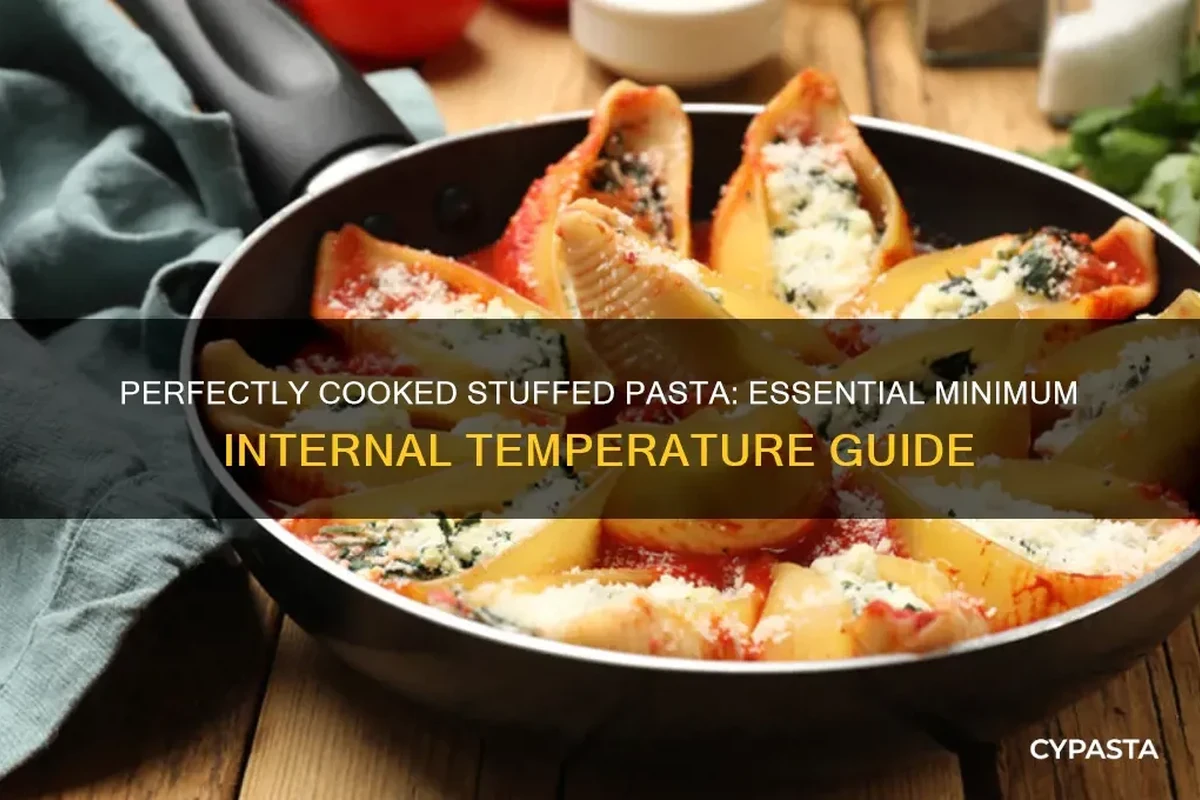
For stuffed pasta, aim for an internal temperature of 165°F. That is the safest general target when the filling includes meat, poultry, cheese, or egg.
Plain pasta does not need a set internal temperature. It only needs to be cooked until tender. Stuffed pasta is different because the filling can stay cool even when the outside looks done.
Quick answer for safe stuffed pasta
If you want the short version, use 165°F as the safe minimum. This is the best rule for ravioli, tortellini, agnolotti, and similar filled pasta.
When the filling reaches that point, you lower the risk from undercooked meat or dairy-based fillings. If you do not have a thermometer, look for strong visual signs and follow package or recipe directions closely.
Why this temperature matters for food safety
Stuffed pasta can fool you. The pasta shell may soften fast, while the center stays cooler for longer.
That matters because fillings often hold moisture. Moist filling can take longer to heat through than plain dough.
Follow the recipe, package directions, and food-safety guidance for the filling type. If the filling includes raw meat or poultry, treat it with extra care.
In short, the shell can look ready before the center is safe. A thermometer gives you a clearer answer than color alone.
How stuffed pasta differs from plain pasta
Plain pasta is simple. You cook it until the dough is tender and the center is no longer hard.
Stuffed pasta adds a second job. You must heat the filling enough for safety and taste.
Many stuffed pasta shapes float when they are close to done, but floating alone does not prove the filling is hot enough.
That is why stuffed pasta needs a little more care. The filling changes the whole cooking process.
What Counts as Stuffed Pasta?
Stuffed pasta means any pasta with a filling inside a dough shell. The filling can be savory or mild, rich or simple.
The shape changes, but the cooking idea stays the same. You need to heat the center through, not just soften the outside.
Common types like ravioli, tortellini, and agnolotti
Ravioli is the most familiar example. Tortellini and agnolotti are also common stuffed pasta shapes.
You may also see cappelletti, mezzaluna, and other filled shapes. The exact form matters less than the filling inside.
Fresh, frozen, and homemade versions
Fresh stuffed pasta usually cooks faster than frozen pasta. Frozen pasta often needs a little more time because the center starts colder.
Homemade pasta can vary a lot. Thin dough, thick dough, and filling density all change the cook time.
Package labels and recipe notes matter here. Different brands and homemade batches can cook at different speeds.
If you make it yourself, keep your batch size and filling thickness in mind. Bigger pieces usually need more time.
How fillings change cooking needs
Not all fillings behave the same. Meat fillings need the most caution.
Cheese fillings heat quickly, but they can still stay cooler in the center. Vegetable fillings may need less safety concern, but they can hold moisture and affect texture.
Needs full heat-through and careful handling.
Can be safe at 165°F and should feel hot in the center.
Often cooks faster, but moisture can affect texture.
How to Check the Internal Temperature the Right Way
A thermometer gives the most reliable answer. It helps you avoid guessing, which is useful with thick or frozen stuffed pasta.
Use it when the filling seems dense, when the pasta is large, or when the batch came from the freezer.
Best tools for checking stuffed pasta
A thin instant-read thermometer works well for most home cooks. It gives a quick reading and limits extra heat loss.
For very small pieces, a thermometer can be tricky to use. In that case, you may need to rely more on timing and visual checks.
Keep the thermometer clean before and after use. That helps prevent cross-contamination.
Where to place the thermometer
Place the tip in the center of the filling, not just in the dough. The filling is the part that matters most.
Try to avoid pressing the probe against the hot pan, pot, or tray. That can give a false reading.
- Check the thickest piece first.
- Test more than one piece in a batch.
- Wait a few seconds for a steady reading.
If the filling is soft, insert the probe gently. You want a true center reading, not a damaged pasta shell.
Signs the pasta is done without a thermometer
Without a thermometer, look for a tender shell and a hot center. The pasta should not feel firm or chalky in the middle.
For boiled pasta, many pieces will float near the end. For baked pasta, the top may brown while the center still needs time.
- Check the thickest piece.
- Cut one open if needed.
- Follow package timing as a guide.
- Do not trust color alone.
- Do not stop at the first floating piece.
- Do not serve cold centers.
Cooking Methods and What They Change
The cooking method changes how fast the heat reaches the filling. Boiling, baking, and air finishing all work a little differently.
That means the same pasta may need different timing in different recipes.
Boiling stuffed pasta
Boiling is the most common method. The hot water surrounds each piece and heats it quickly.
Still, frozen pasta may need extra time. Stir gently so the pieces do not stick or tear.
Use plenty of water and keep the boil steady. Crowded pasta cooks unevenly and can stick together.
Once the pasta floats, give it a little more time if the recipe says so. Floating is helpful, but it is not the full test.
Baking stuffed pasta
Baked stuffed pasta often sits in sauce. That sauce helps heat the pasta and keep it moist.
Because ovens heat from the outside in, the center can lag behind. This is especially true with thick layers or a cold dish.
Use oven-safe cookware only. Follow the recipe and avoid handling very hot dishes without protection.
Let the dish rest for a few minutes before serving. Resting helps the heat spread through the filling.
Air frying or pan finishing stuffed pasta
Air frying and pan finishing are usually better for crisping or reheating. They are less common for fully cooking raw stuffed pasta.
If you use these methods, check the center carefully. The outside can brown before the inside is ready.
For best results, use them as a finish after boiling or baking. That gives you better control over texture and doneness.
Common Mistakes That Lead to Undercooked Stuffed Pasta
Most problems come from rushing or guessing. A few small mistakes can leave the center too cool.
These are easy to avoid once you know what to watch for.
Using the wrong temperature target
Some cooks assume all pasta needs the same check. That is not true for stuffed pasta.
The filling sets the safety target. If you stop too early, the shell may be done while the center is not.
Rushing frozen pasta
Frozen pasta needs more patience. The center starts much colder than fresh pasta.
If you pull it too soon, the outside may feel soft while the middle stays cool.
Frozen stuffed pasta looks done on the outside but feels cool inside.
Give it more time and test the thickest piece before serving.
Overcrowding the pot or pan
Too many pieces at once can drop the water temperature. That slows cooking and can create uneven results.
In a pan or baking dish, crowding blocks heat flow. The pieces in the middle may cook more slowly.
Trusting color alone
Color can be misleading. A golden top or a firm-looking shell does not prove the filling is hot enough.
Cut one piece open if you are unsure. Better yet, use a thermometer for a clear answer.
Food Safety Tips for Stuffed Pasta Fillings
The filling type matters as much as the pasta shape. Safe handling starts before the pot even heats up.
Keep raw and ready-to-eat foods apart, and chill ingredients that need refrigeration.
Meat fillings and safe handling
Meat fillings need careful prep. Keep them cold before cooking and avoid cross-contact with other foods.
Cook them all the way through to the safe target. If you are unsure, check the center with a thermometer.
Cheese and dairy fillings
Cheese fillings can turn hot fast, but they still need even heating. Very rich fillings may stay soft and cool in the middle longer than expected.
Watch for leaks too. A split seam can let the filling escape into the water or pan.
Vegetable fillings and moisture control
Vegetable fillings often bring extra moisture. That can make the pasta taste soft or watery if the filling was not drained well.
Drain cooked vegetables before stuffing. That helps the pasta hold its shape and improves the final texture.
Best Practices for Better Texture and Taste
Safe pasta is the goal, but good texture matters too. Nobody wants a burst shell or a watery filling.
A few small habits can improve both safety and flavor.
How to avoid burst pasta
Do not boil too hard. A very rough boil can tear delicate dough.
Handle the pasta gently when stirring or lifting. Use a slotted spoon if you need to move pieces around.
How to keep fillings creamy and hot
Warm sauces help keep the filling hot after cooking. They also protect the pasta from drying out.
Let the dish rest briefly after cooking. That gives the heat time to settle through the center.
How sauce timing affects the final dish
Add sauce at the right time. If you wait too long, the pasta can cool before serving.
If the sauce is very thick, loosen it a little so it coats the pasta well. That helps the dish stay hot and balanced.
Final Recommendation for Home Cooks
The simplest rule is this. Cook stuffed pasta until the filling reaches 165°F, or until the center is fully hot and the pasta is tender.
That rule works well for most ravioli, tortellini, and similar shapes. It is especially helpful for frozen or meat-filled pasta.
When to use a thermometer
Use a thermometer when the filling is dense, the pasta is frozen, or the batch is large. It is also smart for homemade pasta with raw ingredients inside.
A thermometer removes guesswork. That makes it the safest choice when you are unsure.
When visual cues are enough
Visual cues can work for small, simple batches. You still need a tender shell and a clearly hot center.
If the recipe is familiar and the pasta is fresh, you may not need a probe every time. Still, a quick cut test helps.
Simple rule to follow every time
Cook stuffed pasta until it is hot all the way through. If the filling includes meat, cheese, or egg, aim for 165°F.
That one rule keeps things simple in the kitchen. It also helps you serve pasta that tastes good and feels safe to eat.
- Stuffed pasta is safest at 165°F inside the filling.
- Use a thermometer for frozen, thick, or meat-filled pasta.
- Do not trust color or floating alone.
- Gentle cooking and proper sauce timing improve texture.
Frequently Asked Questions
Yes, 165°F is a safe general target for most stuffed pasta. It works well for meat, cheese, and egg fillings.
Frozen stuffed pasta usually needs more time. Check the thickest piece, since the center starts colder than fresh pasta.
It helps a lot, but it can be harder to place in very small pieces. If you skip it, cut one open and make sure the center is hot.
Yes, reheat it until the filling is hot again. If you have a thermometer, aim for 165°F before serving leftovers.
It can burst from rough boiling, overcrowding, or weak seams. Handle it gently and keep the boil steady, not wild.
Make sure the filling was handled safely and cooked through. If it includes raw meat or egg, a thermometer is the best final check.