Toaster Explained for Beginners: Stunning Beginner Guide to the Best Toast

Understanding Toasters: A Clear, Beginner‑Friendly Guide to Perfect Toast
If you’ve ever stood in front of a kitchen aisle or scrolled through pages of appliances online wondering which toaster to buy—and how to actually get consistently good results—you’re not alone. This toaster explained for beginners guide is designed to demystify the appliance, show you how it works, and help you make toast that’s crisp, golden, and exactly the way you like it.
We’ll cover types of toasters, how they function, what the settings really mean, how to choose the right one, how to use and maintain it safely, and some simple tricks to elevate your everyday toast from “meh” to “wow.”
—
How a Toaster Works (Without the Tech Jargon)
Before you can get the best toast, it helps to know what’s actually happening inside the machine.
The Basic Science of Toasting
At its core, a toaster is a heating device that browns bread using dry heat. When bread is toasted:
– Moisture evaporates from the surface.
– Sugars and starches break down and caramelize, creating flavor and color.
– Proteins and sugars react (Maillard reaction), producing that familiar toasted taste and aroma.
The toaster’s job is to control how much heat is applied and for how long, so you get just the right level of browning without burning.
Key Components Inside a Toaster
Most standard electric toasters share the same essential parts:
– Heating elements
Thin wires or ribbons (often made of nichrome) run along the inner sides of the slots. When electricity flows through them, they heat up and glow red-hot.
– Bread slots
The openings where you insert bread, bagels, or other items. Width and depth vary by model and affect what you can toast.
– Lever (or handle)
When you push it down, it lowers the bread and activates the elements. When the toast is done, the lever pops up and raises the toast.
– Timer or browning control
This may be a traditional mechanical timer, an electronic circuit with a sensor, or a digital control. It determines how long the heating elements stay on.
– Crumb tray
A removable tray at the bottom that catches crumbs. It’s more important than it looks—cleaning it regularly prevents burning smells and even fire risks.
– Safety features
Modern toasters usually have automatic shutoff, cool-touch exteriors on some models, and insulation to keep heat inside.
You don’t need to understand the electronics in detail to use it well, but knowing that toast color is mainly about time and heat will help you control results.
—
Main Types of Toasters (And Which One You Should Consider)
Toaster models vary widely, and the best choice depends on your household size, counter space, and how you like to cook.
1. Pop‑Up Toasters
This is what most people picture when they hear “toaster.”
What it is:
A compact appliance with vertical slots. You push the lever down, the bread goes in, and it pops up when done.
Pros:
– Simple and intuitive to use
– Heats up quickly
– Compact and easy to store
– Generally more affordable
– Great for daily bread, bagels, and some frozen items
Cons:
– Limited to what fits in the slots (thicker breads or odd shapes may not work)
– Less versatile than toaster ovens
– Browning can sometimes be uneven in cheaper models
Best for:
Individuals, couples, or anyone primarily toasting sliced bread, English muffins, and bagels.
2. Toaster Ovens
A toaster oven looks like a mini oven with a glass door and wire rack.
What it is:
A small countertop oven that toasts, bakes, reheats, and sometimes broils. You place food on the rack or tray instead of into slots.
Pros:
– Extremely versatile (toast, pizza, small casseroles, cookies, reheating leftovers)
– Fits larger items like thick artisan bread, rolls, and even small sheet pans
– You can watch the toasting process through the glass
Cons:
– Bulkier, takes more counter space
– Usually slower to toast than a pop‑up toaster
– Can consume more energy for simple toast
Best for:
Small families, those with limited stove/oven access, college students, or anyone who wants a multi-function mini-oven that also toasts.
3. Conveyor and Specialty Toasters
These are less common in home kitchens but worth knowing:
– Conveyor toasters: Bread moves along a belt and comes out toasted on the other side. Common in hotels or cafes.
– Sandwich / panini toasters: Designed for grilled sandwiches, often with ridged plates.
– Smart toasters: Wi-Fi enabled or app-controlled, with advanced sensors and presets.
Best for:
Special situations (cafes, large households, or gadget enthusiasts). For most beginners, a pop‑up toaster or toaster oven is plenty.
—
Choosing the Right Toaster for Your Kitchen
When you’re new to this, every toaster can look the same. Here’s how to narrow it down logically.
Step 1: Decide How Much Toast You Make
Ask yourself:
– How many people are you usually feeding?
– How many slices do you toast at once?
– How often do you toast?
If you make more than 2 slices regularly, consider:
– A 4-slice pop‑up toaster, or
– A larger toaster oven with a wide rack
If it’s just you and you toast occasionally, a 2-slice pop‑up is usually enough.
Step 2: Measure Your Bread (Yes, Really)
It sounds odd, but bread size matters.
– Slot width:
If you like bagels, thick slices, or hand-cut artisan loaves, look for extra-wide slots (often 1.5 inches or more).
– Slot height/depth:
Some toasters won’t toast the top edge of taller bread slices. Check reviews or product photos to see if full slices fit.
For toaster ovens, look at:
– Interior width and height
– The included rack size
– Maximum slice capacity (often listed in product specs)
Step 3: Understand Key Features (And Which Ones Actually Matter)
Common features and how much you should care:
– Browning control dial or digital setting
Essential. This controls how dark your toast gets. Look for a model with a clear, consistent range of settings.
– Bagel function
Heats the cut side more than the outer side. Very useful if you eat a lot of bagels.
– Defrost function
Designed for frozen bread; it toasts a bit longer or uses a different cycle. Handy if you store bread in the freezer.
– Reheat setting
Warms already toasted bread without over-browning it.
– Lift or “high lift” lever
Raises small items (like English muffins) higher so you don’t burn your fingers reaching in.
– Crumb tray access
A slide-out tray on the side or back is much easier to clean than one that requires flipping the toaster over.
– Cool-touch exterior
Useful if you have children or tight counter spaces where you might touch the sides.
– Cancel button
Lets you stop toasting instantly without unplugging. This is more helpful than it sounds.
Step 4: Consider Size, Style, and Budget
– Footprint:
Measure your counter space and height under cabinets. Some toaster ovens need clearance above for venting.
– Aesthetics:
If it will live out on your counter, look for a style and color you actually like. You’ll see it every day.
– Price range (approximate):
– Basic pop‑up, 2-slice: budget-friendly
– Quality 4-slice or stainless steel models: moderate
– Toaster ovens and smart toasters: can be higher-end
You don’t need the most expensive model to make excellent toast. Reliability and consistency matter more than fancy features.
—
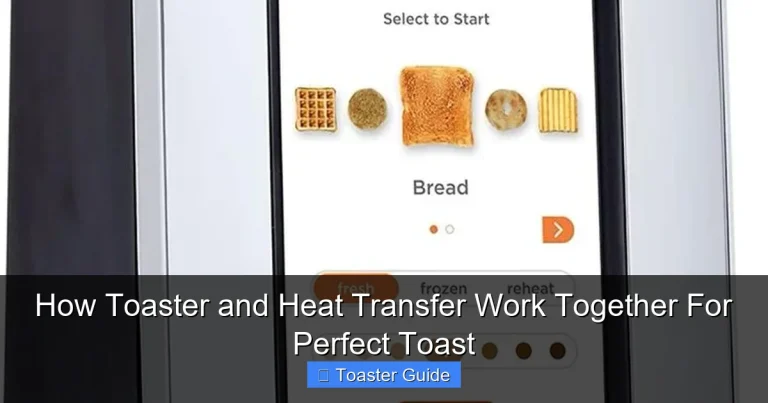
Toaster Controls Explained for Beginners
The front of a toaster can be confusing at first. Here’s how to decode the common controls so you can get predictable results.
The Browning Control: What the Numbers Really Mean
Many people assume the numbers on the dial are “toast levels” that mean the same thing across all brands. They don’t.
In reality, the dial controls:
– Time in most mechanical toasters
– Or heat + time algorithm in electronic/digital models
On one toaster, “3” might be light golden; on another, it might be quite dark. You need to learn your own toaster’s personality.
Tips:
– Start with a medium setting (usually 3–4 on a 1–6 or 1–7 scale).
– Toast a plain slice, then adjust up or down next time depending on your preference.
– Remember that toasting consecutive batches can make later slices darker because the toaster is already warm.
Specialty Buttons and What They Do
Most toasters will have some or all of these:
– Bagel
– Usually heats only one side of the bread more intensely (the cut side)
– Sometimes reduces heat on the outer side to avoid burning
Use it for bagels, thick buns, or anything you want crisp inside, soft outside.
– Defrost
– Adds a bit of extra time or a lower pre-heat stage
– Designed for frozen bread or pastries
Use it when taking items straight from the freezer.
– Reheat
– Short, gentle warming cycle
– Doesn’t significantly add color
Good for toast that has gone cold but not soggy.
– Cancel / Stop
– Immediately cuts power to the heating elements
Use it whenever you smell something burning or want to pull toast early.
Knowing what these buttons actually do helps you choose the right cycle instead of guessing.
—
How to Use a Toaster Safely (Step‑by‑Step)
For beginners, safety matters just as much as getting a perfect golden color.
Basic Safety Rules
– Never insert metal objects
No forks, knives, or metal tongs should ever go inside the slots while it’s plugged in. This can cause electric shock.
– Unplug before cleaning
Always disconnect the toaster before emptying crumbs or wiping it down.
– Don’t place it near water
Keep away from sinks and remember that appliances and water do not mix.
– Avoid covering the toaster
Don’t drape towels or cloth over it while in use. The heat needs to escape.
– Watch it during use
Especially when you’re still learning the settings, stay in the kitchen while it’s running.
Step‑By‑Step: Toasting Bread in a Pop‑Up Toaster
1. Check the toaster
Make sure it’s on a stable, heat-resistant surface and there’s nothing flammable around it.
2. Set the browning level
Use a medium setting the first time with a new toaster.
3. Place bread in the slots
Insert slices vertically, centered in each slot. For bagels, place the cut side toward the inside heating element (usually indicated on the toaster).
4. Push down the lever
This starts the toasting cycle.
5. Stay nearby
Watch and smell. If you suspect burning, press the cancel button and pop the toast early.
6. Wait for the pop‑up
When the cycle ends, the lever rises and your toast appears.
7. Remove the toast carefully
Use your fingers with caution or wooden/silicone tongs designed for toast. Avoid metal tongs unless the toaster is unplugged and cool.
8. Adjust for next time
Too light? Increase the dial slightly next round. Too dark? Decrease it a notch.
—
Mastering Even, Golden Toast: Practical Tips
Now that the toaster explained for beginners basics are clear, let’s focus on achieving consistently good, even results.
Choose the Right Bread
Not all bread behaves the same in a toaster.
– White sandwich bread:
Toasts quickly; easy to get golden. Good starting point.
– Whole wheat / multigrain:
Often denser; may need a slightly higher setting or longer time.
– Sourdough and artisan loaves:
Thicker and chewier; use wider slots and possibly a higher setting, but watch closely.
– Very sweet bread (brioche, raisin bread):
Burns faster because of sugar. Use a lower setting and check more often.
– Frozen bread:
Use defrost or toast twice at a lower setting, rather than one very long, high setting.
Control Moisture for Better Texture
– Fresh, soft bread has more moisture and may take longer to reach the same color as slightly older bread.
– Stale bread toasts faster and can become too hard if overdone.
If your toast is:
– Brown outside but still soft and steamy inside → The bread was very moist; try a slightly lower heat or longer, gentler cycle (in a toaster oven if you have one).
– Dry and brittle throughout → You may be toasting too long or using too dry bread; reduce the setting slightly.
Arrange Items Correctly
For pop‑up toasters:
– Don’t jam thick slices in; they should slide in with minimal force.
– Center the bread in the slot to avoid one side getting more heat.
For toaster ovens:
– Place slices in a single layer, not touching each other.
– Use the toast or broil function according to your manual (they behave differently).
Learn Your Toaster Through Mini Experiments
A simple way to get to know your appliance:
1. Take 3–4 slices from the same loaf.
2. Toast each at a different setting (e.g., 2, 3, 4, 5).
3. Note the color and texture of each.
4. Decide which is your target for:
– Thin white bread
– Thick whole grain
– Frozen slices
Write down the best settings on a note and stick it near the toaster if that helps, especially when multiple people share it.
—
Using a Toaster Oven for Great Toast
If you’re using a toaster oven instead of (or in addition to) a pop‑up toaster, the process is slightly different.
Basic Toasting in a Toaster Oven
1. Preheat or not?
Many toaster ovens don’t require preheating for basic toast, especially if they have a “toast” setting.
2. Choose the function
– Use toast mode if available. It balances top and bottom heating.
– If toast mode is missing, use bake or broil with attention:
– Bake: more even, gentler
– Broil: top heat only, faster browning, needs watching
3. Set temperature and time
– Some models let you choose a color level (light/medium/dark).
– Others require a temperature (e.g., 350°F / 175°C) and time (e.g., 3–5 minutes).
4. Position the rack
– Middle position is usually best for toast.
– Closer to the top heats faster but can burn more easily.
5. Monitor closely
Look through the glass door. Pull the rack out with an oven mitt when it reaches desired color.
When Toaster Ovens Are Better Than Pop‑Ups
Consider using a toaster oven when:
– Your bread is very thick or oddly shaped.
– You’re toasting toppings (like cheese) on bread—essentially an open-faced sandwich.
– You’re making multiple slices and want to see them as they cook.
– You want toasted items that shouldn’t be vertical, like small pizzas or pastries.
—
Common Toasting Mistakes (And How to Avoid Them)
Even experienced home cooks make these errors. Avoiding them will dramatically improve your results.
1. Not Cleaning the Crumb Tray
Problem:
– Built-up crumbs can burn, cause smoke, and even become a fire hazard.
– Old crumbs can alter the smell and taste of fresh toast.
Solution:
– Empty the crumb tray at least weekly (more often if you use the toaster daily).
– Wipe the tray with a dry or slightly damp cloth and dry thoroughly before reinserting.
2. Using the Same Setting for Every Bread
Problem:
– Different breads toast at different speeds. One setting does not fit all.
Solution:
– Have a go-to setting for your most common bread.
– Adjust up or down by ⅓–½ step for:
– Very fresh bread (often up slightly)
– Sweet or sugary bread (down slightly)
– Dense, grainy bread (up slightly, but watch closely)
3. Leaving the Toaster Plugged in and Crowded
Problem:
– A plugged-in toaster still draws a bit of power and is one more appliance on a potentially overloaded outlet strip.
– Crowding flammable items (towels, boxes, paper) nearby is dangerous.
Solution:
– Unplug when not in use, if feasible.
– Keep a clear area around the toaster during operation.
4. Forcing Bread That Doesn’t Fit
Problem:
– Jamming bread into slots can damage the mechanism or cause uneven toasting and potential sticking.
Solution:
– Choose bread that naturally fits, or cut larger slices down.
– Invest in a wide-slot toaster if you love thick slices and bagels.
—
Simple Ways to Upgrade Your Toast Game
Once you’re comfortable making good, basic toast, you can start to play with flavors and textures.
Control Texture: From Soft to Crunchy
You can intentionally create different textures:
– Soft inside, crisp outside
– Use slightly thicker slices.
– Toast at a medium setting.
– Eat soon after toasting before it cools and dries too much.
– Extra crunchy
– Toast once at a medium setting.
– Let it cool briefly, then give it a short second toasting at a lower setting.
Spread Strategy: Apply at the Right Time
– Butter:
– For maximum melt and soak: butter immediately when the toast pops.
– For more distinct buttery layer on top: wait 20–30 seconds before spreading.
– Nut butters, cream cheese, chocolate spread:
– Let the toast cool slightly first, to prevent excessive melting and sogginess.
– Juicy toppings (tomatoes, fresh fruit):
– Use a light smear of fat (butter, cream cheese, avocado) on toast first as a barrier.
– This prevents liquid from soaking in too fast and making it soggy.
Flavor Additions
You don’t need elaborate recipes; a few simple upgrades go a long way:
– Sprinkle cinnamon and sugar onto buttered toast.
– Add a drizzle of honey or maple syrup over nut butter.
– Rub toast with a cut clove of garlic while still warm for instant garlic toast (then add olive oil and salt).
– Top with sliced avocado, salt, pepper, and a squeeze of lemon for a quick savory snack.
The key is to think of toast as a customizable base, not just a side dish.
—
Caring for Your Toaster So It Lasts
A well-maintained toaster can last many years and perform far more reliably.
Regular Cleaning
1. Unplug the toaster
Always the first step.
2. Remove and empty the crumb tray
Tap it gently over a trash can.
3. Shake out loose crumbs
Gently invert the toaster (over the sink or trash) and shake softly. Don’t bang it; that can damage internal parts.
4. Wipe the exterior
Use a soft, slightly damp cloth. For stainless steel, follow the grain to avoid streaks.
5. Avoid liquids inside
Never pour water or cleaning solution into the slots. If something is stuck inside, try turning the toaster upside down and gently tapping, or use wooden skewers with extreme care while it’s unplugged and cool.
Occasional Deeper Care
– Check the cord for damage or fraying. If the cord is compromised, replace the toaster; don’t try to repair it yourself.
– Inspect the slots for burnt-on food. If there are large stuck-on bits, wait until fully cool, then gently dislodge them (again, with non-metal, non-conductive tools).
—
When to Replace Your Toaster
Even with good care, there are times when replacement is safer and more practical.
Consider a new toaster if:
– Toast comes out unevenly browned no matter what you do.
– The lever sticks, or the toaster doesn’t stay down consistently.
– It smells like burning plastic or wiring when in use.
– The cord is damaged or the plug gets unusually warm.
– You frequently see sparks or hear popping noises.
Given the cost of most home toasters, repairs are rarely worth it. Improving safety and consistency with a new model is often the best choice.
—
Bringing It All Together
You don’t need advanced cooking skills to make excellent toast, but a little understanding goes a long way. When you see the toaster explained for beginners this way, it stops being a mysterious box with unpredictable results and becomes a simple, predictable tool you can control.
To recap the essentials:
– Choose the right type of toaster for your needs: pop‑up for simplicity, toaster oven for versatility.
– Understand that the browning dial controls time and heat, and learn how your specific model behaves.
– Match bread type and moisture with appropriate settings.
– Use features like bagel, defrost, and reheat thoughtfully instead of guessing.
– Prioritize safety and regular cleaning, especially the crumb tray.
– Experiment with timing, toppings, and techniques to dial in your personal perfect toast.
With this foundation, you’ll be able to consistently produce toast that suits your taste—whether that’s barely kissed with color or deeply golden and crunchy—while keeping your kitchen safe and your toaster working smoothly for years.