Why Toaster Burns One Side: Best Fixes and Stunning Guide

A slice of toast that’s golden on one side and pale or burnt on the other can turn a simple breakfast into a small daily frustration. If you’ve ever wondered why toaster burns one side and how to fix it without immediately buying a new appliance, you’re not alone. Uneven toasting is one of the most common complaints people have about their toasters.
This comprehensive guide will walk you through all the likely reasons your toaster is misbehaving, how to troubleshoot them step by step, and what you can realistically do to restore even browning. We’ll also cover when it’s worth repairing, when to replace, and how to choose a better model next time.
—
Understanding How a Toaster Works (So the Problem Makes Sense)
Before you can fix an uneven toaster, it helps to know what’s happening inside.
Basic Anatomy of a Toaster
Most pop-up toasters share a similar design:
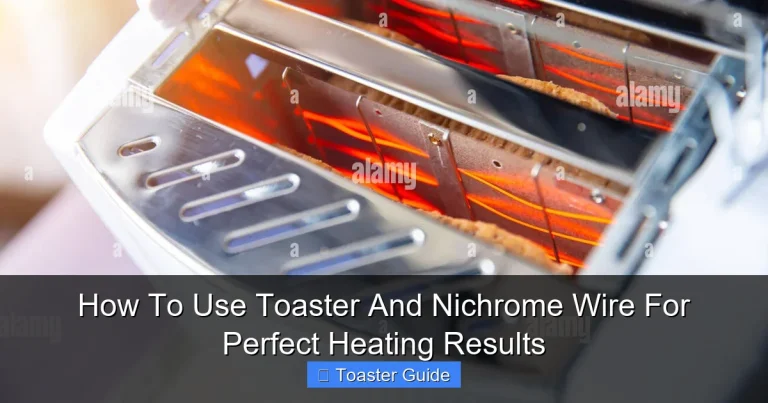
– Heating elements: Thin wires (usually nichrome) or metal plates that glow red when electricity passes through them. These sit on both sides of each bread slot.
– Bread slots and cages: Metal frames that hold the bread in place and lower/raise it.
– Browning control (thermostat or timer): A mechanism that determines how long the heaters stay on.
– Carriage lever and latch: What you push down to start the toasting cycle.
– Crumb tray: A removable tray at the bottom that catches falling crumbs.
For toast to be even, the heating elements on both sides of the slot must heat evenly and stay on for the appropriate amount of time.
Why Uneven Browning Happens
If your toast is:
– Dark on one side and pale on the other, or
– Normal on one side and almost black on the other
then at least one of the following is likely at play:
1. One side’s heating elements are failing, blocked, or dirty.
2. Heat distribution is uneven due to design or wear.
3. You’re using the toaster in a way that encourages imbalance (e.g., placement, bread type).
4. Internal components (thermostat, wiring) are starting to fail.
Let’s dig into each cause and the best fixes.
—
The Most Common Reasons One Side Burns (or Under-toasts)
When you’re troubleshooting why your toaster burns one side, think in terms of what would make one side hotter, colder, or less efficient than the other.
1. Partially Failed Heating Elements
What happens
Toasters rely on a series of wires or strips that heat up. If a section of these elements:
– Breaks
– Loosens
– Corrodes
then that part may not heat, or it may heat less. As a result, one surface of the bread is closer to a fully working heater while the other side is near a partial or failing element, causing uneven browning.
Signs to look for
– Look inside the slots (unplugged, cool toaster):
– One side glows bright red along its full length.
– The other side:
– Glows only in patches, or
– Is dimmer, or
– Doesn’t glow at all in certain sections.
– Toast looks striped or patchy on one face.
Why this can cause burning on one side
If one side’s elements are underperforming, the toaster’s timing or thermostat keeps power on long enough for that weaker side to achieve the set browning. Meanwhile, the stronger side overheats and burns.
2. Crumbs, Grease, or Debris Obstructing Heat
What happens
Over time, crumbs, sugar residue (from pastries, bagels, etc.), or even bits of melted cheese can accumulate around the elements.
– Debris near one side may absorb heat, preventing the bread from browning properly.
– Or it can cause hot spots that scorch one area.
You might end up with toast that is:
– Unevenly browned on one surface, or
– Smells burnt despite the bread not looking very dark.
Signs to look for
– Smoky or burnt smell even with lighter settings.
– Visible buildup on one side of the slots.
– Crumbs stuck near or on the elements.
3. Misaligned or Warped Bread Cages
What happens
The internal cage that holds your bread may become:
– Bent from rough use
– Warped from temperature cycles
– Poorly aligned from manufacturing defects
If the bread is leaning closer to one side:
– That side gets more direct radiation from the elements.
– The opposite side is slightly farther away and stays lighter.
Signs to look for
– Bread consistently leans toward one wall of the slot.
– Toast shows a clear gradient: dark on the side touching the wall, light on the other.
– You notice physical warping or misalignment if you look down the slot.
4. Design Limitations in Cheap or Narrow Toasters
Sometimes the issue isn’t damage; it’s design.
Low-cost toasters may:
– Use fewer or lower-quality heating wires on one side.
– Have irregular spacing between elements.
– Be poorly insulated, so outer walls drain heat from one side.
Narrow slots can also exaggerate the effects of:
– Slight overhang if the bread is wider than the slot.
– Light exposure on one side if the bread isn’t centered.
If your toaster has always had this problem since day one, it may be a design flaw rather than a new malfunction.
5. Inconsistent Thermostat or Timing Mechanism
What happens
Toasters use either:
– A bimetallic strip thermostat (that bends as it heats), or
– An electronic timer (in newer digital models).
If the thermostat or timing circuit is off, your toaster may:
– Run too long before popping up.
– Turn off at slightly different times from one cycle to the next.
This doesn’t always affect only one side, but if one side’s heating elements are slightly stronger, a faulty thermostat amplifies that difference—leading to visible one-sided burning.
6. Uneven Power Supply or Internal Wiring Issues
What happens
Inside the toaster, power is distributed to both sides of each slot. If:
– A connection is loose,
– A solder joint is failing, or
– A wire is partially damaged,
one side’s element bank may receive more power than the other. The stronger side gets hotter faster and darker.
Signs to look for
– The problem seems to be getting progressively worse.
– Occasionally the toaster seems to “behave” normally, then regresses.
– You might see flickering in the glow of one side.
Note: Opening a toaster to check wiring can be dangerous and may void warranties. For most households, this is a job for a professional or a sign to replace the unit.
7. Environmental Factors: Placement and Ventilation
This is an often overlooked cause.
If your toaster is:
– Pushed tight against a wall or backsplash
– Placed under low-hanging cabinets
– Partially covered or surrounded by objects
heat may be trapped more on one side, altering how hot each side of the bread becomes.
Example:
– The side against a tile wall reflects more heat back, browning that surface more aggressively.
– The exposed side loses more heat to the air and toasts lighter.
This is especially noticeable with metal or stone surfaces that reflect radiant heat.
8. Bread Type, Shape, and Condition
Sometimes, the toaster isn’t the only variable. Bread characteristics can accentuate small imbalances:
– Very moist bread (fresh bakery loaves, brioche) absorbs heat differently than dry slices.
– Uneven thickness (one side thicker than the other) creates uneven toasting.
– Sugary or glazed breads (raisin toast, cinnamon swirl, pastries) caramelize and burn faster on surfaces with more sugar.
If you only notice the problem with certain breads, your toaster may be mostly fine, just sensitive.
—
Step‑by‑Step Troubleshooting: Diagnose Why One Side Is Burning
Now that you know the common culprits, let’s walk through a systematic way to pinpoint the exact cause.
> Safety first: Always unplug the toaster and allow it to cool completely before inspecting or cleaning.
Step 1: Visual Check of Heating Elements
1. Plug in the toaster and run it empty (no bread) for a short cycle on a medium setting.
2. Stand back and look down into each slot from above.
3. Observe:
– Do all wires or strips glow red on both sides?
– Are some sections darker, patchy, or not glowing at all?
– Is one side noticeably brighter/hotter than the other?
Interpretation:
– Uniform glow on all sides: Elements are likely functional; the issue may be alignment, crumbs, or environment.
– Patchy or dim sections: Partially failed elements—this often requires repair or replacement.
– One side significantly brighter: Power imbalance or wiring issue.
Unplug the toaster again and let it cool before proceeding.
Step 2: Clean Thoroughly to Remove Obstructions
Even if the elements look fine, a deep clean can solve many uneven-toasting problems.
How to Clean Safely and Effectively
1. Unplug the toaster and let it cool.
2. Remove the crumb tray and dispose of crumbs. Wash the tray with soap and water, dry thoroughly.
3. Gently invert the toaster over a trash can and shake lightly to dislodge stuck crumbs.
4. Use a soft pastry brush or small paintbrush to sweep crumbs and debris from the interior (do not use metal tools).
5. If you see sticky residue:
– Slightly dampen a cloth with water and a touch of vinegar.
– Carefully wipe areas that do not touch electrical components.
– Allow the toaster to dry completely (several hours) before plugging in again.
Run a test with bread afterward:
– If the problem improves or disappears, debris or blockages were likely the main cause.
– If not, continue troubleshooting.
Step 3: Check for Bread Misalignment or Warping
With the toaster unplugged and cool:
1. Look down into the slots:
– Are the metal cages straight and centered?
– Does one side look closer to the bread slot’s wall?
2. Insert a slice of bread (don’t toast yet) and observe:
– Does the slice sit perfectly vertical?
– Or does it lean to one side?
If bread leans or the cage is warped:
– Try gently pressing the cage into a more centered position with a wooden chopstick or plastic utensil (do not use metal).
– Make small adjustments only; you don’t want to break anything.
After adjustment, test again with a slice of bread:
– If browning is more even, misalignment was at least part of the problem.
Step 4: Experiment with Placement and Environment
Try moving your toaster to a different spot:
– Away from reflective walls or metal appliances.
– Into a more open, ventilated area on your counter.
Then:
1. Toast a slice as usual.
2. Compare results before and after moving the toaster.
If toast becomes more even, environmental heat reflection or poor ventilation was affecting the process.
Step 5: Test Different Breads and Settings
To rule out the bread as the main variable:
1. Use standard, store-bought sandwich bread of uniform thickness.
2. Toast at medium setting and observe both sides.
3. Then test with:
– Slightly thicker bread.
– A sugared bread or pastry.
If only certain bread types cause noticeable imbalance, your toaster may simply be sensitive and need slightly adjusted settings for different products:
– Lower settings for sugary or thin bread.
– Higher settings for thick, dense loaves.
Step 6: Compare Slots and Sides
If your toaster has two slots (or four), check whether the problem is:
– Only in one slot, or
– Present in all slots, but always on the same overall side.
Possible patterns and meanings:
– Only slot #1 burns one side; slot #2 is fine
→ Localized issue: partial element failure or misalignment in that slot.
– All slots are worse on the side nearest a wall or appliance
→ Environmental heat reflection.
– All slots uneven in the same way, no matter what
→ Overall wiring or design flaw. Likely not worth repairing if it’s a cheap model.
—
Practical Fixes: What You Can Actually Do at Home
Once you’ve narrowed down why your toaster burns one side, here are realistic actions you can take—without special tools or deep electrical skills.
1. Regular Deep Cleaning
Even if you don’t see obvious debris, routine cleaning improves consistency and safety.
Maintenance schedule:
– Weekly (heavy use) or monthly (light use):
– Empty and clean crumb tray.
– Shake out loose crumbs.
– Brush interior gently.
Benefits:
– Reduces hot spots and burnt smells.
– Keeps heat distribution more consistent.
– Lowers fire risk.
2. Adjusting Bread Position Manually
If slight misalignment remains, you can adapt your technique:
– Center the bread by feel: When you insert a slice, gently slide it left or right to make it stand as upright as possible.
– For very narrow slices, position them toward the middle of the toaster rather than tight against one wall.
For some older or cheaper models, this simple habit can noticeably improve results.
3. Turn the Toast Midway (Manual “Flip” Hack)
If the toaster consistently toasts darker on one side and you don’t want to replace it yet, you can:
1. Toast on a slightly lower setting than usual.
2. Midway (or when it pops), remove the slice, flip it front-to-back, and toast again briefly.
This manual flipping:
– Exposes each bread face to both sides of the elements.
– Averaging out any consistent imbalance.
It’s not as convenient as a perfect toaster, but it’s a functional workaround.
4. Calibrate Your Browning Settings
When one side is prone to burning:
– Lower the overall browning level by 1–2 steps.
– Toast twice at a lower setting instead of once at a high setting.
This approach:
– Gives you more control.
– Reduces the chance of one side becoming scorched while the other just reaches golden.
5. Use Specialty Settings Correctly (Bagel, Defrost, Reheat)
Many modern toasters offer modes that alter how the elements behave.
– Bagel mode often:
– Turns off or reduces heat on the outside elements.
– Increases heat on the inside elements to brown the cut face.
If your toaster seems to always over-brown one face, check:
– Whether you accidentally leave bagel mode on.
– How your specific model’s bagel mode behaves (manual or online guide).
Using these modes properly can improve your results and reduce apparent unevenness.
6. Be Mindful of Overloaded Use
Toasting several batches back-to-back can:
– Gradually warm the interior metal.
– Cause heat buildup on one side, especially if it’s closer to walls or other appliances.
To avoid this:
– Space out toast cycles by a minute or two.
– Occasionally reduce the setting for later batches.
This is especially important with older or compact toasters.
—
When DIY Is Not Enough: Repair vs. Replace
Some issues, especially electrical or structural ones, are not realistic to fix at home.
Signs It’s Time to Consider Replacement
1. Elements are clearly damaged
– You see broken segments, heavy corrosion, or large unlit areas.
2. Strong burning smell, smoke, or sparking
– Potential fire hazard. Unplug immediately and stop using it.
3. Inconsistent performance despite cleaning and repositioning
– Toast varies wildly in doneness from cycle to cycle.
4. Very old or extremely cheap toaster
– Replacement parts are hard to find, and repair costs can exceed a new unit.
Could Professional Repair Be Worth It?
For high-end toasters or specialty models:
– Some manufacturers or appliance shops offer servicing.
– If the toaster cost significantly more than average, repair might be reasonable.
But for most everyday toasters:
– Labor plus parts often cost as much as or more than a new mid-range toaster.
– Safety concerns (aging plastic, insulation) can make replacement the better choice.
—
Choosing a New Toaster That Toasts Evenly
If you decide your current unit isn’t worth saving, use what you’ve learned about why toasters burn one side to make a smarter purchase.
Key Features to Look For
1. Reputation for Even Toasting
– Check user reviews specifically mentioning:
– “Even browning”
– “Consistent results on both sides”
– “No pale/burnt side issues”
– Look for side-by-side photos in reviews when possible.
2. High-Quality Heating Elements
– Models that use:
– Multiple tightly spaced nichrome wires
– Quartz or ceramic elements (in some premium designs)
– More elements spaced evenly usually equals more uniform heat.
3. Solid Construction and Alignment
– Test display units (if in-store):
– Are slots straight and wide enough?
– Does the bread cage seem sturdy and well-centered?
– Avoid toasters where the slots feel flimsy and loose.
4. Adjustable Settings and Special Modes
– A clear, adjustable browning dial or digital scale.
– Bagel, defrost, and reheat modes that are clearly described.
– Some high-end models offer “lift and look” functions to check toast mid-cycle.
5. Evenness Testing or Independent Reviews
– Some consumer organizations test for:
– Uniform browning across the surface.
– Consistency over multiple batches.
– Look for toasters recommended for reliability and evenness, not just appearance.
Slot Width and Depth
– Wide slots: Better for artisan or homemade bread, bagels, and thicker slices.
– Deep slots: Ensures larger slices don’t remain pale at the top.
A toaster that can fully accommodate your usual bread will naturally toast more evenly.
—
Everyday Habits to Keep Toasting Even Over Time
Once you have a toaster performing the way you want, a few simple habits can prevent the return of one-sided burning.
1. Consistent Cleaning
– Empty and wipe crumb tray regularly.
– Brush interior crumbs out every few weeks.
– Avoid toasting foods that drip (cheese, thick frostings) directly in a standard toaster; use a toaster oven instead.
2. Proper Placement
– Give at least a few inches of clearance on all sides.
– Avoid pressing it flush against walls or storing it under low cabinets while in use.
– Keep it away from areas where steam (from kettles or pots) could condense inside.
3. Match Settings to Bread Type
– Lower settings for:
– Thin bread
– Stale or very dry bread
– Sugary or glazed products
– Slightly higher settings for:
– Dense, whole-grain slices
– Very moist fresh loaves
Keeping notes mentally (or even on a sticky note near the toaster) about which settings work for your common breads can save a lot of trial and error.
4. Don’t Force or Jam Slices
If a slice is too big for the slot:
– Trim edges slightly rather than forcing it.
– For very irregular shapes, consider a toaster oven or grill instead.
Forcing bread in can:
– Bend the internal cage.
– Cause long-term misalignment that leads to one-sided burning.
—
Quick FAQ: Uneven Toaster Problems in Everyday Language
Q: Why does my toaster burn one side but leave the other just warm?
A: Most commonly because one set of heating elements is hotter or closer to the bread than the other. That can come from partial element failure, misalignment, or even placement against a wall that reflects heat back to one side.
Q: Is it dangerous if one side is darker than the other?
A: Slight unevenness isn’t usually dangerous. However, if you see smoke, smell strong burning plastic, or notice sparking or flickering, unplug it immediately and stop using it.
Q: Can cleaning really fix one-sided burning?
A: It often helps more than people expect. Built-up crumbs or sticky residue can change how heat is distributed, causing hot or cold spots, especially on one side.
Q: My toaster has a bagel function—could that be affecting my toast?
A: Yes. On many models, bagel mode intentionally lowers or disables the elements on the outside of the bagel. If you accidentally leave it on, you might see one face of ordinary bread toasted more than the other.
Q: The elements look uneven when glowing. Should I try to fix them myself?
A: For most people, no. Opening the toaster exposes you to electrical hazards and often isn’t worth the cost or risk. If the unit isn’t under warranty, it’s usually safer and more economical to replace it.
—
Bringing It All Together
Uneven toast is rarely a mystery once you understand the mechanics. When you notice one side consistently darker, lighter, or burnt, it’s usually due to a combination of:
– The condition of the heating elements,
– Cleanliness and internal alignment,
– How and where you’re using the toaster, and
– The inherent quality of the unit.
To diagnose and improve the situation:
1. Inspect the glow of the elements (carefully) to check for failures.
2. Clean the toaster thoroughly, including the crumb tray and interior.
3. Check alignment and ensure bread stands upright in the slots.
4. Move the toaster away from walls or reflective surfaces.
5. Adjust your toasting habits, including settings, bread choice, and flipping methods.
If these steps don’t restore reasonably even browning—or if you see signs of more serious electrical issues—it’s usually time to invest in a new toaster designed with better heat distribution.
By understanding why one-sided burning happens and how to prevent it, you can turn a breakfast annoyance into a solved problem, and enjoy evenly golden toast day after day.