French Press Coffee Making Tips: Perfect Brew Every Time

Use a coarse, even grind and a 1:15 coffee-to-water ratio for a clean, balanced cup.
I’ve made and tested hundreds of French press brews over the years, and these french press coffee making tips pack practical steps, common mistakes, and advanced tweaks that lift your cup. This guide explains grind, ratios, water, timing, cleaning, and flavor tricks in plain language so you can brew consistent, great-tasting coffee at home with confidence.
Why choose a French press?
A French press makes full-bodied coffee. It extracts oils and soluble solids that paper filters trap, giving a richer mouthfeel. These french press coffee making tips show how to get clarity and depth, not just strength.
A French press is simple. No paper filters, no pods. With the right grind, ratio, and timing, it gives excellent control and a reliable cup every time.

Essential equipment and coffee
Good results start with the right tools. You don’t need fancy gear, but certain items make a big difference for french press coffee making tips.
- Burr grinder for a consistent coarse grind. Blade grinders create uneven particles.
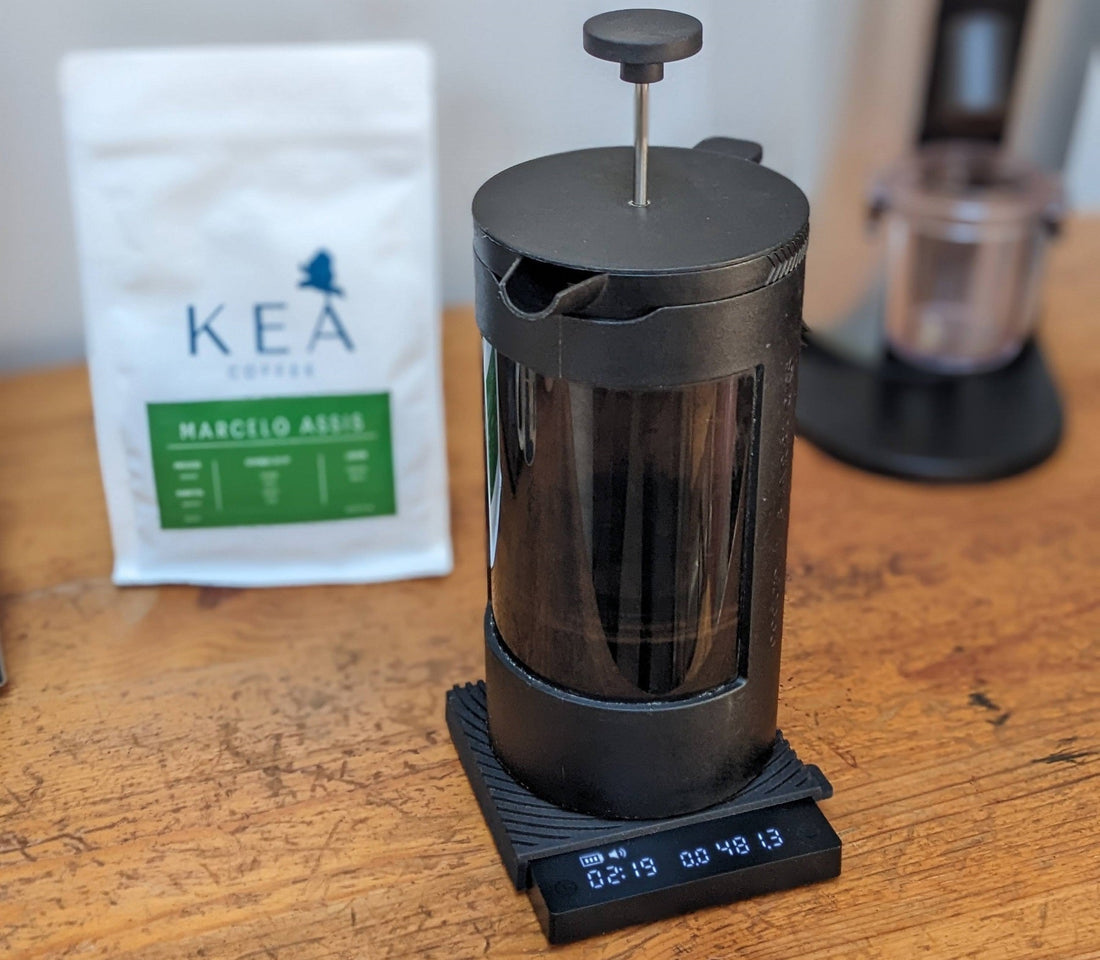
- Kitchen scale to weigh coffee and water. Eyeballing causes big inconsistencies.
- Gooseneck kettle or any kettle that pours steadily. Control matters during bloom and pour.
- Quality whole beans roasted within 2–4 weeks. Freshness beats any gimmick.
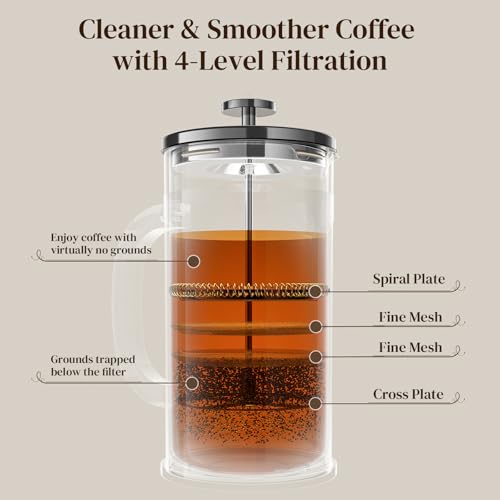
- A clean French press with a tight-fitting plunger and mesh filter that fits well.
I learned early that a cheap grinder made muddier cups. Upgrading to a burr grinder cut bitterness and improved clarity fast.

Grind size, coffee-to-water ratio, and measurements
Grind size and ratio are the backbone of french press coffee making tips. Use a coarse, even grind about the size of coarse sea salt. Too fine and you get grit and over-extraction. Too coarse and the coffee can taste weak.
Common starting ratios:
- 1:15 coffee-to-water for balanced flavor. For example, 20 g coffee to 300 g water.
- 1:12 for a stronger cup.
- 1:17 if you want a lighter brew.
Measure by weight for repeatable results. If you don’t have a scale, use 1 level tablespoon per 7–8 grams of coffee, but scales are strongly recommended for consistency.
Step-by-step French press coffee method
Follow a clear routine to use the french press well. This method combines many french press coffee making tips into one repeatable process.
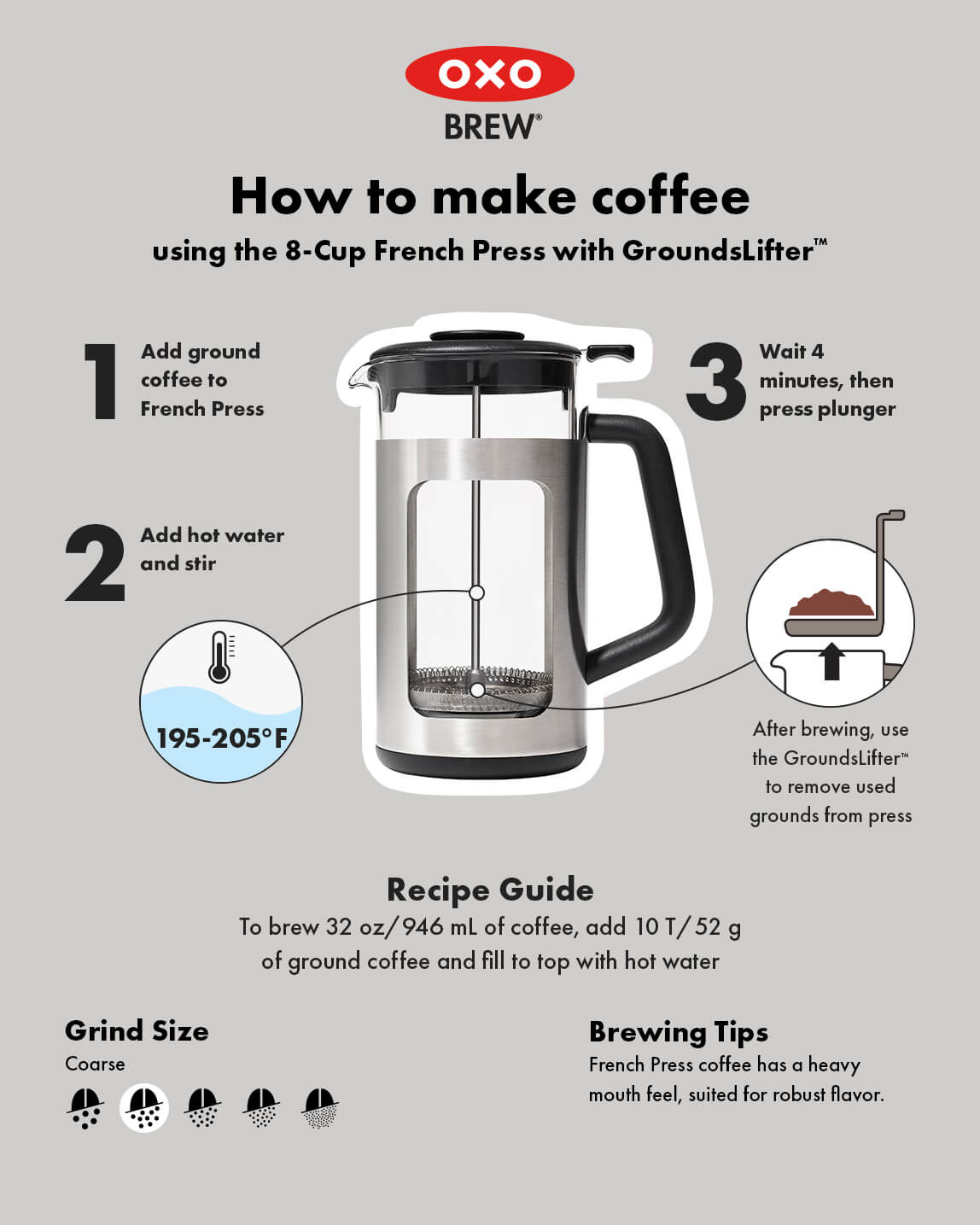
- Preheat your press and cups with hot water. Dump the water before adding coffee.
- Weigh and grind coffee to a coarse, even texture.
- Add coffee to the press. Start your timer at the first pour.
- Pour twice the coffee weight in hot water to bloom for 30–45 seconds. Stir gently.
- Pour the remaining water up to your target weight. Place the lid with plunger raised.
- Brew for 3:30 to 4:30 minutes depending on taste. 4 minutes is a good default.
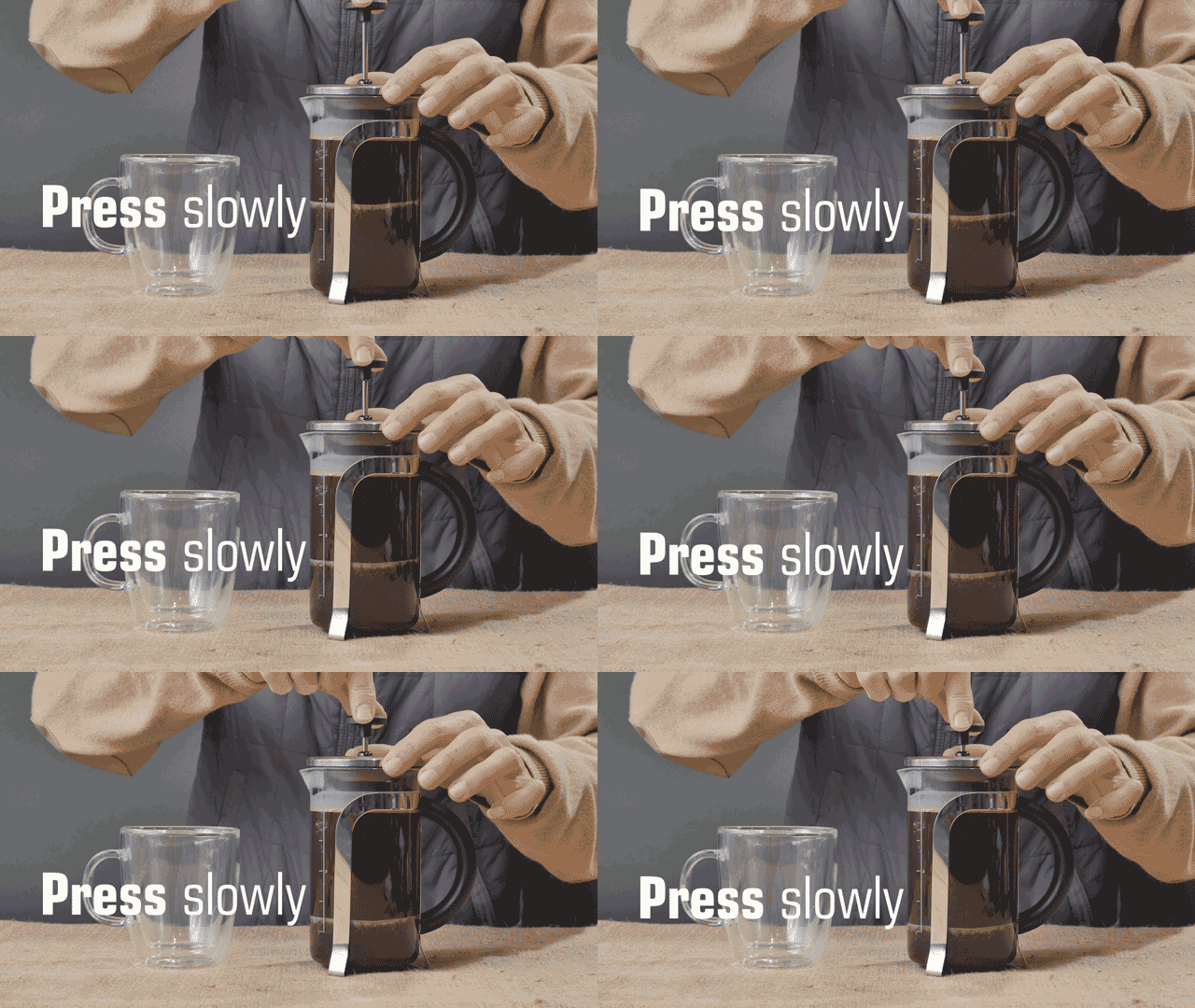
- Press the plunger down slowly with steady pressure. Pour immediately and enjoy.
In my experiments, a short bloom and a gentle stir reduced uneven extraction. Press slowly to avoid forcing fines through the mesh.
Water temperature and brewing time
Water matters. Use water between 195°F and 205°F (90°C–96°C). Boiling water cools slightly; let it sit 30 seconds after boiling if needed. Cooler water under-extracts. Too-hot water speeds up extraction and can taste bitter.
Brew time depends on grind and ratio. Aim for 3:30 to 4:30 minutes for a standard coarse grind. If the cup tastes sour, increase time or make the grind finer. If it tastes bitter, shorten time or coarsen the grind.
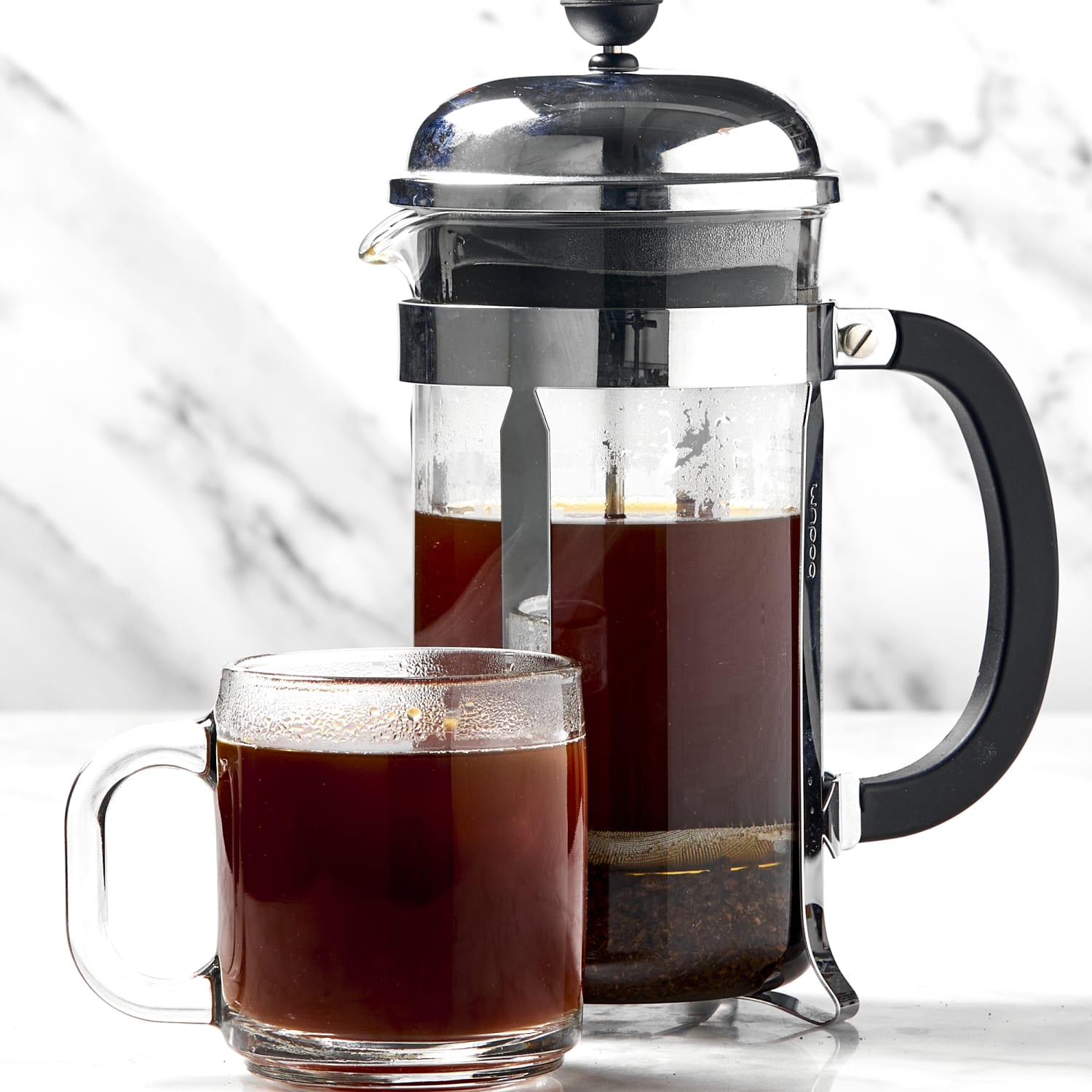
:max_bytes(150000):strip_icc()/Simply-Recipes-French-Press-Coffee-METHOD-07-e61f9c9136b94f3389522ec2f52892a5.jpg)
Troubleshooting and common mistakes
Problems happen. These french press coffee making tips help you fix common issues fast.
- Bitter or harsh coffee
- Cause: Too fine grind, too hot water, or over-extraction.
- Fix: Coarsen the grind, lower temperature slightly, or shorten brew time.
- Sour or weak coffee
- Cause: Under-extraction, grind too coarse, or too little coffee.
- Fix: Make grind finer, increase brew time, or raise coffee dose.
- Gritty sediment in the cup
- Cause: Very fine particles or worn filter.
- Fix: Use coarser grind or replace the mesh/filter assembly. Pour gently to leave settled grounds.
- Overfull or hard-to-press plunger
- Cause: Too fine grind or too much coffee.
- Fix: Coarsen grind and use correct ratio.
When I first used a very fine grind, my press clogged and I learned to always check particle size before brewing.
Cleaning and maintenance
A clean French press brews better coffee. Old oils and trapped grounds ruin flavor fast. These cleaning steps are simple but effective.
- Disassemble the plunger and scrub the mesh screens with warm, soapy water.
- Rinse all parts thoroughly to remove soap residue.
- Deep clean weekly by soaking parts in warm water and a touch of baking soda, then scrub lightly.
- Replace worn filters or screens. A snug seal prevents grounds from slipping into the cup.
I keep a small brush near the sink. Quick rinses after each use save a lot of scrubbing later.
Advanced tips and flavor tweaks
Once you master basics, try these french press coffee making tips to refine flavor and experiment.
- Bloom technique: Pour a small amount of water first and let coffee degas for 30–45 seconds before full pour.
- Gentle agitation: Stir once after bloom to even the bed, then let it brew undisturbed.
- Plunge halfway: Press halfway after 3 minutes, leave for 30 seconds, then finish pressing for a cleaner cup.
- Cold-brew press: Use a 1:8 to 1:10 ratio, steep in cold water for 12–18 hours in the fridge, then press and strain.
- Paper-filter trick: Pour the press coffee through a paper filter into a carafe for a cleaner, less oily cup while keeping full flavors.
I often use the halfway press trick for guests who prefer less body. It reduces sediment and highlights delicate flavors.
Personal notes and mistakes to avoid
I’ve brewed hundreds of presses and learned lessons that save time and taste. These are friendly tips from experience.
- Don’t rush the grind. A fast grind often means uneven particles.
- Always preheat the press. Cold glass steals temperature and flavor.
- Taste and tweak. Keep a simple log of grind, ratio, and time so you can repeat your best brews.
When friends visit, I use a simple 20 g to 300 g recipe and tweak from there. It’s predictable and pleasing to most palates.
Frequently Asked Questions of french press coffee making tips
How coarse should I grind for French press?
Use a coarse grind similar to coarse sea salt. Consistent grind size helps avoid grit and over-extraction.
What is the best coffee-to-water ratio for French press?
Start with 1:15 (coffee:water) for balance. Adjust to 1:12 for stronger cups or 1:17 for lighter ones.
How long should I brew French press coffee?
Aim for 3:30 to 4:30 minutes. Four minutes is a good default and works with most coarse grinds.
Why does my French press coffee taste bitter?
Bitter taste often means over-extraction, too-fine grind, or water that’s too hot. Coarsen the grind, lower the temperature, or shorten brew time.
How do I reduce sediment in my cup?
Use a coarser grind, press slowly, and consider double filtering through a paper filter for a cleaner cup.
Can I make cold brew in a French press?
Yes. Use a coarser grind and a higher coffee ratio. Steep in cold water for 12–18 hours in the fridge, then press and serve.
Conclusion
Mastering french press coffee making tips is mainly about control: grind, ratio, water, and timing. Start simple with a coarse grind, a 1:15 ratio, and a four-minute brew, then tweak to your taste. Try one change at a time, keep notes, and enjoy the process.
Take action: brew a batch using the steps here, record what you changed, and refine your method over a few brews. Leave a comment with your favorite ratio or a question, and subscribe for more practical tips and recipes.