How to Make Hard Boiled Eggs in Rice Cooker Fast and Easy

Yes, you can make hard boiled eggs in a rice cooker by steaming them with the right water amount and then cooling them quickly in ice water. The method is fast and convenient, but results vary by cooker model, so a test batch helps you find the best timing.
If you want a fast, hands-off way to cook eggs, making hard boiled eggs in a rice cooker is a simple option in 2026. It works especially well when you already have the appliance out for rice, grains, or meal prep and want one less pot to wash.
- Fast and hands-off: A rice cooker can steam eggs with minimal attention.
- Model matters: Timing changes by cooker type, egg size, and batch size.
- Cool quickly: An ice bath helps stop carryover cooking and improves peeling.
- Check safety first: Read the manual and avoid damaged appliances.
- Great for meal prep: Eggs work well in salads, bowls, sandwiches, and snacks.
Why Make Hard Boiled Eggs in a Rice Cooker in 2026?
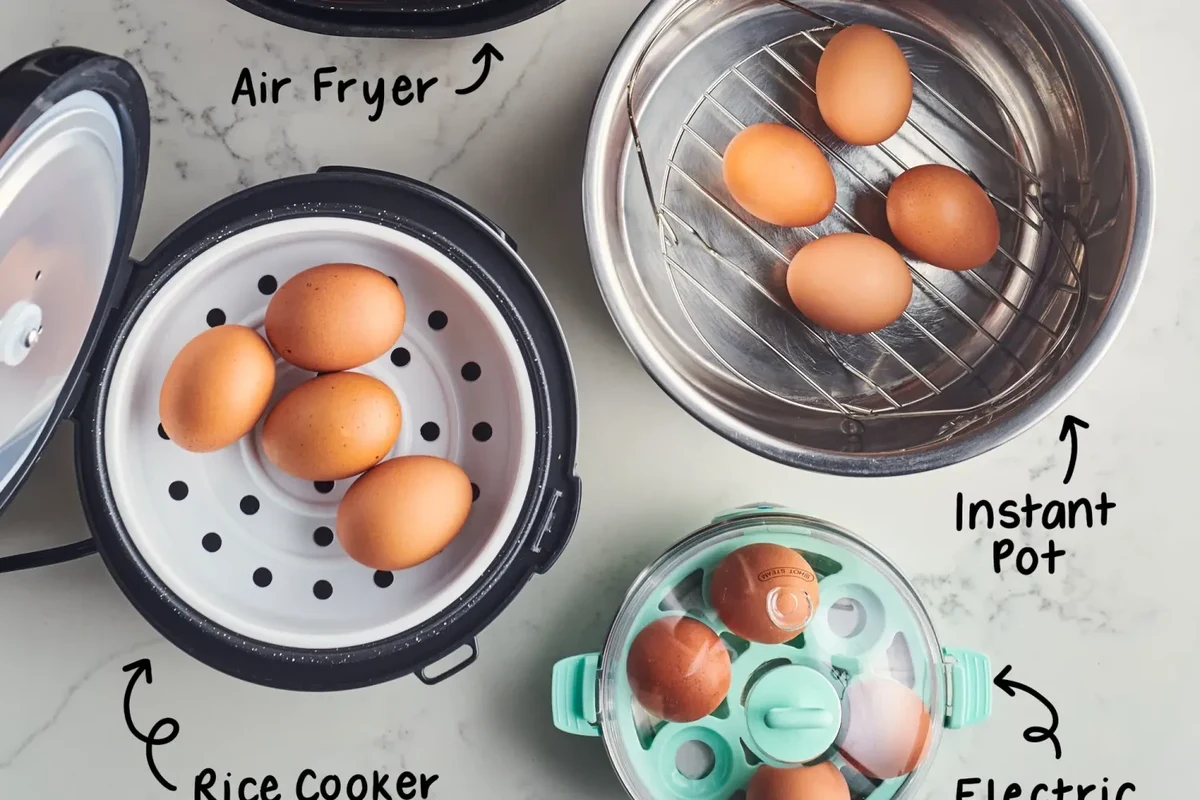
For busy home cooks, the appeal is straightforward: set it up, walk away, and come back to cooked eggs. A rice cooker can steam or gently heat eggs with less attention than a stovetop pot, which is helpful on rushed mornings or during meal prep.
This method also fits small kitchens, dorm rooms, studio apartments, and shared spaces where stovetop access may be limited. If you already use a rice cooker for rice, quinoa, oats, or other alternative grains and sides, eggs can be a convenient add-on batch.
Search intent: fast, hands-off, no-boil egg cooking for busy home cooks
Most people searching this topic want a low-effort method that does not require watching a pot. A rice cooker can deliver that convenience, though exact results vary by model, egg size, and how your cooker cycles between heat and warm.
Why this method appeals for dorms, small kitchens, and meal prep
Rice cookers are compact, easy to store, and often more versatile than they first appear. For meal prep, they let you cook several eggs at once while freeing up the stove for other dishes.
What makes rice cooker egg cooking different from stovetop boiling
Instead of fully submerging eggs in boiling water, many rice cooker methods rely on steam or controlled heat. That usually means a gentler cook, but it also means timing can be less predictable than a standard pot on the stove.
What You Need Before You Start
Before you begin, confirm that your rice cooker can handle steaming or heating items other than rice. Some cookers are better suited to this than others, and the safest approach is always to check the manual first.
Rice cooker compatibility: basic switch models, fuzzy logic cookers, and steam trays
Basic switch-style cookers often work well for simple egg steaming because they are easy to monitor. Fuzzy logic models may cycle heat differently, so the total time can vary more, while steam trays can make egg placement cleaner and more consistent.
Best egg types and batch sizes for the cooker size
Standard large eggs are the easiest starting point, but medium or extra-large eggs can work too. Keep the batch size modest so steam can move around the eggs; overcrowding can lead to uneven cooking.
Water amount, measuring cup notes, and optional steamer basket setup
Use enough water to create steam for the full cook cycle, but not so much that the eggs are submerged unless your cooker and method are designed for that. If your rice cooker includes a steamer basket or tray, that usually helps keep the eggs above the water line and improves airflow.
Use the rice cooker’s measuring cup only if your manual recommends it. If not, a standard measuring cup is usually easier for repeatable results.
Helpful tools: tongs, bowl of ice water, timer, and towel
Have tongs or a spoon ready for removing hot eggs safely. A bowl of ice water helps stop the cooking fast, while a timer and towel make the process smoother and less messy.
Step-by-Step: How to Make Hard Boiled Eggs in Rice Cooker Fast and Easy
The basic method is simple: place the eggs in the cooker, add water, run the cycle, then cool them quickly. The details matter, though, because too much heat or too little cooling can leave you with rubbery whites or overcooked yolks.
Prep the eggs and rice cooker safely
Start with clean eggs and a clean cooker insert. Set the eggs in a single layer if possible, and avoid stacking them unless your cooker’s steam tray is designed for that.
Add the right amount of water for steaming or boiling
If you are steaming, add enough water to produce steady steam without touching the eggs. If your cooker and method call for a small boil-style setup, follow the manual closely and avoid guessing, since water needs vary by model.
Arrange the eggs in the cooker insert or steam tray with space between them if possible. This helps heat circulate more evenly.
Pour in the amount needed for steaming or the method recommended by your cooker manual. Keep the water level consistent each time you want repeatable results.
Close the lid, start the cooker, and let it run. If your cooker switches to warm early, you may need to add a short rest period or restart briefly depending on the eggs’ doneness.
Move the eggs into ice water for several minutes, then crack and peel. Cooling quickly helps stop carryover cooking and usually improves peeling.
Set the cooker and monitor the cycle
Stay nearby the first time you try this method so you can learn how your cooker behaves. Some units finish quickly, while others keep the eggs hot longer than expected.
Rest time, ice bath, and peeling for clean results
Once the cycle ends, let the eggs rest briefly if needed, then transfer them to ice water. This step is one of the biggest differences between okay eggs and cleaner, easier-to-peel eggs.
How to tell when the eggs are fully hard boiled
A fully hard-boiled egg should have a firm white and a set yolk with no runny center. If you are unsure, crack one open after cooling; if the yolk is still soft, adjust the next batch by adding a little more time.
Timing Guide, Texture Results, and Cost Comparison
Timing varies more in a rice cooker than in a standard pot, so treat the first batch as a test. After that, you can fine-tune the process for your cooker, your egg size, and your preferred yolk texture.
Soft, medium, and hard yolk timing differences
Shorter cook times usually produce softer yolks, while longer times move toward fully hard-boiled eggs. Because rice cookers differ, think in ranges rather than exact minutes, and adjust after seeing your results.
How cook time changes by rice cooker type and egg size
Small eggs may finish faster than extra-large eggs, and basic cookers often behave differently from fuzzy logic models. A steam tray can also change timing by keeping the eggs above direct water contact.
| Option | Best For | Watch Out For |
|---|---|---|
| Basic switch cooker | Simple, repeatable steaming | Can switch to warm early |
| Fuzzy logic cooker | Gentler heat control | Timing may vary more |
| Steam tray setup | Cleaner egg placement | Tray size limits batch size |
Energy and cost comparison versus stovetop boiling
In many kitchens, a rice cooker uses a modest amount of electricity and can be efficient for small batches. The real advantage is often convenience rather than dramatic savings, and actual cost may vary by model and local energy rates.
Best use cases: breakfast prep, salads, ramen, and snacks
Hard-boiled eggs are useful for quick breakfasts, grain bowls, lunch salads, ramen toppings, and snack boxes. If you already cook alternative grains and sides in the same appliance, eggs can fit neatly into the same meal prep routine.
Common Mistakes That Ruin Rice Cooker Eggs
Most problems come from water, crowding, or skipping the cooling step. Once you know the common issues, it becomes much easier to get reliable results from one batch to the next.
Using too much or too little water
Too little water can end the cook cycle before the eggs are done, while too much water can change the steaming behavior or cause messes. Follow your cooker manual first, then keep your water amount consistent for better repeatability.
Overcrowding the cooker or blocking steam flow
If eggs are packed too tightly, steam cannot circulate well and some eggs may cook unevenly. Leave room around the eggs whenever possible, especially in smaller cookers.
Skipping the ice bath and causing overcooked yolks
Without an ice bath, eggs keep cooking from residual heat. That can lead to chalky yolks and a greenish ring around the yolk, especially if the eggs sit in a hot cooker after the cycle ends.
Cracked shells, rubbery whites, and uneven cooking
Cracks can happen if eggs are jostled hard or if they start too cold and hit strong heat too quickly. Rubberiness usually means too much heat or too much time, while uneven cooking often points to crowding or poor steam circulation.
Small changes in timing can make a big difference in texture.
Safety Notes and Best Practices for Reliable Results
Rice cookers are convenient, but they still produce hot steam and hot surfaces. Treat the lid, vent, and inner pot with the same care you would use around any hot cooking appliance.
Preventing steam burns and handling hot lids safely
Open the lid away from your face and hands so steam can escape safely. Use tongs, a towel, or oven mitts if the insert or lid area is hot.
Checking rice cooker instructions before using non-rice items
Not every rice cooker is designed for eggs or steaming accessories. Read the manual first, especially if your cooker has special coatings, sensors, or auto-shutoff behavior that affects cooking time.
Do not use a rice cooker with a damaged cord, loose lid, cracked inner pot, or unstable base. If the unit shows electrical damage or unusual heating behavior, stop using it and replace or service it safely.
When to avoid the method: damaged seals, faulty cords, or unstable units
If the cooker is unstable, leaks steam excessively, or trips power unexpectedly, do not keep experimenting. Appliance safety matters more than saving a few minutes of cleanup.
Food safety tips for storing and reheating hard boiled eggs
Cool the eggs promptly, refrigerate them within a reasonable time, and store them in a covered container. Peeled eggs should be eaten sooner than unpeeled eggs, and reheating should be gentle to avoid a rubbery texture.
Best Variations and Serving Ideas After Cooking
Once the eggs are cooked, you can keep them plain or turn them into quick meal prep components. A little seasoning or smart storage can make them much more useful during the week.
Seasoning and peeling shortcuts for easy meal prep
Some cooks find slightly older eggs peel more easily than very fresh eggs. After peeling, a pinch of salt or a light seasoning blend can make them ready for grab-and-go snacks.
How to use rice cooker eggs in grain bowls, sandwiches, and side dishes
Slice hard-boiled eggs over rice bowls, tuck them into sandwiches, or serve them alongside grains and vegetables. They also work well with couscous, quinoa, millet, and other alternative grains and sides that RedKitchenProject readers often cook at home.
Flavor add-ons: salt, vinegar, tea, or spice blends
For a simple flavor boost, try flaky salt, black pepper, chili crisp, or a mild spice blend. Some cooks also experiment with vinegar in the cooking water or tea-infused seasoning after peeling, though results can vary by taste and method.
Final Recap: The Fastest Way to Make Hard Boiled Eggs in a Rice Cooker
Making hard boiled eggs in a rice cooker is a practical, low-effort method when you want hands-off cooking and easy cleanup. The best results come from the right water level, a manageable batch size, and a quick ice bath afterward.
Quick summary of the method, timing, and key success tips
Place the eggs in the cooker, add the correct water amount for your model, run the cycle, and cool the eggs fast. Keep notes on timing so you can repeat the result that matches your preferred yolk texture.
Who this method is best for and when to choose another cooking method
This method is best for busy cooks, small kitchens, dorm rooms, and meal prep days when convenience matters most. If you need highly precise timing or your rice cooker manual does not support non-rice cooking, a stovetop pot or dedicated steamer may be the better choice.
Frequently Asked Questions
Yes, many rice cookers can steam or heat eggs successfully. Results vary by model, egg size, and whether your cooker uses a simple switch or a more advanced heat cycle.
Use enough water to create steam for the full cycle, but follow your rice cooker manual first. The right amount depends on the cooker type and whether you are using a steam tray or direct insert setup.
Timing varies by cooker, egg size, and batch size, so there is no single exact minute count. Start with a test batch and adjust until you get the yolk texture you want.
An ice bath is strongly recommended because it stops carryover cooking. It also helps the shells peel more cleanly and reduces the chance of overcooked yolks.
Not every rice cooker is designed for non-rice cooking, so you should check the manual first. Avoid using a damaged unit, faulty cord, or unstable appliance.
Check for overcrowding, too much heat, or poor steam circulation. Try a smaller batch, more even spacing, and a quicker transfer to ice water after cooking.