How to Natural Release Instant Pot: A Simple Guide for Home Cooks

You finished pressure cooking, the Instant Pot beeped, and now the recipe says “natural release.” But what does that actually mean? If you are wondering how to natural release Instant Pot safely, you are not alone. This is one of the most common questions new Instant Pot users ask.
Natural release matters because pressure cooking does not stop the second the timer ends. Heat, steam, and pressure are still inside the pot. If you open the lid too soon or release pressure the wrong way, food can splatter, meat can turn tough, or rice and beans can foam through the valve.
In this guide, you will learn what natural release means, how to do it step by step, when to use it, when not to use it, how long it takes, and how to avoid the most common mistakes.
Quick Answer
To natural release an Instant Pot, leave the steam release valve in the Sealing position after cooking ends and wait until the float valve drops by itself. This means the pressure has released naturally. Natural release usually takes 10–40 minutes, depending on the amount and type of food inside.
What Does Natural Release Mean on an Instant Pot?
Natural release means the Instant Pot slowly releases pressure on its own as the temperature inside drops. You do not move the steam release valve right away. You simply leave the cooker closed and let the pressure come down naturally.
Instant Pot’s own explanation says that during natural release, the cooker depressurizes over time as the temperature drops, and the user should leave the pot set to sealing until the pressure is released, according to the Instant Pot pressure release guidance.
Think of it like letting a hot pot of soup rest before opening the lid. The food is still very hot, and the steam needs time to calm down.
Natural release is also called:
- NPR, meaning Natural Pressure Release
- NR, meaning Natural Release
- Full natural release
- Complete natural release
These terms usually mean the same thing: wait until the float valve drops before opening the lid.
How to Natural Release Instant Pot Step by Step
Natural release is easy once you know what to watch for. The most important rule is simple: do not force the lid open.
Here is the safe step-by-step method.
- Let the cooking cycle finish.
Wait until the Instant Pot beeps and the cooking time is complete. - Leave the steam release valve alone.
Keep the valve or switch in the Sealing position. Do not move it to Venting yet. - Turn off Keep Warm if you want a faster release.
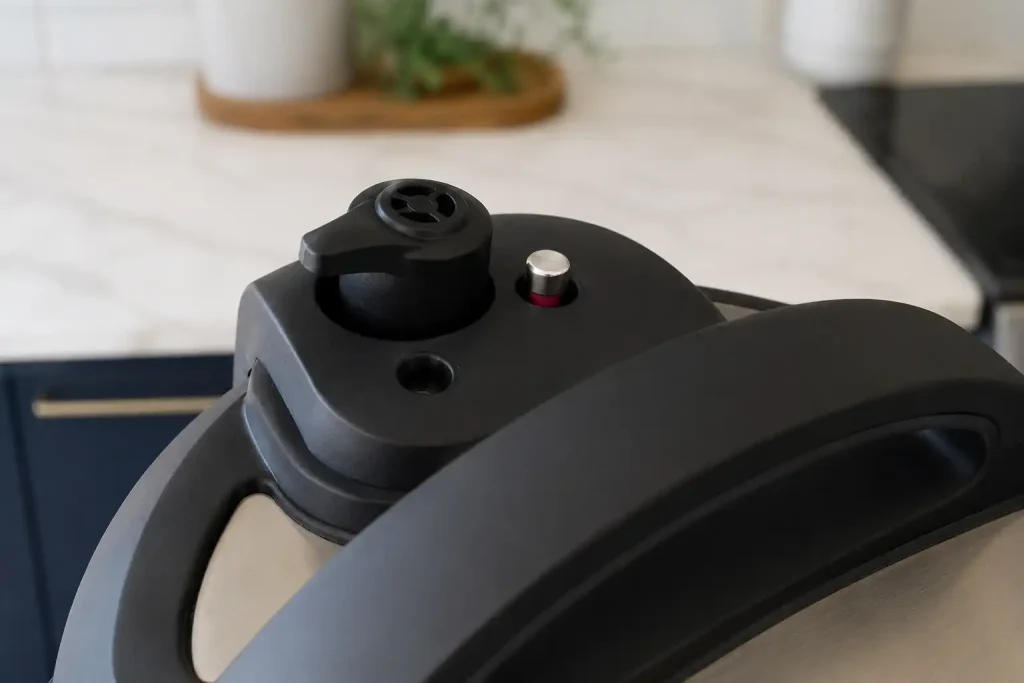
Press Cancel if you do not want the pot to stay warm. Keep Warm can slow down cooling. - Wait for the float valve to drop.
The float valve is the small metal or plastic pin on the lid. When it drops, the pressure is released. - Carefully open the lid.
Turn the lid away from your face so steam escapes away from you. - Stir and check the food.
Some foods continue cooking during natural release, so check texture before serving.
Important warning: Never try to open the lid while the float valve is still up. The Instant Pot lid is designed to stay locked under pressure for safety.
How Long Does Natural Release Take?
Natural release can take anywhere from about 10 minutes to 40 minutes or more. The time depends on what you cooked, how full the pot is, and how much liquid is inside.
A small amount of chicken breast may release in 10–15 minutes. A large pot of soup, beans, or stew may take 30–40 minutes.
The official Instant Pot Duo Plus guide notes that natural release time can vary based on the volume, type, and temperature of the food and liquid, and some dishes may take up to 40 minutes. The guide also says to wait until the float valve drops before opening the lid, as shown in the Instant Pot Duo Plus getting started guide.
Natural Release Time Guide
| Food Type | Usual Natural Release Time | Best Release Method | Why It Helps |
|---|---|---|---|
| Rice | 10 minutes, then quick release remaining pressure | Timed natural release | Helps rice finish steaming |
| Beans | 20–40 minutes | Full natural release | Reduces foaming and splitting |
| Soup or stew | 15–30 minutes | Full natural release | Prevents liquid from spraying |
| Tough meat roast | 15–25 minutes | Natural release | Keeps meat tender |
| Chicken breast | 5–10 minutes | Timed natural release | Helps avoid dryness |
| Vegetables | Usually not recommended | Quick release | Prevents overcooking |
| Seafood | Usually not recommended | Quick release | Keeps delicate texture |
Natural Release vs Quick Release
Natural release and quick release both remove pressure, but they work differently.
Natural release is slow. You leave the valve sealed and wait. The food keeps resting in the hot pot.
Quick release is fast. You move the valve to Venting, and steam shoots out quickly. This stops cooking faster.
Use Natural Release When:
- Cooking beans, lentils, or grains
- Making soup, stew, chili, or oatmeal
- Cooking large cuts of meat
- Cooking foods with lots of liquid
- Cooking foamy or starchy foods
- You want tender meat
Use Quick Release When:
- Cooking vegetables
- Cooking seafood
- Making foods that overcook easily
- You need to stop cooking quickly
- The recipe clearly tells you to quick release
A good rule: natural release is better for foods that can foam, splatter, or benefit from resting. Quick release is better for delicate foods that can overcook.
What Is Timed Natural Release?
Timed natural release means you wait for a set number of minutes, then release the remaining pressure manually.
For example, a recipe may say:
- “Natural release for 10 minutes, then quick release.”
- “Let pressure release naturally for 15 minutes, then vent.”
- “10-minute NPR.”
This method is common for rice, chicken, pasta dishes, and some meats. It gives food a short resting period without letting it cook too long.
How to Do a Timed Natural Release
- When cooking ends, leave the valve on Sealing.
- Set a kitchen timer for the recipe’s release time.
- After the timer ends, carefully move the valve to Venting.
- Keep your face and hands away from the steam.
- Open the lid only after the float valve drops.
Timed natural release is useful because it gives you control. You get the benefit of resting without waiting for a full natural release.
Why Natural Release Makes Some Foods Better
Natural release is not just about safety. It can also improve texture.
When pressure drops slowly, food has time to settle. Meat fibers relax. Beans finish softening. Rice absorbs extra moisture. Soups stop bubbling so aggressively.
This is why many Instant Pot recipes for pot roast, pork shoulder, beans, rice, lentils, and soup recommend natural release.
Better Texture for Meat
For large cuts of meat, natural release helps the juices stay inside. If you quick release a roast too soon, the sudden pressure change can make the meat tighten. That can lead to a drier or tougher bite.
For pulled pork, brisket-style beef, pot roast, or short ribs, natural release is usually worth the extra time.
Less Mess With Soups and Beans
Soups, beans, pasta, oatmeal, and grains can foam under pressure. If you quick release them too soon, hot liquid may spray from the steam valve.
Natural release gives the foam time to settle. This is safer and cleaner.
Better Rice and Grains
Rice often benefits from a short natural release. It lets the steam finish the cooking process and helps the grains absorb moisture evenly.
For many rice recipes, a 10-minute natural release followed by quick release works well.
Is Natural Release Safe?
Yes, natural release is safe when you use the Instant Pot correctly. In fact, it is often the safer method for foods that foam or contain a lot of liquid.
The main safety points are:
- Do not force the lid open.
- Keep hands and face away from the steam release valve.
- Do not cover the steam release valve.
- Do not move the cooker while it is pressurized.
- Do not use the appliance if the lid, cord, sealing ring, or valve is damaged.
For general home safety, the U.S. Fire Administration advises people to unplug small appliances when they are not being used. That is a good habit after your Instant Pot is done cooking, cooled, cleaned, and no longer needed.
Should You Turn Off Keep Warm During Natural Release?
In many cases, yes. Turning off Keep Warm can help the Instant Pot cool down faster.
If Keep Warm stays on, the cooker keeps applying gentle heat. That can slow pressure release and may continue cooking the food longer than you want.
Use this simple guide:
- For soup, beans, stew, or roast: Keep Warm is usually okay for a short time.
- For rice or chicken breast: turn Keep Warm off to avoid overcooking.
- For delicate foods: avoid long natural release.
If your recipe says “natural release for 10 minutes,” press Cancel after cooking ends unless the recipe says otherwise.
What If the Float Valve Does Not Drop?
Sometimes the float valve takes longer than expected. This is usually normal, especially with a full pot, thick food, or lots of liquid.
Try these steps:
- Wait a few more minutes.
- Make sure Keep Warm is turned off.
- Do not shake, tilt, or move the cooker.
- Check whether steam is still coming out.
- If the recipe allows, carefully tap the lid area lightly with a utensil handle, but do not force anything.
- Move the steam release valve to Venting only if you are sure the food is not likely to foam or spray.
If the float valve seems stuck because of food residue, wait until pressure is fully released before cleaning the lid parts. Sticky foods like oatmeal, beans, and pasta water can leave residue around the valve.
Foods That Should Usually Natural Release
Some foods are simply better with natural release. Here are the most common ones.
Beans and Lentils
Beans foam and expand. Natural release helps prevent hot bean liquid from spraying out of the valve. It also helps beans finish cooking gently.
This is especially useful for black beans, pinto beans, chickpeas, navy beans, and kidney beans.
Soups, Stews, and Chili
These foods contain a lot of hot liquid. Quick release can cause sputtering, especially if the pot is full.
Natural release lets bubbling calm down before you open the lid.
Oatmeal and Porridge
Oatmeal is thick and starchy. It can foam quickly under pressure. Use natural release to reduce mess and clogging.
Large Cuts of Meat
Pot roast, pork shoulder, ribs, and similar cuts usually taste better after resting. Natural release gives them that rest.
Rice and Grains
Rice, quinoa, and other grains often need a timed natural release. Full natural release may make some grains too soft, so follow the recipe.
Foods That Should Usually Not Natural Release Too Long
Natural release is not always the best choice. Some foods keep cooking while the pressure drops. That can make them mushy or dry.
Use quick release or short timed natural release for:
- Broccoli
- Green beans
- Asparagus
- Shrimp
- Fish
- Thin chicken breasts
- Small pasta shapes
- Hard-boiled eggs
For these foods, a long natural release can ruin the texture.
Expert Tip:
For recipes with rice, chicken, or pasta, write down the release time that gave you the best texture. A 5-minute difference can change the result, especially in smaller Instant Pot models.
Common Mistakes Home Cooks Should Avoid
- Opening the lid too soon.
Wait until the float valve drops. If the lid resists, pressure may still be inside. - Using quick release on foamy foods.
Beans, oatmeal, pasta, and soup can spray through the valve. - Leaving Keep Warm on too long.
This can overcook rice, chicken, or vegetables. - Ignoring the recipe’s release method.
The release method is part of the cooking process, not an optional detail. - Overfilling the inner pot.
Too much food or liquid can cause foaming, clogging, or uneven cooking. - Covering the steam valve.
Never place a towel or object over the steam release valve while pressure is releasing. - Forgetting carryover cooking.
Food continues to cook during natural release, especially meat, rice, and dense dishes.
Natural Release and Food Safety
Natural release is part of cooking, but food safety still matters after the pressure is gone.
Once you open the Instant Pot, serve the food or store leftovers properly. Do not leave cooked food sitting at room temperature for too long. The USDA explains that perishable food should not sit out for more than 2 hours, or 1 hour if the temperature is above 90°F, in its food safety danger zone guidance.
This matters for Instant Pot meals like rice, beans, chicken, soups, stews, and casseroles. They may look fine, but bacteria can grow if food stays warm too long after cooking.
Cleaning After Natural Release
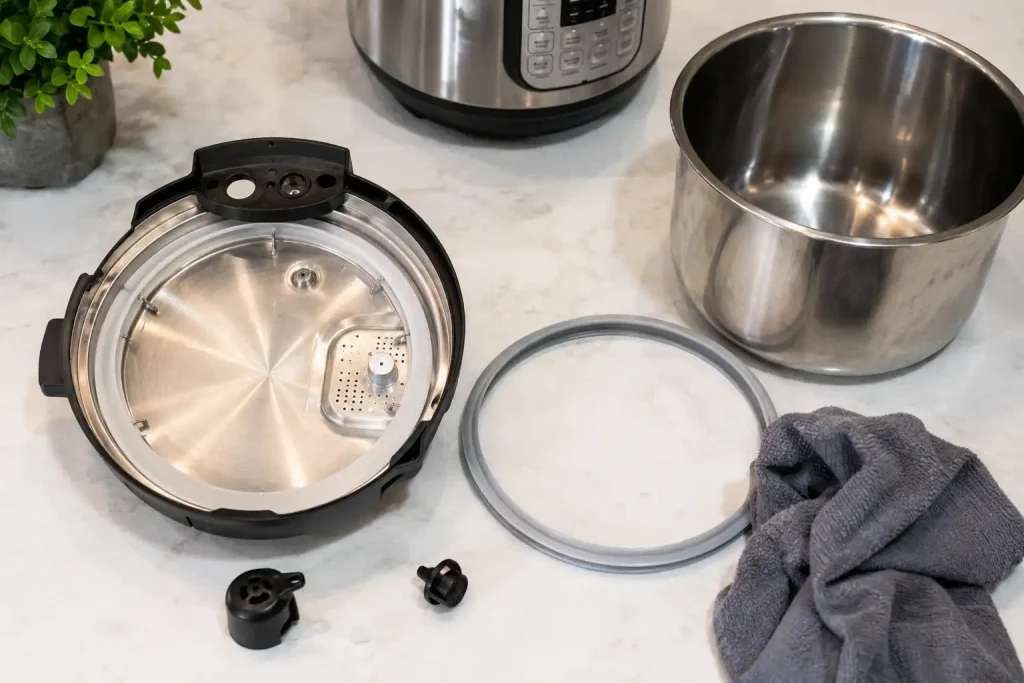
Natural release usually makes less mess than quick release, but the lid still needs regular cleaning.
After the Instant Pot cools:
- Unplug the cooker.
- Remove the lid.
- Take out the sealing ring.
- Wash the lid, sealing ring, and inner pot.
- Check the steam release valve area.
- Make sure the float valve moves freely.
- Dry everything before reassembling.
Pay extra attention after cooking beans, soup, oatmeal, or pasta. These foods can leave starch around the valve and anti-block shield.
A clean lid helps the Instant Pot seal properly next time.
When to Contact Customer Support or Replace the Appliance
Most natural release issues are simple. But some problems need manufacturer support.
Contact Instant Pot customer support or consider replacing the appliance if:
- The lid does not lock properly.
- The float valve does not move freely after cleaning.
- Steam leaks heavily from the sides during cooking.
- The sealing ring is cracked, stretched, or damaged.
- The power cord is frayed, loose, melted, or damaged.
- The cooker gives repeated error messages.
- The lid or base is warped.
- You smell burning plastic or electrical odor.
- The steam release valve is broken or missing.
Do not attempt DIY repairs on electrical, pressure, or heating parts. An Instant Pot works with heat and pressure, so damaged parts can become unsafe. Replacing a sealing ring is normal maintenance. Opening the base or trying to repair wiring is not a safe home project.
If your cooker is old, damaged, or unreliable, replacement may be smarter than repair. This is especially true if the cost of parts and shipping is close to the price of a new model.
Repair, Replace, or Keep Using It?
| Situation | What to Do | Why |
|---|---|---|
| Sealing ring smells or is stretched | Replace the sealing ring | Low-cost and easy fix |
| Float valve is sticky | Clean the lid parts | Often caused by food residue |
| Steam leaks from lid edge | Check ring placement and lid | May be user setup or worn ring |
| Cracked lid or damaged base | Stop using and contact support | Pressure safety concern |
| Frayed power cord | Stop using and replace appliance/support | Electrical safety risk |
| Older model with frequent issues | Consider upgrading | Better reliability and safety features |
Product-Choice Tips for Easier Pressure Release
If you are buying a new Instant Pot or upgrading from an older model, look closely at the lid design.
Some newer models have easier steam release switches, clearer markings, and better lid features. These can make pressure release less intimidating for beginners.
Consider:
- A clear Seal/Vent switch
- Easy-to-clean lid parts
- Dishwasher-safe accessories
- Replacement sealing rings available online
- A size that matches your household
- A model with simple controls
For most U.S. home cooks, a 6-quart Instant Pot is the most practical size. It works well for family meals, soups, rice, beans, and meal prep. A 3-quart model is better for one or two people. An 8-quart model is better for big families or batch cooking.
FAQs
How do I know when natural release is done?
Natural release is done when the float valve drops down. The lid should open easily. If the lid feels locked, wait longer and do not force it.
Do I turn the valve to Venting for natural release?
No. For full natural release, leave the valve in the Sealing position until the float valve drops. For timed natural release, wait the recommended time first, then turn the valve to Venting.
Can I natural release too long?
Yes, some foods can overcook if left too long. Rice, chicken breast, vegetables, seafood, and pasta can become soft, dry, or mushy with a long natural release.
Why is steam still coming out during natural release?
A little steam may escape as pressure changes, but heavy steam from the valve may mean it is not fully sealed. Check the valve position and sealing ring before your next use.
Should Keep Warm be on or off during natural release?
Either can work, but turning Keep Warm off usually helps pressure drop faster. It also helps prevent overcooking delicate foods.
Is natural release better than quick release?
It depends on the food. Natural release is better for beans, soups, stews, grains, and large meats. Quick release is better for vegetables, seafood, and foods that overcook quickly.
Can I open the Instant Pot before the float valve drops?
No. Do not open the lid while the float valve is up. Wait until pressure is fully released and the lid opens without force.
Conclusion
Learning how to natural release Instant Pot makes pressure cooking safer, cleaner, and more predictable. The process is simple: leave the valve sealed, wait for the pressure to drop, and open the lid only after the float valve falls.
Use natural release for beans, soups, stews, grains, and large cuts of meat. Use timed natural release when you want some resting time without overcooking. Use quick release for delicate foods that need cooking to stop fast.
The best next step is to follow the release method in your recipe and pay attention to how your food turns out. Once you understand natural release, your Instant Pot becomes easier, safer, and much less intimidating to use.