Electric Milk Frother Usage Guide for Perfect Foam

An electric milk frother makes café-style foam at home with very little effort. The best results come from the right milk, the right fill level, and quick cleaning after use.
An electric milk frother makes milk light, airy, and ready for coffee drinks at home. This guide shows how to use one safely, choose the right milk, avoid common mistakes, and get better foam with less guesswork.
- Use the fill line: Foam expands, so leave room in the jug.
- Match milk to drink: Whole milk, oat milk, and soy often work best.
- Pick the right mode: Use hot foam, cold foam, or warm milk as needed.
- Clean right away: Fresh milk rinses off more easily and smells less.
What an Electric Milk Frother Does and Why It Matters

An electric milk frother adds air to milk and changes its feel. That turns plain milk into a creamy topping or a soft layer for drinks like lattes and cappuccinos.
Some models also heat the milk. Others only froth it cold. Either way, the goal is the same. You want milk that feels smoother, looks richer, and blends well with coffee or cocoa.
How frothing changes milk texture
Frothing breaks milk into tiny bubbles. That gives it a lighter body and a soft, silky look.
Good foam should feel smooth, not dry or stiff. If the bubbles are huge, the foam can look thin and fall fast.
In short: better foam comes from small, even bubbles.
Best drinks for frothy milk
Frothy milk works well in many drinks. It is great for lattes, cappuccinos, hot chocolate, matcha, and iced coffee.
You can also use it for simple weekend drinks at home. For example, a splash of foam can make plain cocoa feel more like a café treat.
What this guide will help you do
This guide focuses on safe, simple use. It also helps you choose milk, avoid overflow, and clean the frother the right way.
We’ll keep it practical. If a step can vary by model, we’ll say so clearly.
Always check your model’s manual first. Frother shapes, fill lines, and mode names can vary a lot.
How an Electric Milk Frother Works

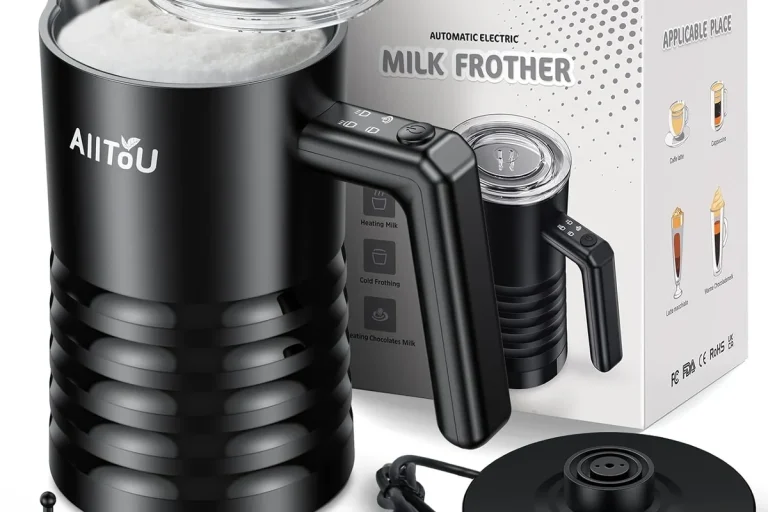
Most electric frothers use a small whisk or spinning head. Some also use heat to warm the milk while they froth it.
The machine does the hard part for you. Still, milk type, fill level, and temperature all affect the final foam.
Whisk style and heating style models
Whisk-style frothers use a small metal wand or disk. They whip air into the milk and often work fast.
Heating-style frothers warm the milk and froth it in the same jug. These are handy for lattes and hot drinks.
Some models can do both hot and cold foam. That makes them more flexible, but the controls can differ by brand.
Good for quick foam and simple cleanup.
Useful when you want warm milk and foam in one step.
Why milk type affects foam
Milk foam depends on protein, fat, and how the milk is processed. That’s why some milks whip up better than others.
Whole milk often makes rich foam. Lower-fat milk can make more foam volume, but it may feel less creamy.
Plant milks vary a lot. Some foam well, while others stay thin or separate fast.
What you should know before you start
Before frothing, check the fill line, power cord, and whisk attachment. A quick look can prevent spills and poor foam.
Also start with clean, cold milk unless your model says otherwise. That gives you a better chance at steady foam.
Use only the milk and fill level your manual allows. Stop using the frother if the cord, lid, jug, or whisk looks damaged.
Step-by-Step Electric Milk Frother Usage Guide
Using a frother is simple once you know the order. The key is to avoid overfilling and to match the mode to your drink.
Use a small amount first. Foam expands, so less milk often works better.
Stay below the max line for frothing. If your model has separate lines, use the one for foam.
Pick the mode that fits your drink. Hot foam suits lattes, while cold foam works for iced drinks.
Serve the foam right away for the best look and feel. Then rinse the jug and whisk soon after use.
- Swirl the milk gently before pouring if the foam separates.
- Use a tall cup to catch the foam without spills.
- Wipe the base dry before putting the frother away.
Best Milk, Add-Ins, and Settings for Better Foam
The best foam comes from the right mix of milk, heat, and time. Small changes can make a big difference in the cup.
Whole milk vs. low-fat milk
Whole milk gives a richer taste and a creamier feel. It often works well for cappuccino-style foam.
Low-fat milk can make more foam volume. However, the foam may feel lighter and less smooth.
If you like a café-style drink, whole milk is a safe starting point. If you want a bigger foam cap, low-fat milk may be worth trying.
Oat, almond, and soy milk results
Plant milks behave differently in frothers. Oat milk often gives the most reliable foam, but results still vary by brand.
Soy milk can foam well too. Almond milk may be thinner and may break down faster.
For best results, look for plant milks made for coffee. They often include added protein or stabilizers that help foam hold longer.
Sweeteners, cocoa, and flavor mix-ins
Add-ins can change foam quality. Sugar, syrups, and cocoa may make the foam heavier or less stable.
If you want the cleanest foam, froth the milk first. Then stir in flavor after pouring.
That small habit helps keep the foam light. It also keeps the frother easier to clean.
Temperature and foam density tips
Warm milk usually froths more easily than very hot milk. Too much heat can weaken the foam or scorch the milk.
Dense foam works best for cappuccinos. Softer foam suits lattes and hot chocolate.
Most important decision pointPick milk and mode based on the drink, not just the foam size.
Common Mistakes That Ruin Froth
Most frother problems come from simple setup issues. The good news is that they’re easy to avoid.
Overfilling the frother
Too much milk gives foam no room to expand. That often leads to spills, weak foam, or a messy lid.
Use the marked line every time. If your drink needs more milk, froth in two batches.
Using the wrong milk temperature
Very hot milk can foam poorly. It can also taste flat or cooked.
Cold milk usually gives better control at the start. Then the frother can heat it if your model supports that.
Choosing milk that foams poorly
Some milks just do not hold foam well. That can happen with certain low-protein plant milks or very watery products.
If your foam keeps falling, try a different brand. Coffee-friendly versions often perform better.
Skipping the cleaning step
Old milk residue can hurt taste and foam quality. It can also cause odor and buildup.
Clean the frother right after use whenever possible. That is the easiest way to keep it working well.
The foam looks thin, watery, or full of large bubbles.
Use less milk, check the fill line, and try a milk with more protein.
Safety, Cleaning, and Maintenance Tips
A frother is a small appliance, but it still needs careful handling. Heat, steam, and milk residue can all cause trouble if you rush.
Safe handling around heat and steam
Be careful when opening the lid after frothing. Steam can escape fast.
Let the jug cool a little before washing it if the manual suggests that. Never dunk the base in water unless the maker says it’s safe.
How to clean the whisk and jug
Rinse the jug and whisk soon after use. Fresh milk comes off much more easily than dried milk.
Use a soft sponge or cloth. Harsh scrubbers can scratch some coatings or nonstick surfaces.
Rinse the jug, wipe the whisk, and dry all parts fully.
Check for buildup, wear, loose parts, or odd smells.
How to prevent milk buildup and odor
Milk residue can hide near the whisk and lid. That is where smell often starts.
To prevent that, clean every contact part after use. If the manual allows it, wash removable parts with warm soapy water.
Storage and long-term care
Store the frother dry and unplugged. Keep the cord neat so it does not get bent or pinched.
If the machine starts to make odd sounds, stop using it and check the manual. If the problem continues, contact the maker for help.
Do not try to repair internal electrical parts yourself. If the frother smells burnt, leaks power, or stops heating safely, stop using it.
Value, Limits, and When an Electric Frother Is Worth It
An electric frother can be a smart buy if you make coffee drinks often. It saves time and gives you more consistent foam than manual shaking.
Still, it is not the right tool for everyone. Your best choice depends on how often you use it and how much cleanup you want.
What to expect at different price points
Lower-cost frothers often keep things simple. They may have fewer modes and smaller capacity.
Midrange models often add better controls, stronger build quality, or easier cleaning. Higher-end models may offer more settings, but the extra features are not always needed.
Since features vary by model, compare the manual, warranty, and cleaning design before you buy.
- Check the frothing capacity and fill line
- Look at cleaning steps and removable parts
- Review the warranty and safety notes
- Confirm hot and cold mode options
Who should buy one
An electric frother is a good fit if you want café-style drinks at home. It also helps if you like quick cleanup and simple controls.
It can be especially handy for small kitchens. A compact frother takes less room than many other coffee tools.
Best for small kitchens and quick single servings.
Best for households that make several drinks at once.
When a hand frother or steam wand may be better
A hand frother can be enough if you only want a little foam now and then. It also costs less and takes up less space.
A steam wand may be better for serious espresso fans. It gives more control, but it also takes more skill and cleanup.
In short: choose the tool that matches your routine, not just the one with the most features.
Electric Frother vs Hand Frother
The main difference is convenience. Electric models do more work for you, while hand frothers stay simple and cheap.
Better for easy, repeatable foam
Good for daily coffee drinks and warm milk. Cleanup depends on the model.
VS
Better for low cost and small storage
Good for light use and travel. It takes more effort and can be less even.
Final Recommendation for Better Home Foam
An electric milk frother is worth it if you want better foam with less effort. It is especially useful for home coffee lovers who want quick drinks and easy cleanup.
The best results come from careful filling, the right milk, and fast cleaning after use. If you follow those basics, the frother can become one of the most useful tools in your kitchen.
Who will get the most from this guide
This guide is best for first-time frother users, casual coffee drinkers, and anyone comparing milk options. It also helps if your foam has been inconsistent.
Simple takeaway for first-time users
Start with the fill line, use the right milk, and choose the right mode. Then clean the frother right away so it stays in good shape.
An electric milk frother is a smart pick for easy, café-style foam at home. If you make drinks often, it offers the best mix of speed, comfort, and consistency. If you only froth once in a while, a hand frother may be enough.
Frequently Asked Questions
Use the fill line marked for frothing, since foam needs room to expand. If you need more milk, froth it in two batches.
Whole milk often gives rich, creamy foam, while low-fat milk can make more volume. Oat and soy milk can work well, but results vary by brand.
You can, but add-ins may change the foam and make cleanup harder. For the cleanest foam, froth first and stir in flavor after pouring.
Overflow often happens when the jug is overfilled or the milk expands more than expected. Use less milk and stay below the safe line in the manual.
Rinse the jug and whisk soon after use, then wash removable parts as the manual allows. Dry everything fully before storage to help prevent odor and buildup.
Stop using it if you notice a burnt smell, damaged cord, odd noise, leaks, or poor heating. Follow the manual and contact the maker for help if the problem continues.