What Do You Need for a French Press Coffee Maker Guide

You only need a French press, coffee, hot water, and a simple way to measure and grind the beans. The best results come from a medium-coarse grind, proper water temperature, and a steady steep time.
If you want to make French press coffee, you only need a few basics. You need a French press, coffee, hot water, and a simple way to measure and grind the beans.
That’s the short answer, but the details matter. The right grind, water temp, and brew time can change the taste a lot.
- Basic setup: French press, coffee, hot water, grinder, and measuring tool.
- Best grind: Medium-coarse helps prevent grit and clogging.
- Brewing rule: Start with a steady ratio and about four minutes.
- Buying tip: Pick size and material based on your routine.
What Do You Need for a French Press Coffee Maker?
A French press setup is simple, but each part plays a role. You do not need a fancy machine or special pods.
In short: a press, coffee, water, and a few basic tools are enough.
The simple answer for beginners
For a beginner, the easiest setup is a French press, medium-coarse coffee, and water just off the boil. A kettle helps, but any safe way to heat water works.
You can also use pre-ground coffee if you do not have a grinder. Just make sure the grind is not too fine.
What belongs in the basic setup
The basic setup includes a few items you’ll use every time. Some are must-haves, while others just make brewing easier.
Holds the coffee and water during brewing.
Fresh beans or ground coffee make the biggest flavor difference.
Water temperature affects taste, strength, and bitterness.
Helps you keep the brew ratio steady from cup to cup.
In short: the press does the brewing, but the coffee and water do most of the flavor work.
How a French Press Works
A French press uses immersion brewing. That means the coffee soaks in hot water before you separate the grounds.
This method gives you full flavor and a heavier body than many drip brewers.
Why immersion brewing changes the taste
Because the grounds stay in contact with water, more oils and fine flavor bits stay in the cup. That often gives French press coffee a richer feel.
It can also taste stronger if you use too much coffee or steep too long.
French press coffee usually keeps more natural oils than paper-filter drip coffee.
In short: the brewing style makes the cup fuller and less filtered.
What the plunger and mesh filter do
The plunger pushes a mesh screen through the liquid. That screen helps separate the brewed coffee from the grounds.
It does not block every tiny particle. That is normal for French press coffee.
Use care when plunging. Press slowly and keep the press on a stable, heat-safe surface.
In short: the filter catches most grounds, but some fine sediment will still pass through.
Essential Items for Brewing French Press Coffee
You can keep this very simple or build a better setup over time. The best choice depends on how often you brew and how much control you want.
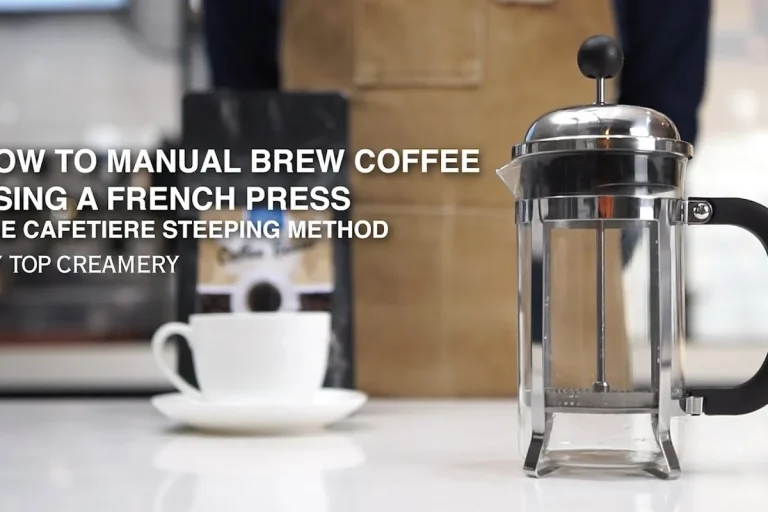
French press size and material
French presses come in different sizes and materials. The best one for you depends on how many cups you make at once.
Glass models let you see the brew. Stainless steel models often hold heat better. Plastic models can feel lighter and work well for travel.
Best for one person or a small counter.
Best for multiple cups or shared mornings.
In short: choose size first, then pick the material that fits your routine.
Fresh coffee beans or ground coffee
Fresh coffee usually tastes better. Whole beans give you more control, since you can grind them right before brewing.
If you buy ground coffee, look for a medium-coarse grind. Very fine coffee can slip through the filter and taste muddy.
Roast level, bean origin, and freshness all change the final taste. Your results may vary by brand and batch.
In short: fresher coffee usually means a cleaner, brighter cup.
Grinder, kettle, and measuring tools
A burr grinder gives the most even grind. That helps the coffee brew more evenly.
A kettle makes it easier to pour hot water with control. A spoon or scale helps you keep the ratio steady.
- Use a burr grinder for a more even grind.
- Measure coffee and water for repeatable results.
- Preheat the press if you want hotter coffee.
In short: these tools are not required, but they make brewing much easier.
Water quality and the right temperature
Good water matters more than many people think. If your tap water tastes off, your coffee may taste off too.
For temperature, use water that is hot but not violently boiling. Very hot water can pull bitter notes from the grounds.
In short: clean water and proper heat can improve the cup fast.
How to Make French Press Coffee the Right Way
French press brewing is easy once you know the steps. The main goal is to keep your grind, water, and time consistent.
Step-by-step brewing process
Place the ground coffee in the empty press.
Add hot water evenly over the grounds.
Mix lightly so all grounds get wet.
Let the coffee sit before pressing.
Press down with steady, gentle pressure.
In short: wet the grounds, wait, then press slowly.
Best coffee-to-water ratio
The best ratio depends on taste and press size. A common starting point is about 1 to 15 or 1 to 17 coffee to water by weight.
If you do not have a scale, use a consistent spoon measure and adjust next time. Stronger coffee needs more grounds. Lighter coffee needs less.
- Use a medium-coarse grind
- Measure coffee and water
- Keep the water hot, not boiling hard
- Stir gently after pouring
In short: start with a standard ratio, then fine-tune to your taste.
Steep time and plunge timing
Many French press brews steep for about four minutes, but the best time can vary. Shorter steeping can taste weak. Longer steeping can taste bitter.
Plunge slowly when the steep is done. Do not rush it.
The coffee tastes harsh or weak.
Adjust grind size, steep time, or coffee amount one change at a time.
In short: timing matters, but small changes work better than big ones.
What to Look for When Buying a French Press
If you are shopping for a French press, think about daily use first. Looks matter, but cleanup, heat, and durability matter more.
Glass, stainless steel, and plastic options
Glass is classic and easy to see through. Stainless steel is often better at holding heat. Plastic can be lighter and easier to carry.
Each choice has trade-offs. Glass can break. Steel can hide the brew inside. Plastic may not feel as sturdy.
- Simple brewing with very few parts
- Works without electricity
- Easy to learn for beginners
- Can leave fine sediment in the cup
- Needs manual cleaning after use
- Some models are fragile or bulky
In short: pick the material that fits how you really use it.
Filter quality, heat retention, and ease of use
A good filter helps keep grounds out of your cup. A snug plunger can also make brewing feel smoother.
Heat retention matters if you drink slowly. Easy-to-wash parts matter if you make coffee every day.
In short: the best press is the one you will use and clean often.
Best choice for home, travel, or office use
For home use, many people like glass or stainless steel. For travel, lighter models often make more sense. For the office, easy cleanup and a smaller footprint can help.
Always check the maker’s care instructions before you buy. Model details vary a lot.
In short: match the press to the place you’ll use it most.
Common Mistakes and How to Avoid Them
Most French press problems come from a few simple mistakes. The good news is that they are easy to fix.
Using the wrong grind size
Too fine a grind can clog the filter and make the coffee gritty. Too coarse can make the coffee taste thin.
Medium-coarse is usually the safest place to start.
In short: grind size has a big effect on taste and texture.
Brewing too long or too short
If you brew too short, the coffee may taste flat. If you brew too long, it may taste bitter or heavy.
Try one timing change at a time so you know what helped.
In short: keep the steep time steady until the taste is where you want it.
Skipping preheating or stirring
Preheating the press can help keep the brew warmer. Stirring helps all the grounds contact the water.
Without those steps, the brew can be uneven.
- Preheat the press if you want hotter coffee
- Stir gently after adding water
- Use a steady plunge
- Using espresso-fine coffee
- Pressing down too fast
- Leaving coffee in the press for too long
In short: a few small habits can make the cup much better.
Cleaning, Care, and Safety Tips
French presses are easy to clean, but they do need regular care. Clean parts help the coffee taste better and keep the filter working well.
How to clean the press after each use
Empty the grounds, rinse the parts, and wash them with mild soap if needed.
Check the mesh, plunger, and seals for wear or buildup.
Let all parts dry fully before storing. That helps reduce odors and stains.
In short: quick cleanup after each brew saves time later.
How to handle hot water and glass safely
Hot water can burn you fast. Glass presses can also crack if they get bumped or shocked by sudden temperature changes.
Follow the appliance manual and stop using damaged equipment.
Use a stable counter and keep the press away from the edge. If a glass press chips or cracks, replace it.
In short: handle heat and glass with care every time.
How to keep the filter working well
The filter works best when it stays clean and fits snugly. Coffee oils and fine grounds can build up over time.
Take the filter apart when the manual allows it, and clean each piece well. If the mesh looks bent or worn, it may be time for a replacement part.
In short: a clean filter gives you a cleaner cup.
Is a French Press Worth It in 2026?
For many coffee drinkers, yes. A French press still offers strong value because it is simple, low-tech, and easy to learn.
It also gives you a rich cup without needing capsules or a powered machine.
Cost, value, and who it suits best
A French press can be a smart pick if you want full flavor and simple gear. It also suits people who like to control grind, strength, and brew time.
It may not be the best choice if you want the cleanest cup with no sediment, or if you want fully automatic brewing.
French press coffee maker
Best for drinkers who want a simple, hands-on brew with rich flavor and low setup needs. The main trade-off is more cleanup and some sediment in the cup.
In short: it delivers a lot of flavor for very little gear.
Final recommendation for new and regular coffee drinkers
If you are new to French press coffee, start with a basic press, a good grinder, and fresh beans. That simple setup will teach you most of what you need to know.
If you already brew coffee often, upgrade for durability, better heat retention, and easier cleanup.
A French press is worth it if you want simple brewing, rich taste, and low cost in daily use. Choose glass for a classic feel, stainless steel for heat, or plastic for travel and lighter handling.
In short: the best French press setup is the one that fits your routine, your counter space, and your taste.
Frequently Asked Questions
Medium-coarse grind usually works best. Very fine coffee can slip through the filter and make the cup muddy.
A good starting point is about 1 to 15 or 1 to 17 coffee to water by weight. You can adjust the strength after your first brew.
Use hot water that is not at a hard boil. Water that is too hot can make the coffee taste bitter.
About four minutes is a common starting point. You can go a little shorter or longer based on taste.
Empty the grounds, rinse the parts, and wash them with mild soap if needed. Dry all parts fully before storing.
Yes, if you want rich coffee and simple brewing. It may not suit you if you want a fully automatic machine or a sediment-free cup.