
How To Use A French Press Coffee Maker Guide: Perfect Brew

Use coarse grounds, 1:15 ratio, 4-minute steep, slow plunge for rich coffee.
I’ve brewed hundreds of presses over many years and tested variables until they made sense. This how to use a french press coffee maker guide gives clear steps, real tips, and troubleshooting to help you make repeatable, delicious French press coffee every time. Read on for hands-on instructions, common mistakes to avoid, and simple recipes you can try today.
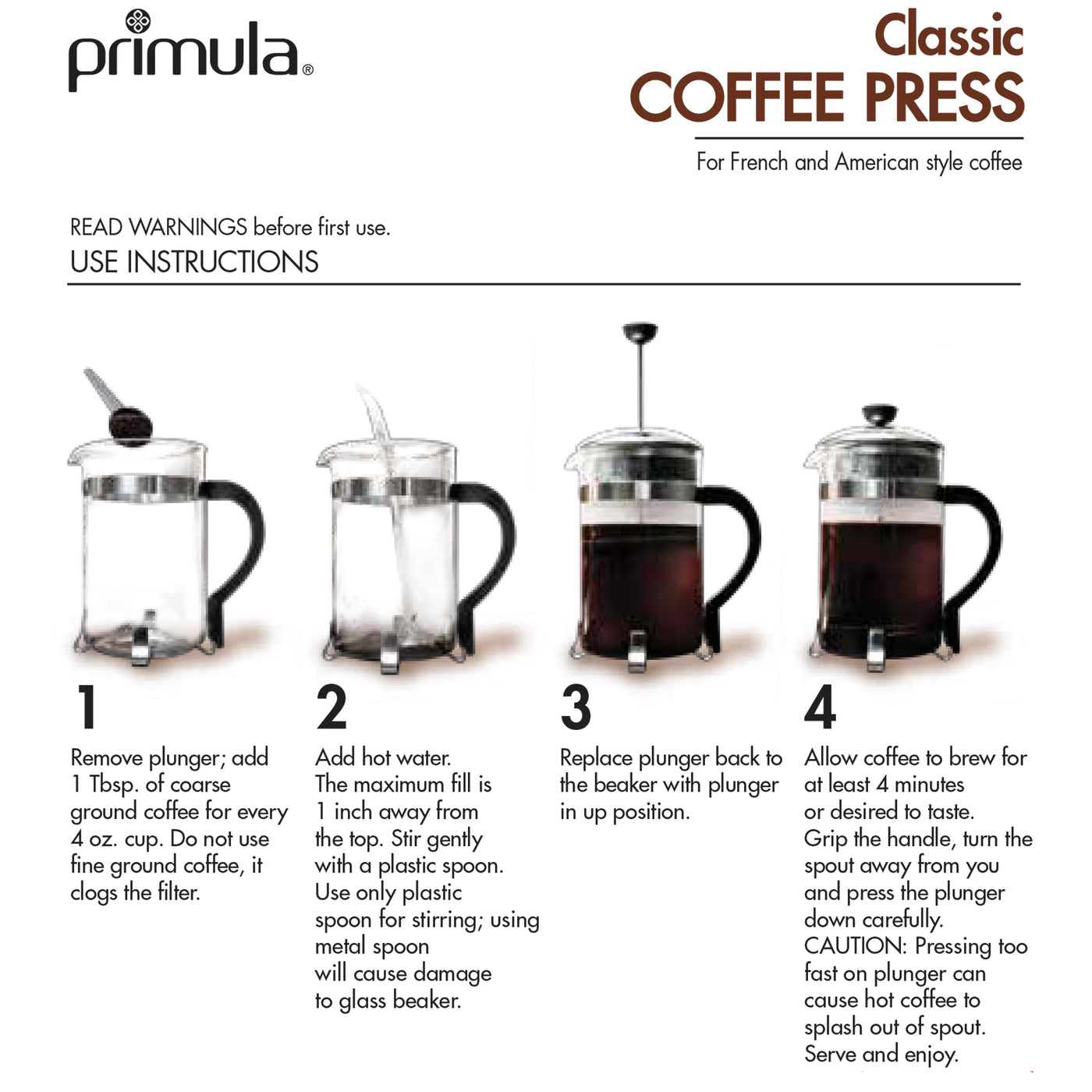
Why choose a French press?
A French press makes full-bodied coffee with oils and flavors paper filters remove. It’s simple, portable, and gives you control over grind, time, and strength. This method works well for people who like bold coffee and a tactile brewing ritual.
Benefits at a glance:
- Full flavor and body
- No electricity needed for simple versions
- Easy to scale from one cup to many
- Works with darker roasts and single-origin beans
Limitations to know:
- Grit can appear if the grind is too fine
- Requires careful timing to avoid over-extraction
- Not ideal if you need super-clear, filter-like clarity
How this how to use a french press coffee maker guide helps:
- Breaks down the process into clear steps
- Shares exact ratios and times
- Explains common fixes and cleaning steps
What you need before you start
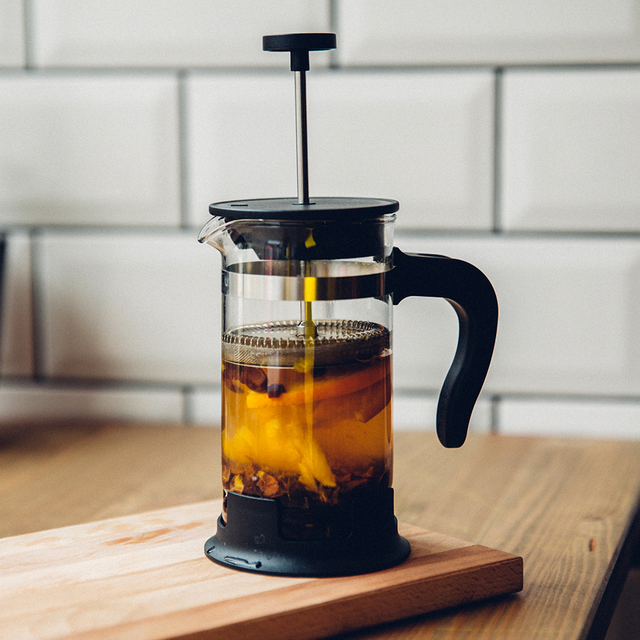
Having the right tools keeps results consistent. This how to use a french press coffee maker guide lists what I use regularly.
Essential items:
- French press (glass or stainless steel, 8–34 oz sizes)
- Burr grinder for consistent coarse grind
- Fresh whole-bean coffee
- Kettle (preferably with temperature control)
- Kitchen scale and timer
- Stirrer (wood or plastic) and mug
Optional but helpful:
- Gooseneck kettle for precise pouring
- Metal or insulated French press for heat retention
- Thermometer if your kettle has no temp setting

Step-by-step: brewing with a French press
Follow these steps to master the core process in this how to use a french press coffee maker guide.
- Measure beans and water
- Use a 1:15 to 1:17 coffee-to-water ratio. For example, 30 g coffee to 450 g water (1:15).
- Grind
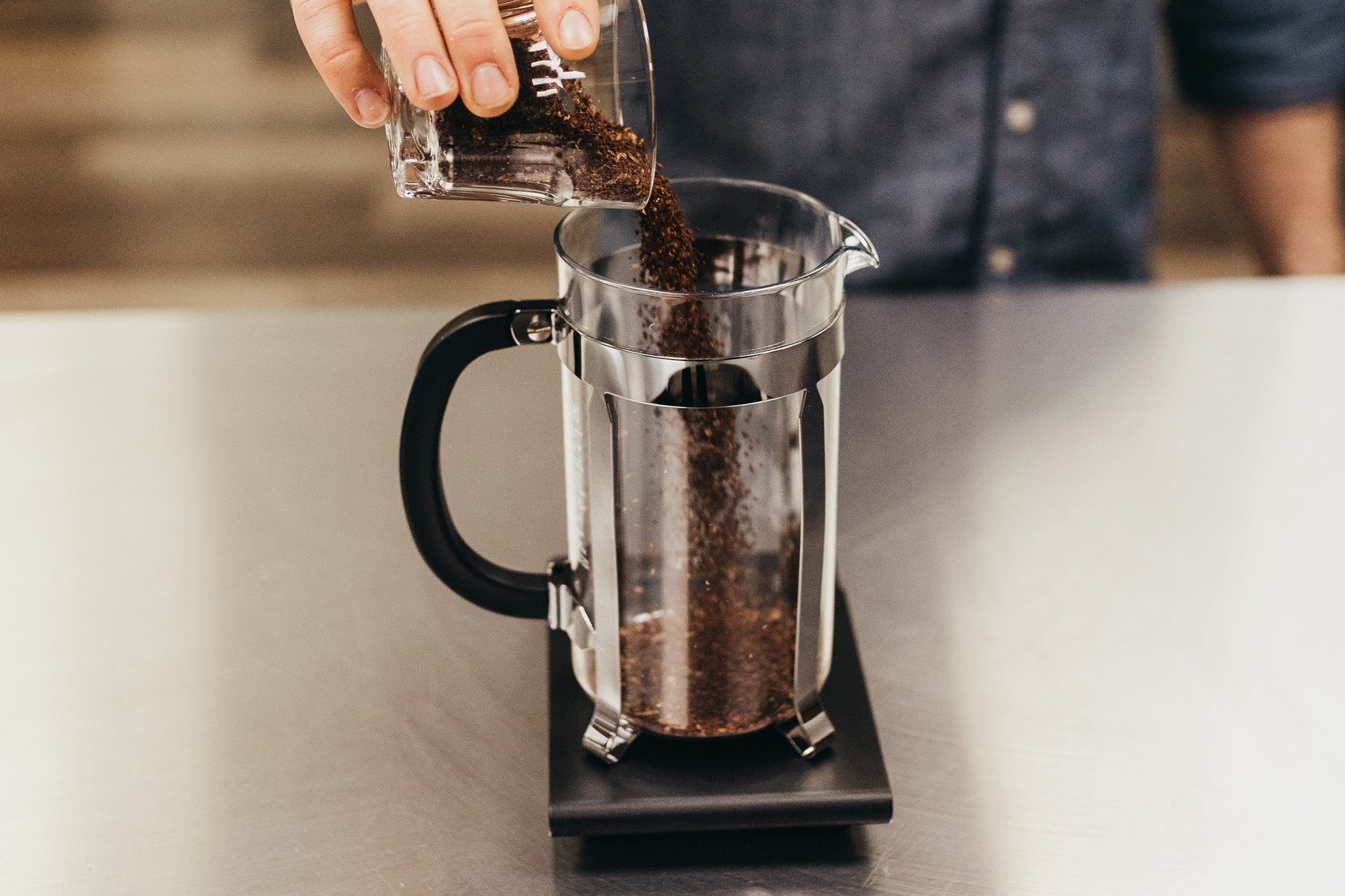
- Grind to coarse sand. Aim for uniform crumbs, not powder.
- Heat water
- Heat to 200°F (about 30 seconds off a boil). If you can’t measure, bring to a boil and wait 30 seconds.
- Preheat the press
- Pour hot water into the empty press, swirl, then discard. This keeps temp stable.
- Add coffee and start timer
- Put grounds in the press and start a timer as you pour.
- Bloom and pour
- Pour half the water in a circular motion to wet grounds. Wait 30–45 seconds to bloom.
- Add remaining water and stir
- Pour the rest gently and give one quick stir to ensure even extraction.
- Steep
- Let the coffee steep 3.5 to 4 minutes for most roasts. Adjust time if you prefer stronger or lighter brew.
- Plunge slowly
- Press the plunger down with steady, even pressure. Stop when it reaches the bottom.
- Serve immediately
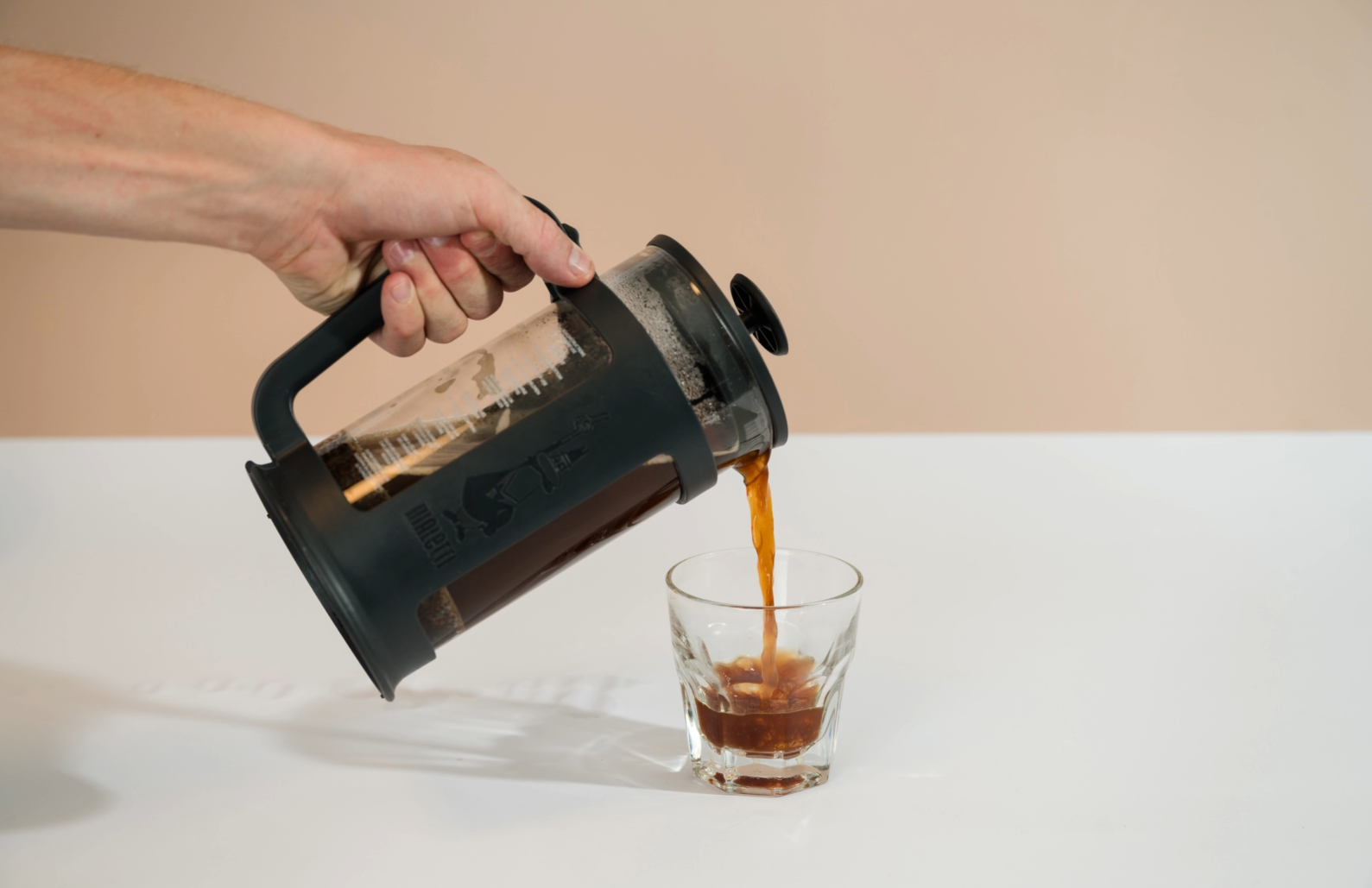
- Pour into your cup right away to avoid over-extraction from sitting grounds.
Common ratio examples in this how to use a french press coffee maker guide:
- 1 cup (250 g water): about 16–17 g coffee
- Small press (12 oz / 350 g): about 23 g coffee
- Large press (34 oz / 1,000 g): about 67 g coffee

Grind, water, and timing details
Small changes make big differences. This how to use a french press coffee maker guide dives into the three pillars.
Grind
- Coarse and even prevents grit and clogging.
- If coffee tastes muddy, try slightly coarser.
Water temperature
- Around 195–205°F is ideal. Cooler water under-extracts; hotter water over-extracts.
- If brew tastes sour, use hotter water or increase brew time.
Timing
- 3.5–4 minutes is a good starting point.
- Shorten time for lighter roasts or longer for darker roasts to balance extraction.

Common mistakes and how to fix them
I’ve made these errors. Fixing them improved my coffee fast. This how to use a french press coffee maker guide lists real fixes.
Problem: Gritty coffee
- Cause: Too fine grind or damaged filter mesh.
- Fix: Use coarser grind and clean or replace the filter screen.
Problem: Bitter or over-extracted coffee
- Cause: Water too hot or brew time too long.
- Fix: Lower temperature, shorten time, or reduce coffee dose.
Problem: Weak or sour coffee
- Cause: Under-extraction, too coarse grind, or low coffee dose.
- Fix: Use finer coarse grind, increase dose, or steep a little longer.
Problem: Plunger hard to press
- Cause: Too fine grind clogging the mesh.
- Fix: Clean the mesh and use coarser grounds.
Cleaning and maintenance
Good care preserves flavor and extends your press’s life. This how to use a french press coffee maker guide covers easy cleaning steps.
Daily cleaning:
- Dump grounds into compost or trash. Rinse carafe and plunger.
- Wash with warm, soapy water and rinse well.
Deep clean (weekly or monthly):
- Disassemble the filter screens and wash each piece.
- Soak parts in warm water with a mild cleaner if oils build up.
- Replace worn mesh or seals for best performance.
Tips:
- Avoid harsh scrubbers on glass.
- For stubborn oils, use a small amount of baking soda or a specialty coffee cleaner.

Recipes and variations to try
Once you master the basics, experiment. This how to use a french press coffee maker guide includes simple, tasty variations.
Strong press for espresso-like coffee
- Use a 1:12 ratio and a 4-minute steep for a bolder cup.
Cold brew (quick method)
- Use coarse grounds, 1:8 ratio, steep in the fridge 12–16 hours, then plunge slowly.
French press latte
- Brew strong press, heat milk, froth, and combine one part coffee to two parts milk.
Two-stage plunge method
- Plunge halfway after 2 minutes, wait 30 seconds, then finish plunging. This can reduce floating grounds.
My experience, mistakes, and best tips
I started with poor grinds and inconsistent water temp. Over time I learned what matters. This how to use a french press coffee maker guide reflects years of testing.
Lessons I learned:
- Burr grinder matters far more than fancy beans.
- Fresh beans roasted within a month make a noticeable difference.
- Scales and timers remove guesswork.
Practical tips I use daily:
- Grind just before brewing.
- Stir gently to avoid too many fines rising to the surface.
- Pour brewed coffee into a thermos if you won’t drink it right away.

Frequently Asked Questions of how to use a french press coffee maker guide
How coarse should the grind be for a French press?
A coarse, even grind like coarse sea salt is best. A burr grinder set to coarse gives consistent results and reduces grit.
Can I use pre-ground coffee in a French press?
Yes, but whole beans ground just before brewing give far better flavor. Pre-ground coffee loses aroma and can make your brew taste flat.
How long should I steep coffee in a French press?
Aim for 3.5 to 4 minutes as a starting point. Adjust by 30-second increments to make the brew stronger or lighter.
Should I rinse the filter before brewing?
Rinsing is helpful to remove loose bits and preheat the press. It improves clarity and temperature stability.
Can I leave coffee in the French press after pressing?
It’s best to pour coffee out immediately into a cup or thermos. Leaving grounds in contact will continue extracting and can make the coffee bitter.
How do I stop the French press from clogging?
Use a coarser grind and clean the mesh screens regularly. Replace worn filters or seals when needed.
Conclusion
This how to use a french press coffee maker guide equips you with clear steps, ratios, and troubleshooting to brew reliably great press coffee. Start with fresh beans, a coarse grind, a 1:15 ratio, and a 4-minute steep, then tweak to taste. Try one new tweak per week and note what changes—this builds skills fast. If you found these tips useful, try a brew now, share your results, or subscribe for more guides and recipes.
