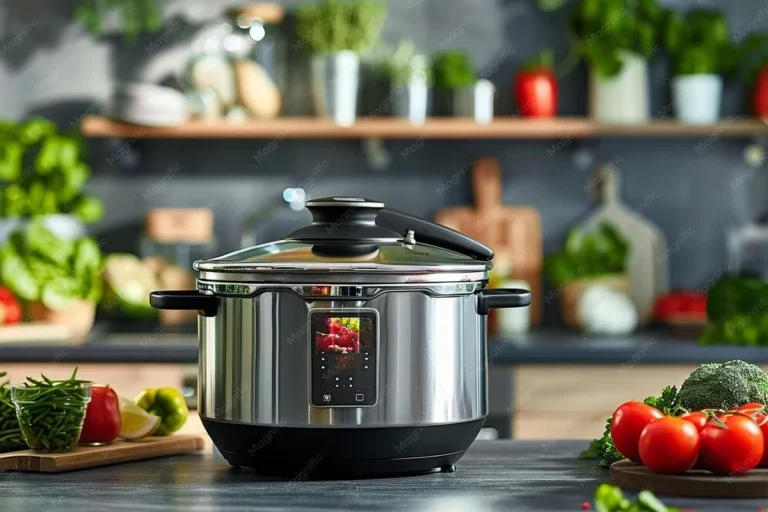
Air Fryer Food Safety Guide for Safer Crispy Meals

Air fryer food safety comes down to checking internal temperature, avoiding cross-contamination, and not relying on looks alone. With the right prep and cleanup, you can get crispy meals that are also cooked through safely.
An air fryer food safety guide is really about more than crisp texture. In 2025, readers want fast meals that are also cooked to a safe internal temperature, handled cleanly, and served without guesswork.
This guide from the RedKitchenProject Editorial Team focuses on practical food safety habits for everyday air frying. You will learn how to avoid undercooked centers, cross-contamination, and common mistakes that can turn a convenient appliance into a risky shortcut.
- Temperature first: Use a thermometer for poultry, burgers, leftovers, and thick foods.
- Space matters: Avoid overcrowding so hot air can cook food evenly.
- Prevent contamination: Keep raw and cooked foods, tools, and surfaces separate.
- Use accessories carefully: Only use liners, foil, and inserts approved for your model.
What Readers Mean by an Air Fryer Food Safety Guide in 2025
Search intent: safer cooking, not just crispier results
Most people searching this topic are not looking for marketing claims. They want to know how to cook chicken, burgers, seafood, frozen foods, and leftovers safely in an air fryer without drying them out or undercooking the center.
That means this guide should focus on temperature, handling, and cleanup. Crisp skin or a golden coating is useful, but it is never a substitute for safe doneness.
Why food safety matters more with rapid air circulation
Air fryers move hot air quickly around food, which can create a browned outside before the inside is fully cooked. That is especially important for thicker cuts, breaded items, and mixed foods with uneven shapes.
Because the appliance cooks so efficiently, it is easy to assume food is done too early. A thermometer is the safest way to confirm that the center has reached the correct temperature.
What this guide will and will not cover
This article covers safe cooking basics, food handling, model compatibility, and common mistakes. It does not replace the instructions that come with your specific air fryer, since performance can vary by brand, basket size, wattage, and design.
If your appliance has unusual accessories, a built-in probe, or special presets, follow the manufacturer’s directions first. For electrical installation, damaged cords, or anything that seems unsafe, contact a qualified technician.
Air Fryer Safety Basics: Temperature, Time, and Internal Doneness
How air fryers cook differently from ovens and deep fryers
An air fryer is closer to a compact convection oven than a deep fryer. It uses fast-moving hot air to brown food with less oil, which can shorten cook time but also makes timing less forgiving.
That speed is convenient for weeknight meals, but it also means food can go from underdone to overdone quickly. For safety, use recipe times as a starting point and verify doneness with a thermometer.
Safe minimum internal temperatures for common foods
Safe minimum temperatures matter because color and texture can be misleading. Poultry should reach 165°F, ground meats should reach 160°F, and fish is commonly cooked to 145°F.
Leftovers should also be reheated thoroughly, not just warmed at the edges. If you are unsure about a food category, check a trusted food safety source or the appliance manual and use the higher safety standard when in doubt.
Using a food thermometer correctly in a basket-style air fryer
Place the thermometer into the thickest part of the food, away from bone, fat, or the basket surface. For burgers and chicken breasts, that usually means the center of the thickest section.
In a basket-style air fryer, remove the basket carefully and check quickly to avoid losing too much heat. If the food is breaded or stacked, test more than one piece when needed.
Why “looks done” is not enough for poultry, burgers, and leftovers
Golden skin, browned surfaces, and bubbling coatings can all look finished before the inside is safe. This is especially true for chicken breasts, stuffed items, and thick burgers.
Leftovers are another common risk because they may brown fast while still cold in the middle. A quick thermometer check is the easiest way to avoid serving food that only appears ready.
Best Practices for Chicken, Meat, Seafood, and Frozen Foods
Chicken wings, breasts, and nuggets: avoiding undercooked centers
Chicken wings can cook evenly because they are smaller and thinner, but larger pieces still need a temperature check. Chicken breasts are more likely to brown early on the outside while the center lags behind.
Frozen nuggets and breaded chicken can be safe if they are cooked fully and handled correctly, but do not assume the package time is perfect for every model. If pieces vary in thickness, check the largest one first.
Ground beef, turkey, and sausage: common risk points
Ground meat can carry bacteria throughout the mixture, so the center must reach the proper temperature. That makes burgers, meatballs, patties, and sausage links good candidates for thermometer checks.
Air fryers often cook ground meat well, but overcrowding can trap moisture and slow heating. Space the pieces out so hot air can circulate around each one.
Fish and shrimp: timing, texture, and safe doneness
Fish and shrimp usually cook quickly in an air fryer, which is useful but easy to misjudge. Fish should flake easily and reach a safe internal temperature, while shrimp should turn opaque and firm.
Because seafood can dry out fast, check a minute or two before the end of the recipe time. If the exterior is browning too quickly, reduce heat slightly and continue cooking until the center is done.
Frozen foods: what is safe to air fry straight from the freezer
Many frozen foods, including fries, nuggets, and breaded snacks, are designed to go straight into the air fryer. These items are usually safe when cooked according to package directions and fully heated through.
Raw frozen meats are different. They may need longer cook times, more careful spacing, and a thermometer check to make sure the center is not still icy or undercooked.
Kitchen Prep Steps That Prevent Cross-Contamination
How to handle raw and ready-to-eat foods safely
Keep raw meat, seafood, and poultry separate from cooked or ready-to-eat foods. Use different plates or containers so juices from raw food do not touch anything that will be served immediately.
This matters just as much with air frying as with oven cooking. The appliance may be small, but cross-contamination can happen anywhere food is transferred, seasoned, or plated.
Cleaning cutting boards, tongs, baskets, and trays between batches
Wash cutting boards, knives, tongs, and trays after contact with raw food. If you use the same basket for multiple batches, clean it between raw and cooked items when contamination is possible.
Even a quick wipe is not always enough if juices or crumbs remain. A proper wash with hot, soapy water helps reduce the chance of spreading bacteria from one batch to the next.
Marinades, sauces, and basting brushes: what to reuse and what to discard
Never reuse marinade that touched raw meat unless it has been boiled first. The same rule applies to dipping sauces or glaze that came into contact with uncooked protein.
Use a clean brush or spoon for basting cooked food. If you want extra sauce for serving, set some aside before the raw food goes in.
Handwashing, glove use, and safe countertop setup
Wash hands before and after handling raw ingredients, and again after touching the air fryer basket, packaging, or trash. Gloves can help in some situations, but they do not replace handwashing.
Set up your countertop so raw and cooked foods have separate landing spots. That simple habit reduces accidental contact and keeps the workflow cleaner.
Air Fryer Model and Basket Compatibility: What to Check Before You Cook
Basket size, tray style, and rack compatibility for even heating
Different air fryer designs cook differently. Basket-style models, tray-style models, and oven-style air fryers each have their own airflow patterns and usable space.
If the basket is too small for the amount of food, items may overlap and cook unevenly. That can create both quality issues and safety risks, especially with proteins.
Manufacturer temperature limits and accessory safety
Check the manual for the highest temperature your model allows and whether accessories are approved for that heat level. Not every liner, rack, or silicone insert is safe for every appliance.
Plastic parts, low-quality coatings, or unapproved accessories can warp or interfere with airflow. When in doubt, use accessories made for your exact style of air fryer and follow the temperature guidance carefully.
Why overcrowding creates both safety and quality problems
Overcrowding blocks airflow, which slows browning and can leave cool spots in the middle. That makes it harder to judge doneness by appearance alone.
It is usually better to cook in smaller batches than to pack the basket full. The extra few minutes are worth it if they help the food heat evenly and safely.
When to use liners, foil, or silicone inserts safely
Use liners or foil only if your manual allows them and they will not block airflow or touch the heating element. Lightweight paper liners can move around if the basket is empty or underfilled.
Silicone inserts may help with cleanup, but they should fit well and tolerate the heat. If an accessory changes how the food cooks, adjust timing and check doneness more carefully.
Common Air Fryer Food Safety Mistakes to Avoid
Skipping preheat when a recipe depends on it
Some recipes assume the air fryer is already hot. If you skip preheating when it matters, the food may spend too long in the danger zone before it starts cooking properly.
Preheating also helps with consistent browning. If your model recommends it, treat preheat as part of the cooking process, not an optional extra.
Cooking from frozen without adjusting time or thickness
Frozen food is not always a simple one-to-one swap for fresh food. Thicker pieces may need more time, and mixed batches often cook unevenly.
If you are cooking from frozen, separate pieces when possible and check the center carefully. Do not rely on a single timer setting for every shape or size.
Using too much oil, aerosol sprays, or unsafe coatings
A small amount of oil can improve texture, but too much can smoke, drip, or create a mess. Some aerosol sprays can also damage nonstick surfaces over time, depending on the product and coating.
Use oil lightly and choose coatings that are safe for your basket material. If your air fryer manual warns against a certain spray or oil type, follow that advice.
Leaving cooked food in the basket too long before serving
Food should not sit in a warm basket for an extended period after cooking. Steam can soften crisp coatings, and food may cool unevenly if it is left too long.
Transfer cooked food to a clean plate or serving tray soon after it is done. This also keeps cooked food separate from any raw prep area still on the counter.
Relying on visual cues instead of temperature checks
Visual cues are useful, but they are not enough on their own. A browned outside can hide a cool center, especially with thick or breaded foods.
Use appearance to guide your timing, then confirm with a thermometer. That combination gives you better results and a safer meal.
Time, Cost, and Convenience: Is Air Frying Safer and More Efficient?
How air fryers compare with ovens for quick weeknight meals
Air fryers are often faster than full-size ovens for small batches. They can also be easier to monitor because the basket is compact and the food is close to the heat source.
For single servings or family sides, that convenience can make safer cooking easier to manage. You are more likely to check the food, turn it, and finish it promptly.
Energy use and time savings for small-batch cooking
Because air fryers heat a smaller chamber, they often use less energy than heating a large oven for a small meal. That does not make them automatically healthier, but it can make them more efficient for everyday cooking.
Time savings depend on the food and the model. Some items cook noticeably faster, while others still need a careful full cycle to reach safe doneness.
When an air fryer is the better choice for food safety and consistency
An air fryer is often a strong choice for foods that benefit from even surface heat and quick monitoring. Frozen snacks, breaded items, and smaller portions are usually easy to manage.
It is also helpful when you want a fast finish after par-cooking or reheating. The compact space makes it simpler to watch the food closely and pull it at the right moment.
When a conventional oven or stovetop is still the safer option
Large roasts, very thick cuts, and family-size batches may be easier in a conventional oven. The extra space can reduce crowding and make temperature control more predictable.
For recipes that need frequent stirring, simmering, or sauce reduction, the stovetop may be safer and more practical. Choose the appliance that gives you the best control, not just the fastest result.
Final Recap: Safer Crispy Meals Without Guesswork
The most important food safety rules to remember
Air fryer safety comes down to three habits: cook to the right internal temperature, avoid cross-contamination, and do not trust appearance alone. Those basics matter more than any preset or shortcut.
Once you build those habits, the air fryer becomes a reliable tool for quick meals. Crisp food is great, but safe food is the real goal.
Quick checklist for cooking, checking, and cleaning
Before cooking, confirm the basket size, accessory fit, and recipe timing. During cooking, avoid overcrowding and check the thickest piece with a thermometer when needed.
After cooking, move food to a clean serving surface, wash tools that touched raw ingredients, and clean the basket or tray before the next batch if contamination is possible.
Closing takeaway for RedKitchenProject readers
If you want consistently safer air fryer meals, focus on temperature, spacing, and clean handling. Those simple steps do more for food safety than any trend or hack.
At RedKitchenProject, our advice is straightforward: use your air fryer for convenience, but verify doneness like a careful home cook. That is the best way to get crispy results without guesswork.
Frequently Asked Questions
Use a food thermometer and check the thickest part of the food. Color and crispness can be helpful, but they are not enough on their own.
Yes, as long as the chicken reaches a safe internal temperature. Check the center of the thickest part, especially with breasts or larger pieces.
Usually only a small amount is needed, and some foods do not need any. Too much oil can smoke, create mess, or affect cleanup.
Wash the basket, tray, and any utensils that touched raw meat with hot, soapy water. Clean the surface around the appliance if juices or crumbs spilled.
Neither appliance is automatically safer in every case. An air fryer can be easier for small batches, but safe results still depend on proper temperatures and handling.
Check for overcrowding, basket placement, and accessory fit first. If the issue continues, follow the manual and consider whether the model is suitable for the food you cook most often.