Is Pesto Pasta Healthy A Simple Nutritional Guide

Pesto pasta can be healthy when you keep the portion modest and add vegetables or protein. It becomes less healthy when the bowl is large, salty, and heavy on sauce.
Yes, pesto pasta can be healthy. It depends on the portion, the pasta type, and how much sauce you use.
Pesto brings flavor from olive oil, nuts, cheese, and herbs. That can make a simple bowl feel rich and satisfying. But it can also raise calories fast if you pour on too much.
So the short answer is this. Pesto pasta works well as part of a balanced meal. It is less healthy when the bowl is huge, salty, or low in vegetables and protein.
- Portion size: The sauce can raise calories fast.
- Best base: Whole wheat or legume pasta adds more nutrition.
- Best add-ins: Vegetables and lean protein make the bowl more balanced.
- Watch labels: Jarred pesto can be high in sodium and oil.
Is Pesto Pasta Healthy? The Short Answer

Pesto pasta is not a junk food meal by default. It can fit a healthy diet when you keep the serving size in check and build a balanced bowl.
What makes pesto pasta a healthy or less healthy meal
The meal gets healthier when it includes whole grains, vegetables, and a modest amount of sauce. It gets less healthy when it becomes mostly refined pasta and oily pesto.
Think of it like this. A small bowl with greens and chicken looks very different from a large creamy pasta pile. The first can work for lunch or dinner. The second may push calories and sodium too high for some people.
When pesto pasta fits a balanced diet
Pesto pasta fits well on busy nights. It also works for active people who need quick energy.
It can be a smart choice when you serve it with a salad, roasted vegetables, or lean protein. That turns it into a fuller meal instead of just a carb-heavy side.
Nutrition can vary a lot by recipe, brand, and serving size. Homemade pesto and store-bought pesto often have very different salt and oil levels.
What Is in Pesto Pasta and Why It Matters
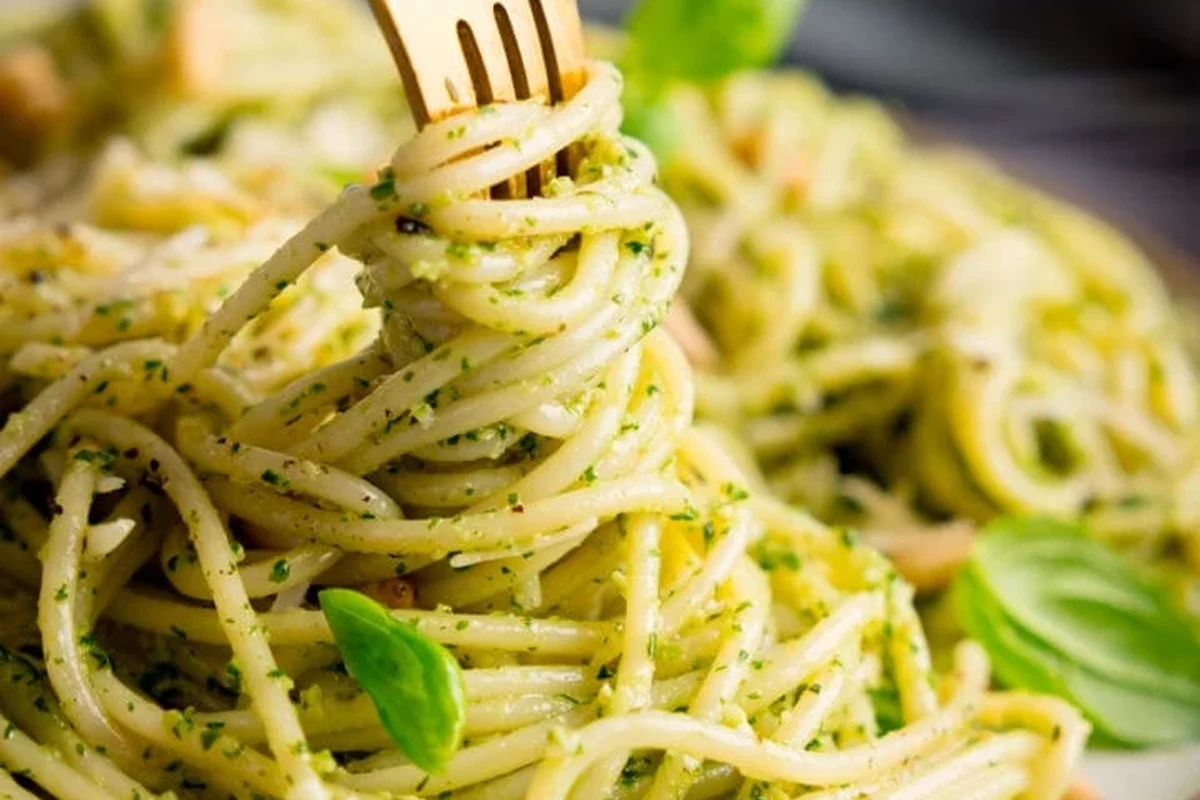
Pesto pasta usually means cooked pasta tossed with pesto sauce. Some versions also include cheese, chicken, tomatoes, spinach, or pine nuts.
Key pesto ingredients and their nutrition role
Classic pesto often includes basil, olive oil, nuts, garlic, cheese, and salt. Each ingredient plays a role in taste and nutrition.
- Basil: Adds flavor with very few calories.
- Olive oil: Adds heart-friendly fats, but also adds calories.
- Nuts: Add healthy fats, some protein, and a rich texture.
- Cheese: Adds flavor and protein, but also sodium and saturated fat.
- Garlic: Adds sharp flavor without many calories.
That mix is part of pesto’s appeal. You get a lot of taste from a small amount. The catch is that the sauce is energy dense, so a little goes a long way.
How pasta type changes the meal
The pasta base matters more than many people think. White pasta cooks fast and tastes mild. Whole wheat pasta brings more fiber. Legume pasta can bring more protein.
Higher-fiber pasta may help you feel full longer. That can make it easier to stop at a normal serving. It also gives the meal more staying power if you eat it for lunch.
How cheese, oil, and add-ins affect calories
Pesto already contains oil and cheese. If you add extra parmesan, more oil, or creamy extras, the calories climb fast.
On the other hand, vegetables barely change the calorie count. They add volume, color, and nutrients. That makes them one of the best upgrades you can make.
Toss pasta with a little reserved cooking water. It helps the pesto coat the noodles, so you may need less sauce.
Nutrition Breakdown of a Typical Pesto Pasta Bowl
A typical pesto pasta bowl can range from light to very rich. The final numbers depend on the pasta amount, sauce amount, and extras.
Calories, fat, carbs, and protein at a glance
Pasta brings most of the carbs. Pesto adds most of the fat. Protein depends on the recipe.
A plain bowl with pasta and pesto may be low in protein. That means it may not keep you full for long. If you add chicken, beans, tofu, or extra cheese, the protein rises.
Fat is not the enemy here. In pesto, much of it comes from olive oil and nuts. Those are useful fats, but they still add up quickly.
Why portion size matters so much
Portion size is the biggest reason pesto pasta can swing from healthy to heavy. A small serving can fit easily into a balanced meal.
A large serving can turn into a calorie-dense dinner without much fiber or protein. That’s especially true if you eat it straight from a big bowl and keep refilling it.
Pesto can taste very rich even in a small amount because fat carries flavor well.
How store-bought pesto compares with homemade
Store-bought pesto is convenient and consistent. Homemade pesto lets you control the salt, oil, and cheese.
Some jarred pestos are quite salty. Others use more oil or fillers. Homemade pesto can be lighter, but it depends on your recipe. If you use extra oil or cheese at home, the bowl can still become rich fast.
The better choice depends on your time, salt goals, and how much control you want over the sauce.
Fresh control
Best when you want to adjust salt, oil, nuts, and cheese.
VS
Fast and easy
Best when you need speed, but labels matter for sodium and oil.
Health Benefits of Pesto Pasta
Pesto pasta has some real upsides. It is tasty, quick, and easy to adapt.
Healthy fats from olive oil and nuts
Olive oil and nuts bring unsaturated fats. These fats are often part of a heart-friendly eating pattern.
They also help pesto feel satisfying. That can make a modest portion feel like enough. For many home cooks, that matters more than chasing a “perfect” diet meal.
Easy energy for busy days and active people
Pasta gives quick fuel. That can be useful before a long workday, after exercise, or on a night when you need dinner fast.
If you are active, pesto pasta can be a practical choice. It gives carbs for energy and fats for staying power. Just make sure the meal also includes enough protein and fiber.
Ways pesto pasta can support a more balanced plate
Pesto pasta becomes more balanced when you treat it as one part of the plate. The sauce adds flavor. The vegetables add bulk. The protein adds staying power.
- Quick to make on busy nights
- Can include healthy fats from olive oil and nuts
- Easy to pair with vegetables and protein
Limits and Health Concerns to Watch
Pesto pasta is not the best fit for every goal. Some bowls can be very high in calories, sodium, or fat.
High calorie counts from large servings
The sauce is the main reason pesto pasta can get heavy. Olive oil, cheese, and nuts all pack a lot into a small spoonful.
If you use a big pasta portion and a generous scoop of pesto, the meal can become calorie dense fast. That may matter if you are trying to manage weight or just want a lighter dinner.
Sodium, saturated fat, and allergy concerns
Cheese and jarred sauces can add sodium. Cheese also adds some saturated fat. For some people, that is worth watching.
Nut allergies matter too. Traditional pesto often uses pine nuts, walnuts, or cashews. If you have an allergy, check the recipe or label carefully.
Always read ingredient labels if you have food allergies. Pesto recipes and jarred sauces can vary a lot.
Why some pesto sauces are more processed
Some packaged pestos include extra oils, preservatives, or fillers. That does not automatically make them bad. It just means the nutrition can differ from a simple homemade version.
If you want a cleaner ingredient list, compare labels. Look at sodium, added oils, and serving size. Those details often matter more than the front label claims.
How to Make Pesto Pasta Healthier
You do not need to give up pesto pasta to make it healthier. A few small changes can improve the meal a lot.
Choose better pasta, like whole wheat or legume pasta
Whole wheat pasta adds more fiber than white pasta. Legume pasta can add more protein too.
That extra fiber or protein can help you feel full. It also makes the meal less likely to leave you hungry an hour later.
Add vegetables, lean protein, or greens
This is the easiest upgrade. Add broccoli, zucchini, spinach, peas, cherry tomatoes, or roasted peppers.
For protein, try chicken, shrimp, tofu, white beans, or chickpeas. That gives the bowl more balance and helps it work as a full meal.
Use less sauce without losing flavor
You do not need a thick green coating on every noodle. A smaller amount of pesto can still taste bold.
Try tossing the pasta with a splash of cooking water first. Then add pesto slowly. This helps the sauce spread farther.
- Start with less pesto than you think you need.
- Add vegetables for volume and color.
- Use a small amount of parmesan for extra flavor.
Simple swaps for a lighter weeknight bowl
Use half pasta and half vegetables. That is one of the best ways to lighten the meal without losing comfort.
You can also use less cheese, choose a lower-sodium pesto, or skip extra oil on top. Those small changes add up over time.
- Measure pesto instead of pouring freely.
- Mix in vegetables and a protein source.
- Choose pasta with more fiber when you can.
- Using a giant bowl of pasta as the whole meal.
- Adding extra oil before tasting first.
- Ignoring sodium on jarred sauce labels.
Common Mistakes People Make With Pesto Pasta
Most pesto pasta problems come from simple habits, not the recipe itself. A few small mistakes can make the meal much heavier.
Using too much sauce
This is the biggest mistake. Pesto is strong, so it is easy to overdo it.
Start small. Add more only if the pasta looks dry. That keeps the meal flavorful without turning it into an oil-heavy bowl.
Skipping vegetables and protein
Plain pesto pasta can feel one-note. It may also leave you hungry sooner.
Vegetables add fiber and volume. Protein helps with fullness. Together, they make the bowl more useful as a meal.
Choosing pesto with hidden extra salt or oil
Some sauces look simple but carry more salt or oil than you expect. That is why the label matters.
Check the serving size first. Then look at sodium and fat. A pesto that seems “light” can still be rich if the portion is small on the label but large in real life.
Final Verdict: Is Pesto Pasta Healthy for You?
Pesto pasta can be a healthy choice when you keep portions sensible and build a balanced bowl. It works best with whole grain or legume pasta, plenty of vegetables, and a moderate amount of sauce.
Best for quick meals, balanced diets, and smart portions
If you want a fast dinner that still feels satisfying, pesto pasta is a strong option. It is also easy to adapt for different diets and schedules.
For many people, that is the real win. It is simple enough for a weeknight and flexible enough to improve with a few smart swaps.
When to enjoy it less often and what to choose instead
If you need to limit sodium, saturated fat, or calories, enjoy pesto pasta less often. In that case, a lighter pasta bowl with olive oil, herbs, and lots of vegetables may fit better.
My simple verdict is this. Pesto pasta is healthy enough for regular rotation when you portion it well. Just do not let the sauce take over the whole bowl.
Pesto pasta can be a smart, tasty meal when you use modest portions and add vegetables or protein. If your bowl is large, salty, and heavy on sauce, choose a lighter version instead.
Frequently Asked Questions
Yes, it can be. It works best when you keep the portion modest and add vegetables or protein.
Large servings, extra cheese, and too much sauce can raise calories fast. Jarred pesto can also be high in sodium.
Often, yes, because you can control the salt, oil, and cheese. Still, homemade pesto can be rich if you use a lot of oil.
Whole wheat or legume pasta are good choices. They add more fiber or protein than regular white pasta.
Add vegetables and a protein source like chicken, beans, tofu, or shrimp. That helps the meal stay satisfying longer.
Start with a small amount and add more only if needed. Pesto is flavorful, so you often need less than you think.